Understanding Deepfakes
Introduction to Deepfakes
What Are Deepfakes?
You've likely seen a video that looked real but felt slightly off. Maybe it was a celebrity saying something outrageous or a historical figure brought to life. Chances are, you were looking at a deepfake.
The 21st century’s answer to Photoshopping, deepfakes use a form of artificial intelligence called deep learning to make images of fake events, hence the name deepfake.
The term itself is a blend of "deep learning" and "fake." Deep learning is a sophisticated type of machine learning that trains artificial neural networks on huge amounts of data. In this case, the data is images, videos, and audio of people. The AI learns a person's facial expressions, mannerisms, and voice so well that it can generate new, synthetic content that is convincingly real.
How They Work
The magic behind many deepfakes is a clever AI setup called a Generative Adversarial Network, or GAN. A GAN consists of two competing neural networks: a Generator and a Discriminator.
Think of it like an art forger (the Generator) and an art critic (the Discriminator). The forger creates a fake painting and shows it to the critic. The critic, who has studied thousands of real paintings, tries to determine if it's a fake.
At first, the forger's attempts are clumsy, and the critic easily spots them. But with each failure, the forger learns and gets better. The critic also improves at spotting more subtle fakes. This back-and-forth continues millions of times, with both AIs becoming experts. Eventually, the forger becomes so skilled that its fakes can fool even the sharpest critic. At this point, the GAN can produce highly realistic synthetic media.
A Quick History
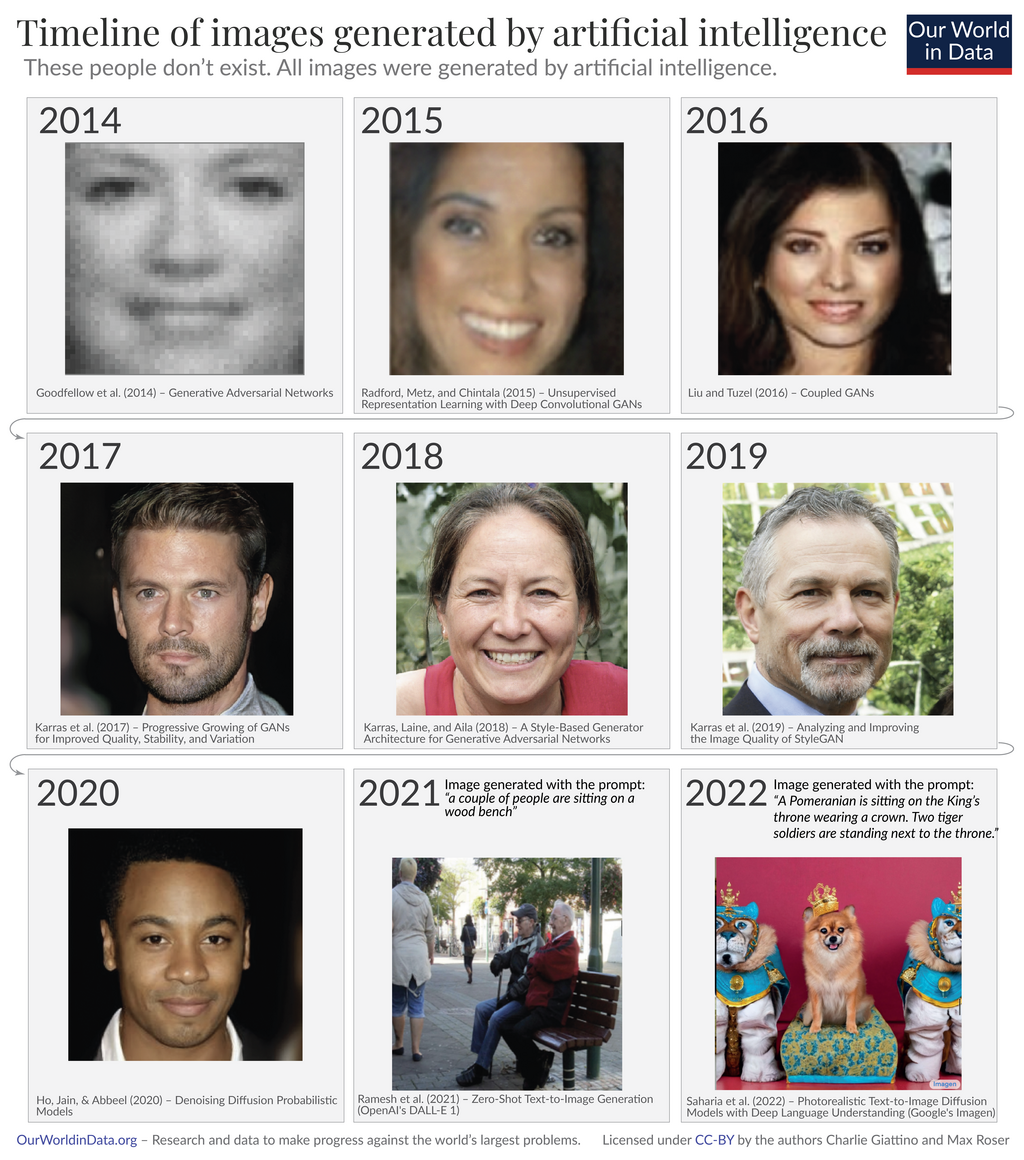
While the underlying AI research is older, the term "deepfake" gained notoriety in 2017. A Reddit user by the same name posted digitally altered videos online, shocking many with their realism. Since then, the technology has advanced at a staggering pace.
Early deepfakes were often blurry, with awkward glitches or unnatural movements. But as AI models became more powerful and accessible, the quality skyrocketed. What once required specialized knowledge and significant computing power can now be done with apps on a smartphone.
More Than Just Fakes
Deepfake technology isn't inherently good or bad, but it can be used for a wide range of purposes. Its applications span from harmless entertainment to serious criminal activity.
| Benign Applications | Malicious Applications |
|---|---|
| Film & Entertainment | Disinformation |
| Dubbing movies into different languages with synchronized lip movements. | Creating fake videos of politicians to influence elections. |
| De-aging actors for flashbacks without expensive CGI. | Spreading false news or propaganda. |
| Art & Satire | Fraud & Scams |
| Creating new forms of digital art and parody. | Impersonating someone to authorize fraudulent money transfers (voice phishing). |
| Bringing historical figures to life in museums. | Creating fake celebrity endorsements for scam products. |
| Education & Training | Personal Harm |
| Creating realistic simulations for training doctors or pilots. | Generating non-consensual explicit material. |
| Developing personalized educational content. | Cyberbullying and personal harassment. |
Understanding what deepfakes are and how they're made is the first step toward navigating a world where seeing isn't always believing.