Understanding Cryptocurrency Fundamentals
Introduction to Cryptocurrency
What Is Cryptocurrency?
At its heart, a cryptocurrency is digital money. It doesn't exist in a physical form like a dollar bill or a metal coin. Instead, it's a type of currency that exists only in the digital world. You can use it to buy things, send money to people, or hold it as an investment, just like traditional money.
Cryptocurrency
noun
A digital or virtual currency that is secured by cryptography, which makes it nearly impossible to counterfeit or double-spend.
The "crypto" part of the name comes from cryptography, the practice of secure communication. This is the key feature that makes cryptocurrencies work. It's a complex coding system that secures transactions and controls the creation of new units. This security means you don't need a bank to verify transactions. Instead, a network of computers does the work, creating a decentralized system. No single person, company, or government controls it.
The First Cryptocurrency
The story of cryptocurrency begins in 2008. The global financial system was in crisis, and trust in banks was low. In this climate, a paper was published online by a person or group using the name Satoshi Nakamoto. The title was "Bitcoin: A Peer-to-Peer Electronic Cash System."
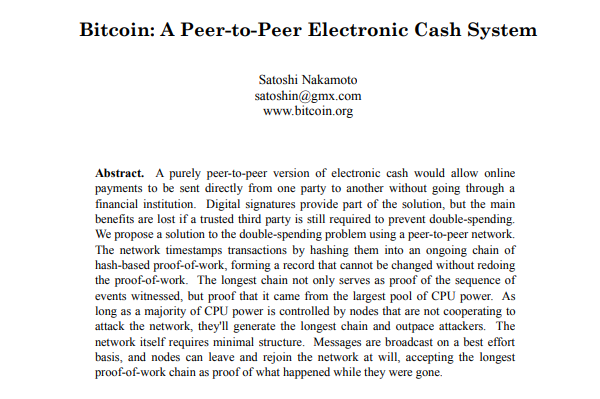
Nakamoto’s idea was revolutionary. It proposed a way to send money directly from one person to another online, without any bank or financial company in the middle. This system would be powered by a technology called blockchain, a kind of public ledger that records every transaction securely. In January 2009, the Bitcoin network came to life.
The main goal was to create a currency that was independent of any central authority, transferable electronically with very low transaction fees.
Nakamoto's identity remains a mystery to this day. But the system they created kicked off a movement that would challenge the very idea of what money could be.
More Than Just Bitcoin
Bitcoin proved that a decentralized digital currency could work. Its success inspired developers around the world to create their own versions. These alternative cryptocurrencies are often called "altcoins."
Today, there are thousands of different cryptocurrencies. Some, like Litecoin, were created to be a faster, "lighter" version of Bitcoin. Others, like Ethereum, introduced new capabilities. Ethereum, for example, allows developers to build applications on its platform, going far beyond just sending and receiving money. This has led to new fields like decentralized finance (DeFi) and non-fungible tokens (NFTs).

The evolution has been rapid. What started as a simple idea for digital cash has blossomed into a diverse ecosystem of digital assets, each with its own purpose and technology.
Shaking Up Finance
Cryptocurrencies present a new model for financial transactions. Because they can be sent across borders without intermediaries, they have the potential to make international payments faster and cheaper than traditional bank transfers, which can take days to clear.
This technology also opens up the possibility of financial inclusion. Billions of people around the world have access to the internet but not to traditional banking services. Cryptocurrencies could offer them a way to store value and participate in the global economy with just a smartphone.
Of course, this new technology has also created challenges. Governments and financial regulators are still figuring out how to approach cryptocurrencies, and their prices can be extremely volatile. But their impact is undeniable, forcing a global conversation about the future of money.
Now, let's review what you've learned about the world of cryptocurrency.
What does it mean for a cryptocurrency to be decentralized?
The anonymous creator of Bitcoin is known by what name?