Understanding Credit Spreads in Fixed Income
Introduction to Fixed Income
What Is Fixed Income?
When you invest in a company's stock, you own a piece of that company. Your fortunes rise and fall with its profits. Fixed income is different. Instead of buying ownership, you're essentially lending money. In return, the borrower promises to pay you back with interest over a set period.
Bond
noun
A type of security where an investor lends money to an entity (typically corporate or governmental) which borrows the funds for a defined period of time at a variable or fixed interest rate.
The most common type of fixed-income security is a bond. When you buy a bond, you're lending money to a government or a corporation. In exchange for your loan, the issuer agrees to make regular interest payments, called coupon payments, for a specific amount of time. At the end of that time, when the bond matures, the issuer repays the original amount of the loan, known as the principal or face value.
Think of it like an IOU. You give someone money, they give you an IOU promising to pay you back with interest, and at the end of the term, you get your original money back.
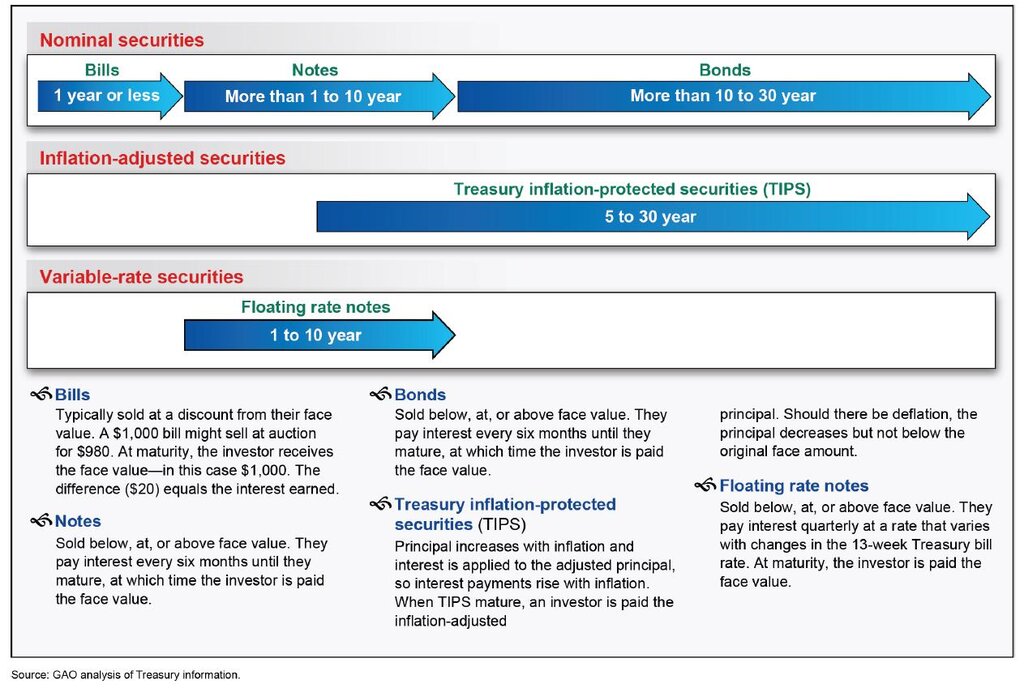
There are many kinds of bonds. Governments issue Treasury bonds (T-bonds), notes, and bills to fund public spending. Corporations issue corporate bonds to finance operations or expansion. Municipalities issue municipal bonds to build things like schools and highways.
Pricing and Yield
A bond's price isn't always its face value. Bonds are traded on the open market, just like stocks, so their prices can fluctuate. The price of a bond is the present value of all its future cash flows, which includes all the future coupon payments and the final principal repayment.
Bonds are priced as the present value of future cash flows, comprising periodic coupon payments and principal repayment at maturity, discounted at the yield to maturity (YTM), which represents the internal rate of return assuming the bond is held to maturity.
Let's break that down. The idea of present value is that money today is worth more than the same amount of money in the future because of its potential earning capacity. To find a bond's price, we discount its future payments back to what they're worth today. The discount rate we use is the bond's yield to maturity (YTM).
In this formula:
- is the price of the bond.
- is the periodic coupon payment.
- is the yield to maturity (per period).
- is the face value of the bond.
- is the number of periods until maturity.
Yield is the total return you can expect to receive if you hold the bond until it matures. It's expressed as an annual percentage. If you buy a bond for $1,000 and it pays $50 in interest per year, its current yield is 5%.
The Price and Interest Rate Seesaw
Bond prices and interest rates have an inverse relationship. When prevailing interest rates in the market go up, the prices of existing bonds go down. When interest rates fall, existing bond prices rise. It works like a seesaw.
Why does this happen? Imagine you buy a bond for $1,000 that pays a 5% coupon ($50 per year). A year later, the central bank raises interest rates, and newly issued bonds with the same risk profile are now paying 6%. Your 5% bond is suddenly less attractive. To sell it, you'd have to lower the price to a point where its yield matches the new 6% market rate. Conversely, if interest rates fell to 4%, your 5% bond would be a hot commodity, and you could sell it for more than its face value.
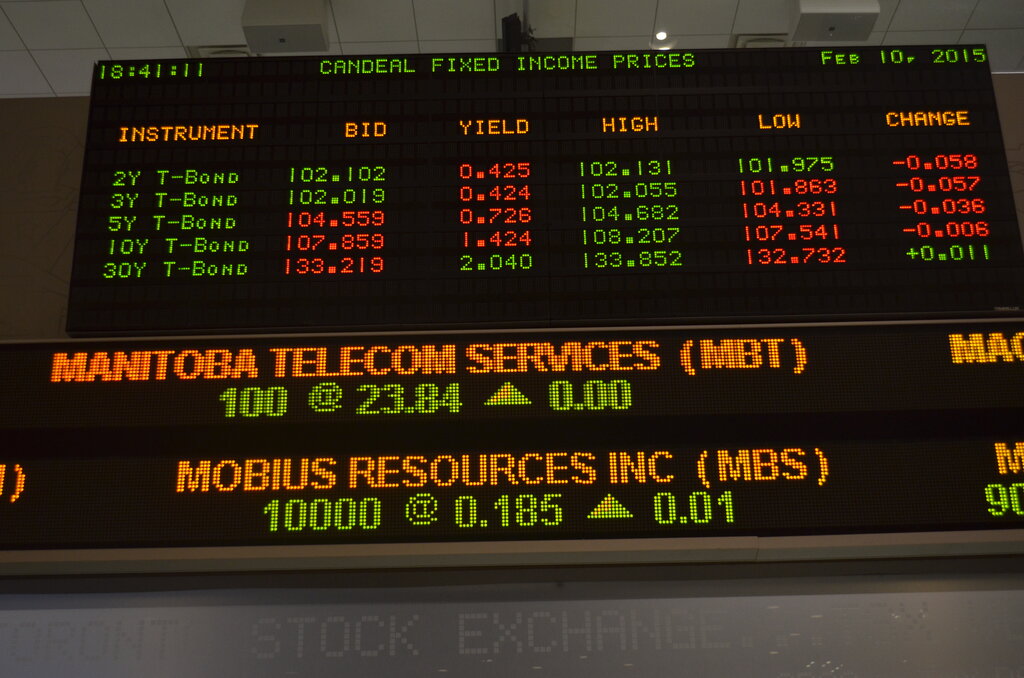
This relationship is a fundamental principle of the fixed-income market. Understanding it is key to navigating bond investments.
When an investor buys a bond, what are they essentially doing?
If market interest rates rise significantly, what is the most likely effect on the price of an existing bond with a lower, fixed coupon rate?