Understanding Continuous and Comprehensive Evaluation
Introduction to CCE
Rethinking Report Cards
For a long time, education in many parts of the world felt like a single, high-stakes sprint. Everything came down to one final exam. This approach often measured how well students could memorize information under pressure, not necessarily what they truly understood or what other skills they possessed. To address this, India's Central Board of Secondary Education (CBSE) introduced a new system: Continuous and Comprehensive Evaluation, or CCE.
CCE is a system of school-based evaluation that covers all aspects of a student's development. It was designed to be a holistic assessment tool, moving beyond just academics.
The primary goal of CCE was to reduce the immense stress and anxiety associated with final exams. Instead of one big test, evaluation became an ongoing process integrated into the daily life of the classroom. The idea was to help teachers better understand their students' learning gaps and strengths, allowing them to provide support right when it's needed. It aimed to shift the focus from rote learning to developing creativity, critical thinking, and other life skills.
A New Chapter for Schools
CCE was formally launched by the CBSE in 2009, aligning with the principles of India's landmark Right to Education Act of 2009. This law made education a fundamental right for children between the ages of 6 and 14 and pushed for a more child-friendly and stress-free learning environment. CCE was the practical application of this philosophy in the classroom, a concrete step away from an exam-centric culture.
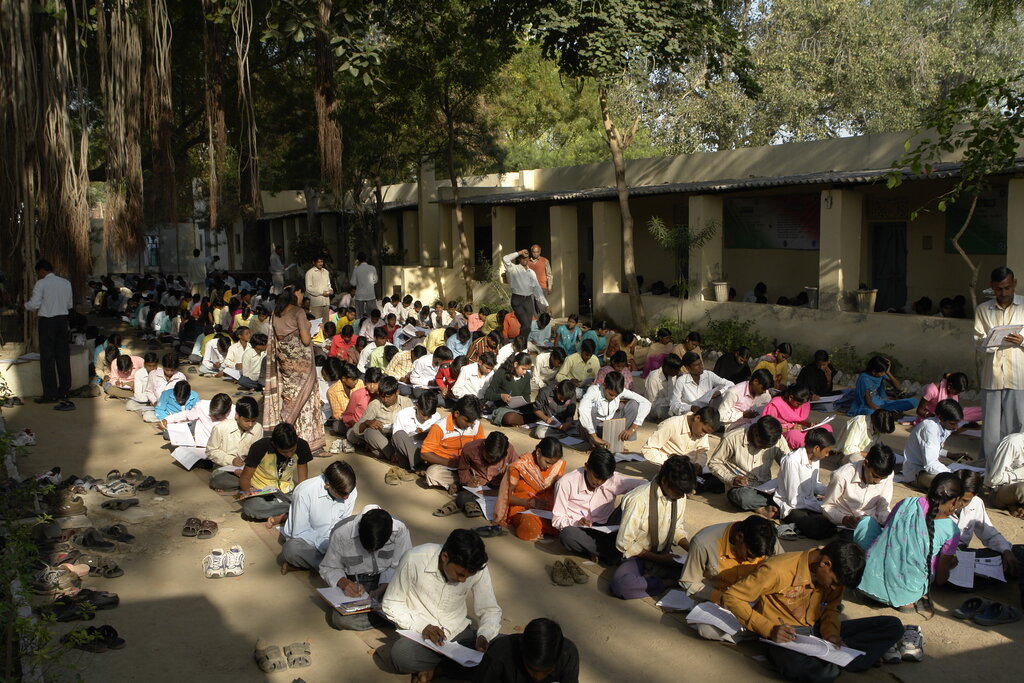
The system was implemented for students from Class 1 to Class 10, fundamentally changing how their progress was tracked and reported. It was a significant shift, requiring new ways of thinking from teachers, students, and parents alike.
How CCE Works
Under the CCE framework, the academic year is divided into two terms. Within each term, student progress is measured through two different types of assessments: Formative and Summative.
This structure ensures that evaluation is not an event at the end of the year, but a continuous thread woven throughout the learning process. Now, let's look at what these two types of assessments are.
Formative Assessment
adjective
Assessments conducted throughout a learning process to monitor student understanding and provide ongoing feedback to improve teaching and learning.
Think of Formative Assessments as check-ins. They are tools for learning, not just of learning. They happen frequently and can take many forms, like quizzes, oral questions, classwork, homework, or group projects. The feedback from these assessments helps teachers adjust their instruction and helps students identify areas where they need to improve. There are typically two Formative Assessments per term.
Summative Assessment
adjective
Assessments that evaluate student learning at the end of an instructional unit or term by comparing it against a standard or benchmark.
Summative Assessments are more like traditional exams. They occur at the end of each term and are designed to measure what a student has learned over a longer period. While they carry more weight than a single formative task, they are only one part of the overall picture in the CCE system. There is one Summative Assessment at the end of each term.
Ready to check your understanding of CCE's foundational ideas?
What was the primary goal of the Central Board of Secondary Education (CBSE) when it introduced the Continuous and Comprehensive Evaluation (CCE) system?
The CCE system was introduced in 2009, aligning with the principles of which landmark legislation?
By breaking the year into manageable terms with a mix of ongoing and end-of-term evaluations, CCE aimed to create a more balanced and less stressful path for students to demonstrate their learning.