Understanding Context Graphs
Introduction to Knowledge Graphs
Mapping Our World of Data
Databases are great at storing information in rows and columns. But what if you want to understand the relationships between different pieces of information? That's where knowledge graphs come in. A knowledge graph is like a digital brain that maps out how different things, people, places, and ideas are connected.
Instead of just storing data, a knowledge graph represents knowledge. It captures the context and connections that give information its meaning.
Imagine a vast web. Each point of light is a piece of information, and the threads connecting them show how they relate. This structure allows computers to not just retrieve facts, but to understand them in context. It's a way of organizing data that mirrors how we naturally think about the world: as a network of interconnected concepts.
The Building Blocks
Every knowledge graph is built from a few simple parts. The core components are entities, relationships, and sometimes attributes.
| Component | Description | Example |
|---|---|---|
| Entity | An object, person, place, or concept. Also called a node. | Leonardo da Vinci, Mona Lisa, Italy |
| Relationship | The connection between two entities. Also called an edge. | painted, born in, located in |
| Attribute | A property or quality of an entity. | Date of birth: April 15, 1452 |
When you put these together, you form simple, fact-based statements called triples. A triple follows the structure: (Entity 1) -[Relationship]-> (Entity 2). For example, (Leonardo da Vinci) -[painted]-> (Mona Lisa).
Knowledge Graphs in Action
You probably use knowledge graphs every day without realizing it. When you search on Google and see an information box on the side with key facts about a person or company, that's powered by a knowledge graph. It pulls together connected information from various sources into a single, easy-to-read summary.
Recommendation engines on platforms like Netflix or Amazon also rely on them. They don't just know you watched a certain movie; they know its genre, director, actors, and themes. By mapping these relationships, they can suggest other movies you might like. If you watched a film starring a particular actor, it might recommend another one they're in.
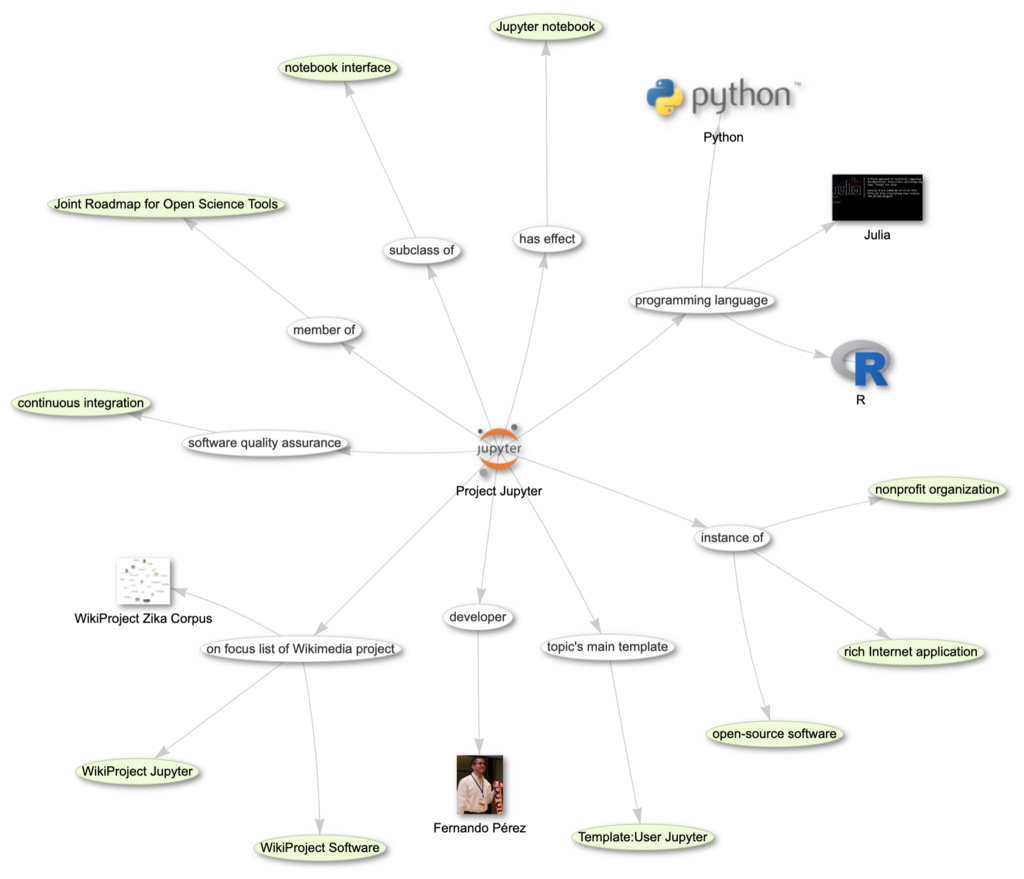
This ability to connect the dots is also crucial for artificial intelligence. AI systems use knowledge graphs to understand complex questions and provide nuanced answers. Instead of just matching keywords, they can navigate the relationships within the graph to find what you're actually looking for.
Knowledge graphs also play a vital role in data integration. Most large organizations have data stored in many different places, in many different formats—a problem known as data silos. A knowledge graph can act as a unifying layer, connecting these disparate datasets and creating a single, coherent view of all the organization's knowledge.
A knowledge graph is a flexible, semantic data layer that unifies and provides meaning to your data silos, with models that evolve as your data evolves.
By structuring data this way, we move from simple information storage to a system that represents real-world knowledge that both humans and machines can easily understand and use.
What is the primary function of a knowledge graph?
Which of the following represents the fundamental structure of a statement, or "triple," in a knowledge graph?