Understanding Computer Nodes
Introduction to Nodes
The Building Blocks of Connections
In the world of computing, many complex systems are built from simple, connected parts. Whether we're talking about how data is organized in memory or how computers talk to each other over the internet, we often rely on a fundamental concept: the node.
Node
noun
A basic unit within a larger data structure or network. A node can contain data and also link to other nodes.
Think of a node as a single point or an individual element in a bigger system. It's a powerful and flexible idea that appears in two major areas: data structures and computer networking.
Nodes in Data Structures
When programmers need to organize information, they use structures to hold and connect data. A node is the basic building block for many of these, like linked lists and trees.
In this context, a node is a container. It typically holds two things: a piece of data and a pointer, or a link, to another node. By connecting nodes together with these pointers, you can create chains of data (a linked list) or branching, hierarchical structures (a tree).
Imagine a scavenger hunt. Each clue has a piece of information and tells you where to find the next clue. Each clue is like a node.
This structure allows for efficient and dynamic storage. You can easily add a new node by changing a single link, or remove one by redirecting the pointer around it. You don't need to shuffle all the other data around.
Nodes in Networking
The concept of a node is also central to computer networking. In a network, a node is any device that can send, receive, or forward information. It’s a point of connection in the network.
This is a broad definition, and that’s intentional. A node can be a personal computer, a server, a printer, a router, a switch, or even a smartphone connected to Wi-Fi. If a device has a network address and can communicate with other devices, it's considered a node.
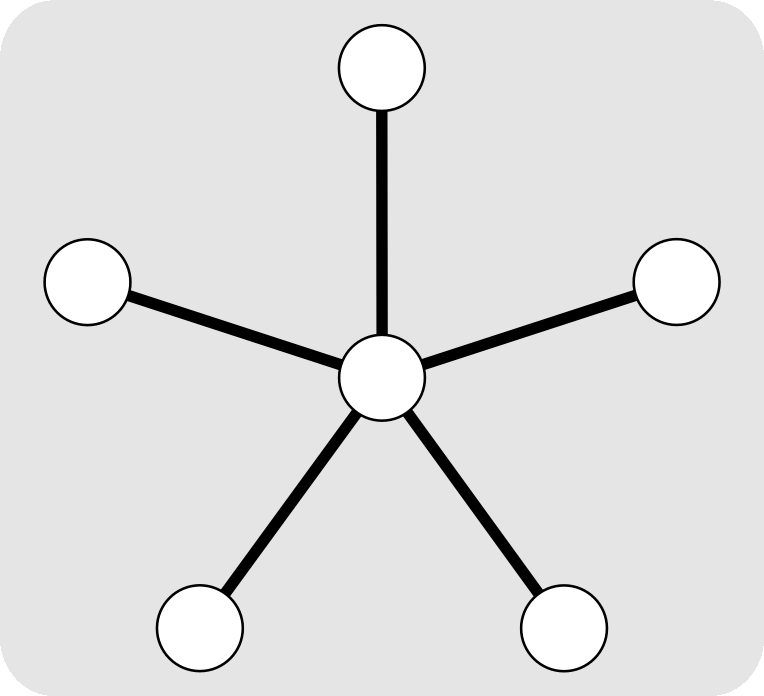
In both data structures and networking, a node serves a similar purpose. It’s a distinct entity that holds something (data or a network function) and connects to other, similar entities to form a larger, more complex system.
Ready to check your understanding?
In the context of data structures, what are the two essential components of a node?
Which of the following items is NOT considered a node on a computer network?
Understanding nodes is the first step to grasping how data flows and how systems are built, from simple lists to the entire internet.