Understanding Competition
Introduction to Competition
What is Competition?
Think about the last time you bought a coffee. You likely had several choices: a big chain, a local café, or maybe even the coffee shop inside the grocery store. You weighed your options based on price, quality, and convenience. That choice you made is the result of competition.
Competition
noun
The rivalry between companies selling similar products and services with the goal of achieving revenue, profit, and market share growth.
In economics, competition is the engine of a market economy. It's the struggle among businesses for your dollars. This rivalry isn't just about winning; it forces companies to be at their best. Without it, a single company could charge whatever it wanted for a low-quality product, and we'd have no other option. Competition keeps businesses honest and innovative.
The Tools of Competition
How do businesses actually compete? They use a set of tools known as the marketing mix, often called the “Four Ps.” By adjusting these four elements, a company can create a unique appeal to customers.
| Element | Description | Example |
|---|---|---|
| Product | The actual good or service being sold. | A smartphone with a better camera. |
| Price | How much the customer pays. | A two-for-one deal on pizzas. |
| Promotion | How a company communicates with customers. | A memorable TV commercial or a social media campaign. |
| Place | Where the product is sold or distributed. | Selling clothes online instead of only in physical stores. |
Imagine two competing shoe companies. One might focus on Product by using higher-quality materials and advertising its durability. The other might compete on Price, offering a more affordable shoe. A third could focus on Place by having the most user-friendly website, while a fourth might launch a massive Promotion with a famous athlete.
Most businesses use a blend of these strategies. The specific mix they choose is what sets them apart from the pack.
Why Competition Matters
A competitive market is a healthy market. It benefits everyone, from the business owners to the customers. The constant pressure to win over consumers creates a cycle of improvement.
Competition pushes companies to create new products and improve existing ones.
This pressure leads directly to innovation. To stand out, firms have to offer something new or better. This could be a groundbreaking feature, a more efficient way to produce something, or a novel solution to an old problem. Think of the evolution of mobile phones over the last two decades, all driven by intense competition.
This same pressure also boosts efficiency. To offer competitive prices and still make a profit, companies must find ways to reduce their costs. They might streamline their operations, find cheaper suppliers, or adopt new technology. These savings are often passed on to the consumer in the form of lower prices.
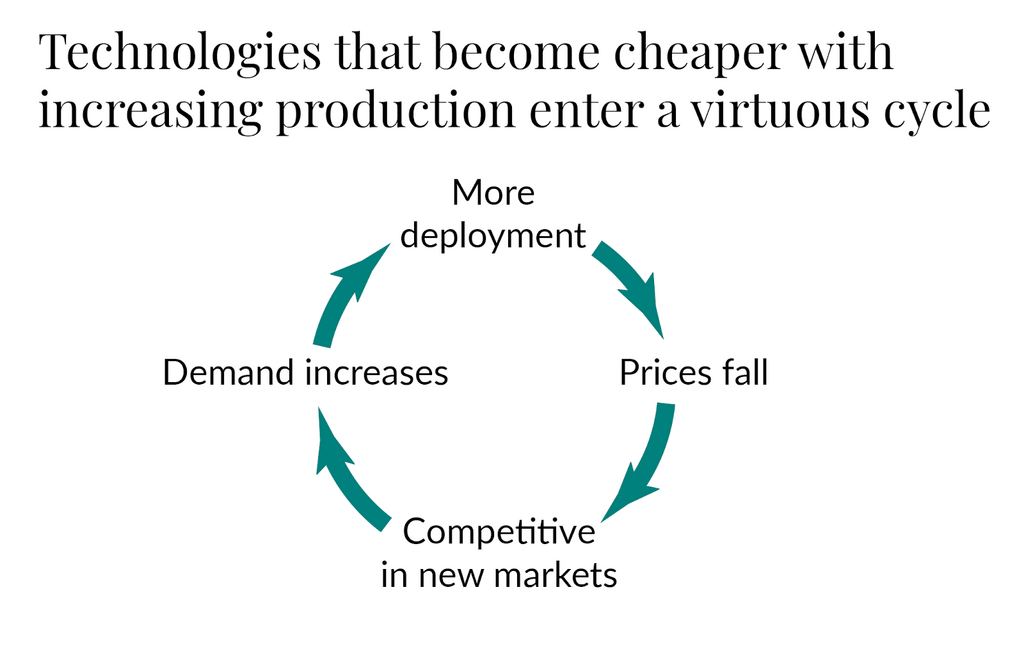
For consumers, competition means more choices, higher quality, and lower prices.
Finally, all of this activity takes place within different market environments. The nature of competition can vary wildly. Sometimes, countless small businesses compete, and in other cases, only a few giant firms dominate. These different competitive landscapes are called market structures, and they have a huge impact on how businesses behave and what choices are available to us.
Let's review what you've learned about the fundamentals of competition.
What is a primary benefit of competition for consumers?
A shoe company decides to use higher-quality, more durable materials for its new line of sneakers. Which of the 'Four Ps' is it primarily focusing on?
Understanding these basic concepts is the first step to seeing how our economy really works. It explains why some products get better and cheaper over time, while others don't.