Understanding Cognitive Load Theory for Effective Learning
Human Memory Basics
Your Brain’s Two Memory Systems
Think of your memory as a dynamic duo, not a single storage unit. It has two key players that work together: working memory and long-term memory. Understanding how they operate is the first step in learning how to learn more effectively.
The Busy Workbench: Working Memory
Working memory is your mental workbench. It’s where you actively process information right now—the thoughts you're holding, the problem you're solving, or the sentence you're reading. When someone tells you a phone number, you hold it in your working memory just long enough to dial it.
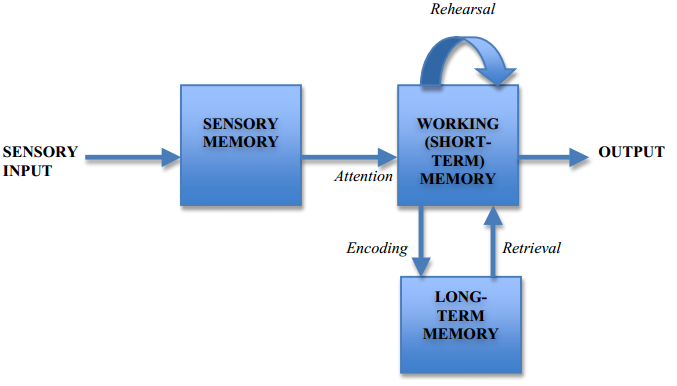
But this workbench is small and temporary. It can only hold a few pieces of new information at once, typically for just a few seconds. If you don't do anything with that information, like repeat it to yourself, it vanishes to make room for new thoughts.
Working memory is powerful but limited. It's the bottleneck of our learning process because it can easily get overloaded.
The Vast Library: Long-Term Memory
If working memory is a small workbench, long-term memory is a vast, sprawling library. It’s where you store everything you know: facts, experiences, skills, and concepts. Its capacity is practically limitless, and memories stored here can last a lifetime.
The goal of learning is to move information from the temporary workbench into this permanent library. This process is called encoding. When you successfully encode information, you can retrieve it later, bringing it back to your working memory to use it.
Building Mental Blueprints
schema
noun
A mental framework that helps organize and interpret information in long-term memory.
Your long-term memory isn't just a random collection of facts. It's highly organized into interconnected networks called schemas. A schema is like a mental blueprint for a concept. For instance, your schema for “restaurant” includes knowledge about menus, waiters, ordering food, and paying the bill.
When you encounter new information, your brain tries to fit it into an existing schema. If you visit a new type of restaurant, you don't have to learn everything from scratch; you just update your existing restaurant schema. The more complex and interconnected your schemas are, the easier it is to learn new, related information because you have a place to put it.
Learning, then, is not just about memorizing isolated facts. It's about building and refining these schemas, creating a rich, organized knowledge base in your long-term memory that you can access and apply whenever you need it.
What is the primary role of working memory?
According to the analogy in the text, if long-term memory is a vast library, working memory is best described as a...