Understanding Cognitive Disempowerment
Introduction to Cognitive Biases
Your Brain's Hidden Shortcuts
Our brains are constantly processing a staggering amount of information. To handle this workload, they develop mental shortcuts, or heuristics, to make decisions quickly and efficiently. These shortcuts work well most of the time, allowing us to navigate our daily lives without having to analyze every single detail. But sometimes, these shortcuts lead to systematic errors in thinking.
Cognitive Bias
noun
A systematic pattern of deviation from norm or rationality in judgment, leading to perceptual distortion, inaccurate judgment, and illogical interpretation.
These errors are called cognitive biases. They aren't signs of a faulty brain; rather, they're byproducts of an efficient one. Think of them as the brain's default settings. They operate automatically and unconsciously, shaping our perceptions, judgments, and decisions without us even realizing it.
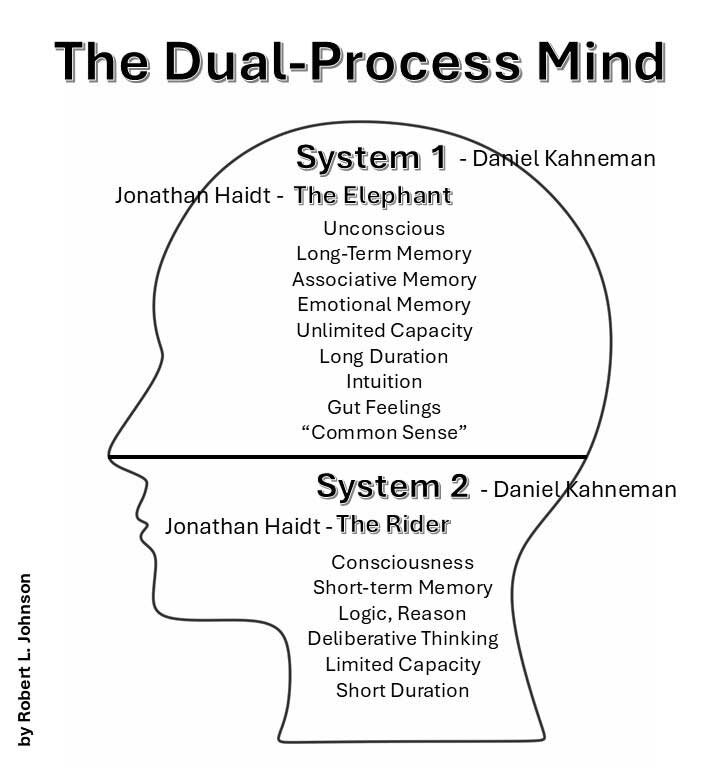
The impact of these biases can be subtle yet profound. They can influence everything from what news articles you believe to the major life choices you make. A bias can make you misinterpret a perfectly neutral situation as hostile or cause you to overestimate your own abilities. Understanding them is the first step toward clearer thinking.
Common Biases in Action
Cognitive biases come in many forms. Let's look at a few common ones you'll likely recognize from your own life.
Cognitive biases—those invisible mental shortcuts and distortions—undermine judgment, warp perception, and quietly sabotage performance.
One of the most widespread is confirmation bias. This is our tendency to search for, interpret, favor, and recall information in a way that confirms our preexisting beliefs. Essentially, we like to be right, so we look for evidence that proves we are.
For example, if you believe left-handed people are more creative, you'll notice every artistic left-handed person you meet, while overlooking the many creative right-handed people and the less creative left-handed ones.
Another common bias is the anchoring effect. This happens when we rely too heavily on the first piece of information offered (the "anchor") when making decisions. Subsequent judgments are then adjusted based on that anchor, even if the anchor is completely arbitrary.
A car salesperson might start negotiations with a very high price. That initial price becomes the anchor, making any subsequent, lower price seem like a great deal, even if it's still higher than the car's actual value.
Finally, there's the availability heuristic. This is a mental shortcut where we overestimate the importance of information that is most easily recalled. Vivid, recent, or emotionally charged examples tend to stick in our minds and seem more common than they actually are.
After seeing several news reports about shark attacks, you might feel that shark attacks are very common and become afraid of swimming in the ocean. In reality, the statistical probability of a shark attack is extremely low.
These are just a few examples of the many cognitive biases that influence our thinking every day. They operate in the background, shaping our view of the world in ways we rarely question. By becoming aware of them, we can start to see our own thought processes more clearly.
What is the primary function of mental shortcuts, or heuristics, in our brain's processing?
After seeing several dramatic news reports about a recent shark attack, a beachgoer decides that swimming in the ocean is far more dangerous than driving to the beach, despite statistics showing car accidents are much more common. Which cognitive bias is at play?