Understanding Cardiovascular Diseases
Cardiovascular System
The Body's Delivery Service
Your body is a bustling city of trillions of cells. Each one needs a constant supply of oxygen and nutrients to function. How do these vital supplies get delivered? Through the cardiovascular system, an intricate network of roads and highways with a powerful pump at its center.
This system has three main components:
- The Heart: The muscular pump that keeps everything moving.
- Blood Vessels: The network of tubes that act as highways and local roads.
- Blood: The transport vehicle carrying oxygen, nutrients, waste, and hormones.
Together, they ensure every part of your body gets what it needs and has its waste taken away. Let's look at how this incredible system is built.
The Heart's Four Rooms
The heart is a powerful muscle about the size of your fist, working tirelessly day and night. It's not just one big pump; it's divided into four distinct chambers, or rooms, that work in a coordinated sequence.
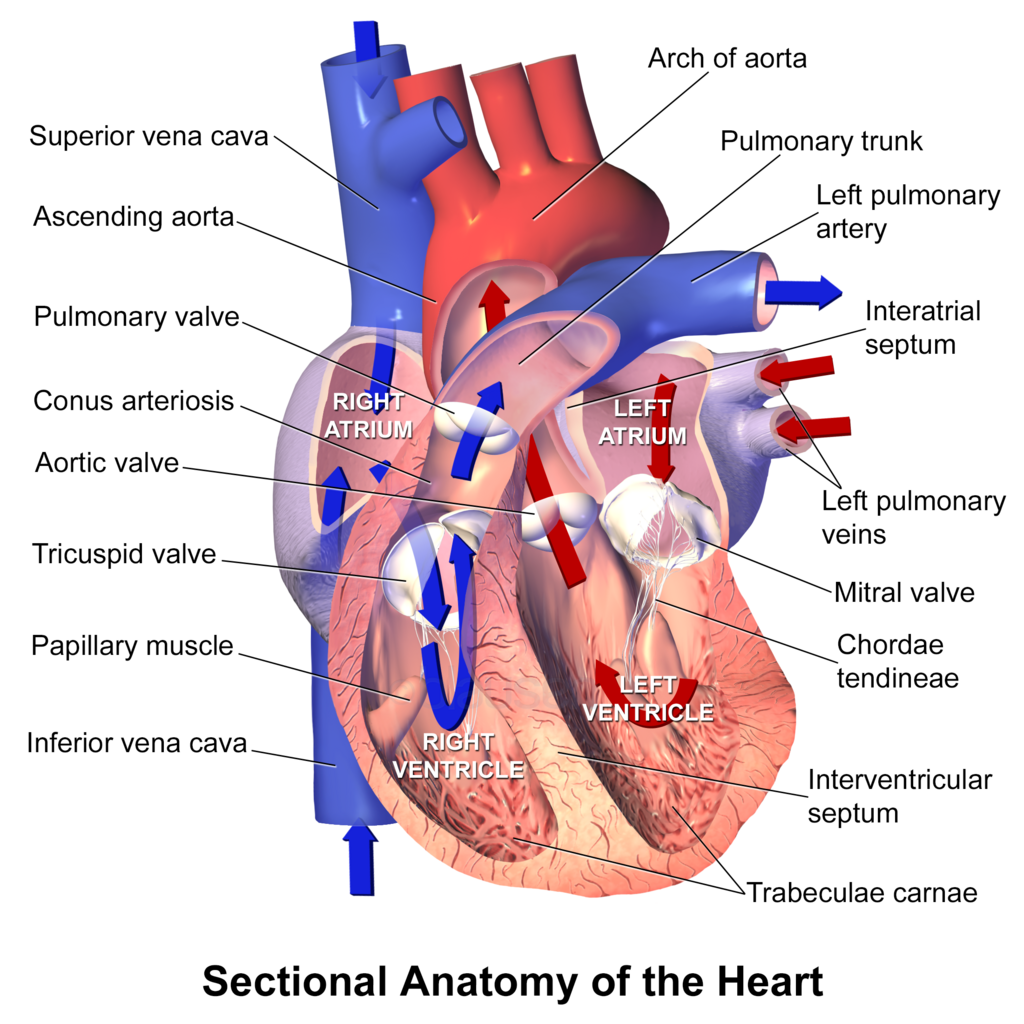
The top two chambers are called the atria (singular: atrium). Think of them as receiving rooms. The right atrium collects oxygen-poor blood returning from the body, while the left atrium collects oxygen-rich blood coming from the lungs.
Below the atria are the two more muscular, powerful chambers: the ventricles. These are the main pumping rooms. The right ventricle pumps the oxygen-poor blood to the lungs. The left ventricle, the strongest chamber, pumps oxygen-rich blood out to the entire body.
To keep blood moving in the right direction, the heart has four valves. These valves act like one-way doors, opening to let blood pass through and then snapping shut to prevent it from flowing backward.
A Network of Highways
Blood travels through your body in a vast network of blood vessels. If you laid them all out end-to-end, they would stretch for thousands of miles. These vessels come in three main types, each with a specific job.
| Vessel Type | Function | Key Features |
|---|---|---|
| Arteries | Carry blood away from the heart | Thick, muscular, elastic walls to handle high pressure |
| Veins | Carry blood back to the heart | Thinner walls, have valves to prevent backflow |
| Capillaries | Connect arteries and veins | Microscopic, one-cell-thick walls for easy exchange |
You can think of arteries as the major highways leaving the city (the heart). They branch into smaller vessels, eventually leading to the tiny capillaries, which are like neighborhood streets. It's in the capillaries that the real work happens: oxygen and nutrients are dropped off to the cells, and carbon dioxide and waste products are picked up. The blood then begins its return journey through the veins, which merge into larger and larger vessels until they reach the heart again.
The Two-Loop Journey
The cardiovascular system actually operates as two separate, connected circuits. This double-loop system is highly efficient. It ensures that the blood is re-oxygenated before being sent out to the body, maximizing the oxygen delivered to your cells.
The first loop is the pulmonary circulation. This is the short trip from the heart to the lungs and back again. The right ventricle pumps oxygen-poor blood (shown in blue) into the pulmonary artery, which carries it to the lungs. In the lungs, the blood drops off carbon dioxide and picks up a fresh supply of oxygen. This newly oxygenated blood (shown in red) then travels back to the heart's left atrium through the pulmonary veins.
The second, much larger loop is the systemic circulation. This circuit sends that fresh, oxygen-rich blood to the rest of the body. The powerful left ventricle pumps blood into the aorta, the body's largest artery. From there, it travels through a branching network of arteries to every organ and tissue, from your brain to your toes. After delivering its oxygen, the now oxygen-poor blood returns to the right atrium of the heart through veins, and the entire process begins again.
This continuous, elegant cycle ensures that your body has the energy it needs for every single heartbeat, thought, and movement.
Time to review the key structures and pathways you've learned.
Now let's test your knowledge of how blood moves through the body.
Which chamber of the heart is the strongest and responsible for pumping oxygen-rich blood to the entire body?
Where does the exchange of oxygen, nutrients, and waste products between the blood and the body's cells primarily occur?
Understanding the basic anatomy and physiology of the heart and blood vessels is the first step in appreciating this vital system. By knowing how the pump, pipes, and circuits work together, you build a foundation for understanding overall health.