Understanding British Identity and Culture
Ancient Britain
The First Britons
Britain's story begins long before recorded history. The first humans arrived on the landmass that would become the British Isles hundreds of thousands of years ago, when it was still connected to mainland Europe by a land bridge. These early inhabitants were hunter-gatherers, living a nomadic life shaped by the rhythms of the Ice Ages.
Around 6,000 BC, the climate warmed, the ice sheets retreated, and the land bridge, known as Doggerland, was submerged. Britain became an island. A few thousand years later, a major shift occurred. Newcomers arrived from Europe, bringing with them the revolutionary practice of farming. This marked the beginning of the Neolithic, or New Stone Age.
The shift from hunting and gathering to farming was one of the most significant changes in human history. It allowed people to settle in one place, build permanent homes, and develop more complex societies.
An Age of Monuments
With agriculture came a new way of life and a new relationship with the land. Neolithic people began to build extraordinary monuments, many of which still dot the landscape today. These weren't just simple structures; they were massive undertakings of engineering and communal effort, built with enormous stones called megaliths.
One of the most famous examples is Stonehenge in Wiltshire, England. Built in stages over a period of about 1,500 years, starting around 3000 BC, its purpose remains a profound mystery. Was it a temple for sun worship, a celestial calendar, or a sacred burial ground? Archaeologists have found human remains at the site, suggesting it had a role in ancient rituals concerning life and death.
The construction was an incredible feat. The larger sarsen stones, weighing up to 40 tons each, were dragged from about 20 miles away. The smaller bluestones, however, have been traced to the Preseli Hills in Wales, over 150 miles from the site. How and why these Neolithic people transported them such a vast distance remains a subject of intense debate.
Stonehenge isn't the only significant site. In the Orkney Islands of Scotland, the prehistoric village of Skara Brae offers a remarkable glimpse into daily life, with stone houses and furniture preserved for over 5,000 years.
Roman Britain
The Iron Age followed the Bronze Age, characterized by the rise of Celtic tribes and hillforts. Britain was a patchwork of local kingdoms, increasingly drawn into the affairs of the continent through trade and tribal connections. This connection eventually brought them to the attention of the growing Roman Empire.
After two brief expeditions by Julius Caesar in 55 and 54 BC, it wasn't until nearly a century later, in 43 AD, that Emperor Claudius launched a full-scale invasion. The Romans were a formidable military machine, and despite fierce resistance from British tribes, they conquered what is now England and Wales over the next few decades. This new territory was organized into the province of Britannia.
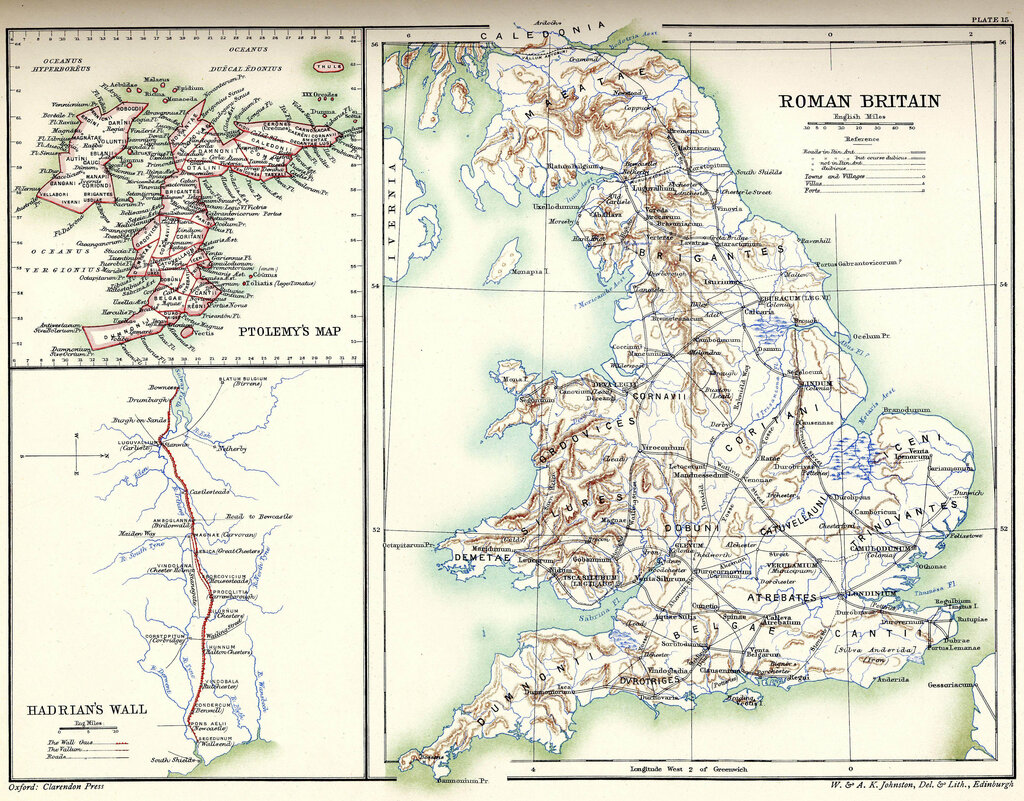
Roman rule transformed Britain. They built an extensive network of paved roads, many of which form the basis of modern routes. They founded towns and cities, imposing a grid-like street plan and constructing impressive public buildings. Londinium (London) became a major administrative and commercial hub, while Aquae Sulis (Bath) was developed as a sophisticated spa town around its natural hot springs.
To defend the northern frontier of their new province from the unconquered tribes of what is now Scotland, Emperor Hadrian ordered the construction of a massive wall. Stretching 73 miles from coast to coast, Hadrian's Wall was a powerful symbol of Roman power and engineering.
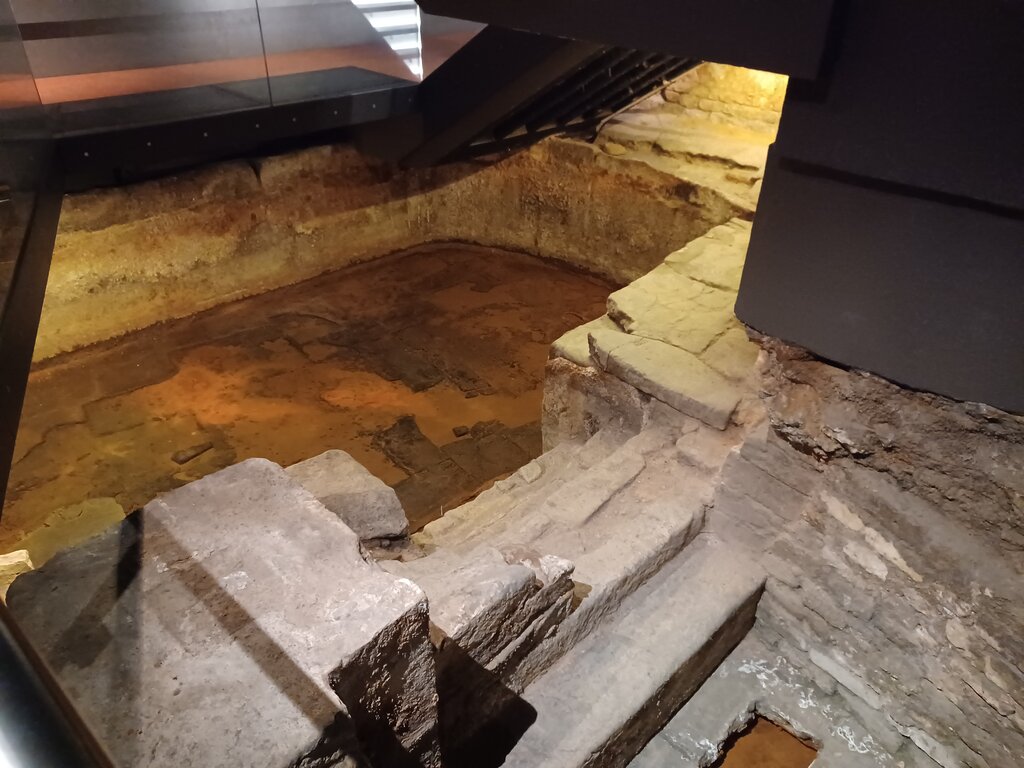
For nearly 400 years, Britain was part of the Roman Empire. This period brought Roman law, language (Latin), currency, and culture to the island. But by the early 5th century, the empire was facing crises elsewhere and began withdrawing its legions. Around 410 AD, the Roman administration collapsed, leaving the Romano-British population to fend for themselves against new waves of invaders.
Ready to test your knowledge of early British history?
What major event around 6,000 BC led to Britain becoming an island?
The smaller bluestones used in the construction of Stonehenge were transported from an incredibly distant source. Where did they come from?
The departure of the Romans marked the end of one era and the dawn of another, setting the stage for the Anglo-Saxon kingdoms that would eventually form England.