Understanding Biogeochemical Cycles
Introduction to Biogeochemical Cycles
Nature's Recycling System
Think about a water bottle. You drink the water, and when the bottle is empty, you might toss it into a recycling bin. From there, it's taken away, broken down, and remade into something new. Earth does something similar with the essential ingredients for life, but on a planetary scale. This process is called a biogeochemical cycle.
Because geology and chemistry have major roles in the study of this process, the recycling of inorganic matter between living organisms and their nonliving environment is called a biogeochemical cycle.
Let's break that word down:
- Bio: Refers to life, like plants and animals.
- Geo: Refers to the Earth, including rocks, soil, and water.
- Chemical: Refers to the elements and compounds being cycled, like carbon and nitrogen.
These cycles move essential chemical elements through the living (biotic) and non-living (abiotic) parts of our planet. Without them, life-sustaining materials would get locked up in one place, and ecosystems would quickly run out of the nutrients they need to survive.
The Key Ingredients
While many elements cycle through Earth's systems, a few are especially critical for life. Think of them as the main ingredients in the recipe for a healthy planet.
- Water (): The foundation for all life. The water cycle moves water from the oceans to the atmosphere, over land, and back again, making it available for all living things.
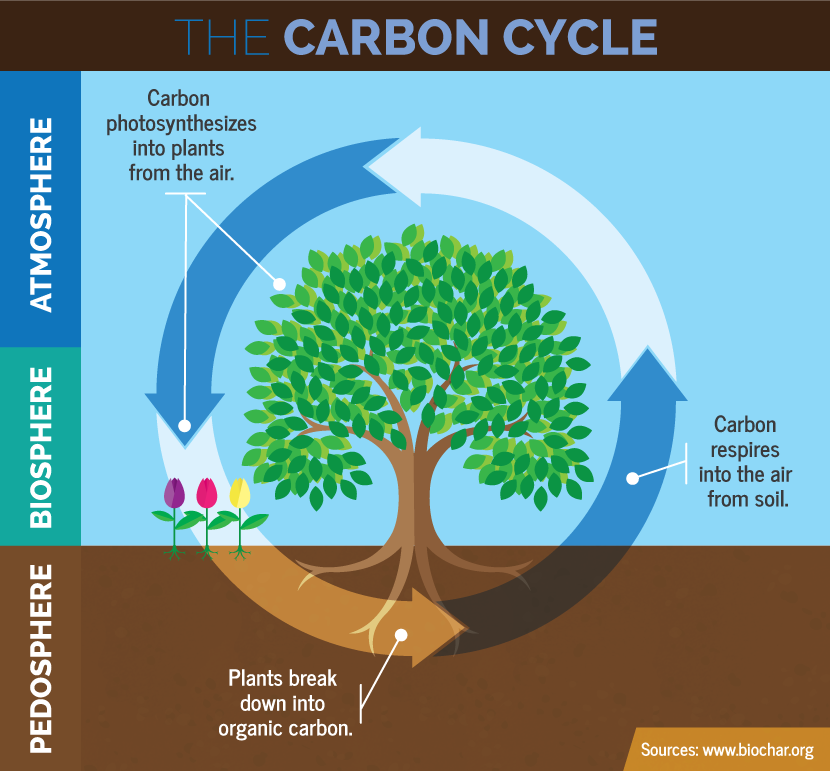
- Carbon (C): The primary building block of organic molecules, including carbohydrates, proteins, and fats. Carbon is found in the atmosphere, oceans, rocks, and all living organisms.
- Nitrogen (N): A crucial component of proteins and nucleic acids like DNA. While our atmosphere is nearly 80% nitrogen gas, most organisms can't use it in that form. The nitrogen cycle converts it into usable forms.
- Oxygen (O): Essential for respiration, the process most living things use to get energy from food. It cycles between the atmosphere and living organisms.
Two Speeds of Recycling
Not all biogeochemical cycles operate at the same speed. They can be broadly categorized into two main types based on where the element's primary reservoir is located.
reservoir
noun
A place where a particular element accumulates or is held for a period of time in a biogeochemical cycle.
The two types are gaseous cycles and sedimentary cycles. Gaseous cycles are generally faster, while sedimentary cycles can be incredibly slow.
| Feature | Gaseous Cycles | Sedimentary Cycles |
|---|---|---|
| Primary Reservoir | Atmosphere and oceans | Earth's crust (rock and soil) |
| Speed of Cycling | Relatively fast (days to years) | Very slow (thousands to millions of years) |
| Example Elements | Nitrogen, Oxygen, Carbon, Water | Phosphorus, Sulfur, Calcium |
In gaseous cycles, elements can move around the globe quickly through the air. A carbon atom released from a plant in the Amazon could find its way into the atmosphere over Europe in a matter of weeks. In sedimentary cycles, elements are locked away in rocks and are released very slowly through weathering and erosion. This makes them much less mobile.
Understanding these fundamental cycles is the first step to seeing how interconnected our planet truly is. Every atom in your body has been on a long journey through Earth's land, air, and water, and it will continue that journey long after you are gone.
What do the 'bio,' 'geo,' and 'chemical' components of the term 'biogeochemical cycle' refer to, respectively?
What is the primary function of biogeochemical cycles?