Understanding Behavior Change
Introduction to Behavior Change
What Drives Our Actions?
Think about the last time you tried to start a new habit, like going to the gym, or stop an old one, like scrolling on your phone before bed. It probably wasn't as simple as just deciding to change. That's because our actions are the result of a complex interplay of thoughts, feelings, and outside influences. Understanding these forces is the first step in making meaningful, lasting changes.
Behavior Change
noun
The process of modifying an individual's or group's actions, often with the goal of improving outcomes in areas like health, well-being, or performance.
Behavior change isn't about brute force or willpower alone. It's a science that explores why we do what we do. By learning what shapes our behavior, we can design smarter ways to achieve our goals, whether that’s eating healthier, becoming a better student, or improving teamwork in the workplace.
The Drivers Inside Us
Much of our behavior starts in our own minds. These are the psychological drivers, the internal factors that push and pull us in different directions. Your personal beliefs, attitudes, and past experiences all play a huge role. If you believe you are capable of running a 5k, you're far more likely to train for one. This belief in your own ability is a powerful motivator.
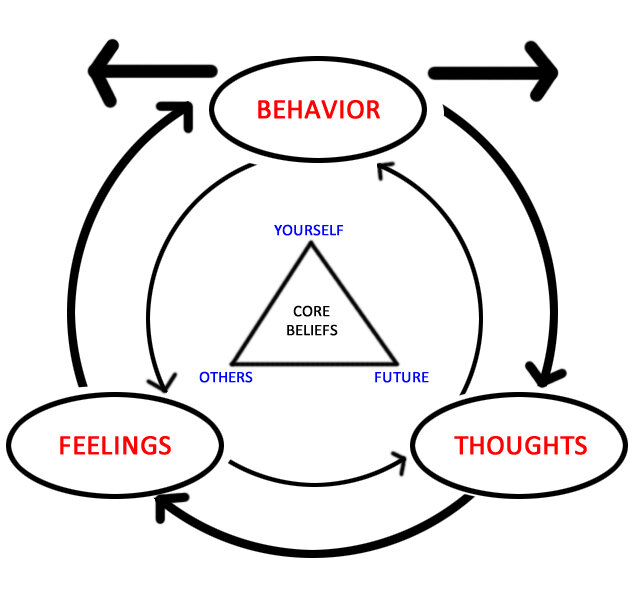
Our feelings are also key. We tend to repeat actions that make us feel good and avoid those that make us feel bad. At the same time, our thoughts shape our feelings. If you think, "I'm terrible at this," you'll likely feel discouraged and give up. But if you think, "This is challenging, but I'm learning," you'll feel more motivated to continue. This cycle shows that our internal world is a constant conversation between what we think, how we feel, and what we do.
The World Around Us
We don't live in a bubble. The world around us, from our friends and family to the design of our cities, constantly shapes our actions. These are the social and environmental determinants of behavior.
Think about your daily coffee. Do you make it at home or buy it? Your choice might be influenced by whether your friends all meet at a coffee shop before work (a social norm), or if there’s an inviting café on your route to the office (your physical environment). We often underestimate how much these external cues guide our decisions.
The people we surround ourselves with and the environments we inhabit can make certain behaviors easier and others harder, often without us even realizing it.
Culture also sets expectations for how we're supposed to act. In some cultures, it’s common to take a long lunch break, while in others, a quick desk lunch is the norm. Neither is inherently right or wrong, but the prevailing culture creates a path of least resistance that guides individual behavior.
Behavior Change in Action
The principles of behavior change are applied everywhere to help people make positive shifts in their lives. The context changes, but the core idea remains the same: understand the drivers of a behavior to effectively modify it.
| Context | Goal | Example Application |
|---|---|---|
| Public Health | Increase physical activity | Designing city parks with accessible walking trails and clear signage. |
| Education | Improve study habits | Teaching students how to break down large assignments into small, manageable tasks. |
| Workplace | Enhance team collaboration | Setting up communication channels that make it easy for team members to share progress. |
| Finance | Encourage saving money | Creating apps that automatically transfer a small amount of money into a savings account. |
By understanding the internal and external forces at play, we can move beyond simply telling people what to do. Instead, we can create supportive systems and environments that make desired behaviors the easier, more natural choice.
According to the provided text, what is the most effective approach to making lasting behavioral changes?
Which of the following is an example of an external determinant of behavior?