Understanding Automation
Defining Automation
What Is Automation?
At its heart, automation is about creating and applying technology to perform a task with minimal human help. It's not just about robots on an assembly line. It’s about designing a system that can follow a set of instructions to achieve a specific goal, whether that's brewing your morning coffee or managing a global supply chain.
Automation is the implementation of technology to perform tasks or processes without human intervention, enabling increased efficiency and productivity.
The idea isn't new. We've been automating for centuries, from ancient water clocks to the player pianos of the 19th century. What has changed is the scale and sophistication. Early automation was purely mechanical, designed for a single, repetitive job. Today's automation is often powered by software and can adapt to changing conditions. This evolution traces a path from simple, fixed machinery to the complex, intelligent systems we see now.
The Core Principles
Regardless of the era, all automation is built on a few key principles. These are the fundamental qualities that make an automated system valuable.
| Principle | Description | Example |
|---|---|---|
| Repeatability | The ability to perform the same task over and over without deviation. | A bottling machine filling thousands of bottles to the exact same level. |
| Rules-Based | The system follows a predefined set of logical rules. IF X, THEN Y. | An email filter automatically moving messages with the word "invoice" to a specific folder. |
| Consistency | The output is uniform and predictable every time the process runs. | A GPS giving the same route for the same start and end points under identical traffic conditions. |
| Efficiency | The task is completed faster, with fewer resources, or with less waste than a human. | An online checkout process that handles thousands of transactions per minute. |
These principles work together. A system that is repeatable and rules-based will naturally produce consistent results. When you combine that with speed, you get efficiency. Another key principle is reliability—the system needs to perform as expected, with minimal failures. This is where the human element becomes crucial.
Humans in the Loop
Automation isn’t about removing humans entirely. It's about changing their role. Instead of performing the repetitive task, a person's job becomes designing, monitoring, and maintaining the automated system. This concept is often called (HITL).
Think of a thermostat. It automates temperature regulation, but a human sets the desired temperature, decides when to turn it on or off, and calls for repairs if it breaks. The human provides the goal and handles exceptions the system can't manage on its own. The same applies to more complex systems, like airline autopilot or the recommendation algorithms on streaming services. Humans define the objectives and intervene when the system encounters a novel situation or makes a mistake.
Automation in Practice
We interact with automated systems constantly. When you use an ATM, you're using a machine that automates the work of a bank teller. When you receive a shipping notification for an online order, that's an automated workflow triggered by a change in your order's status in a database.
In industry, (RPA) uses software "bots" to perform routine digital tasks, like transferring data from a spreadsheet to a CRM system. These bots mimic human keystrokes and mouse clicks to interact with applications just as a person would, but they do it 24/7 without getting tired or making typos. This frees up employees to focus on more creative and strategic work that requires human judgment.
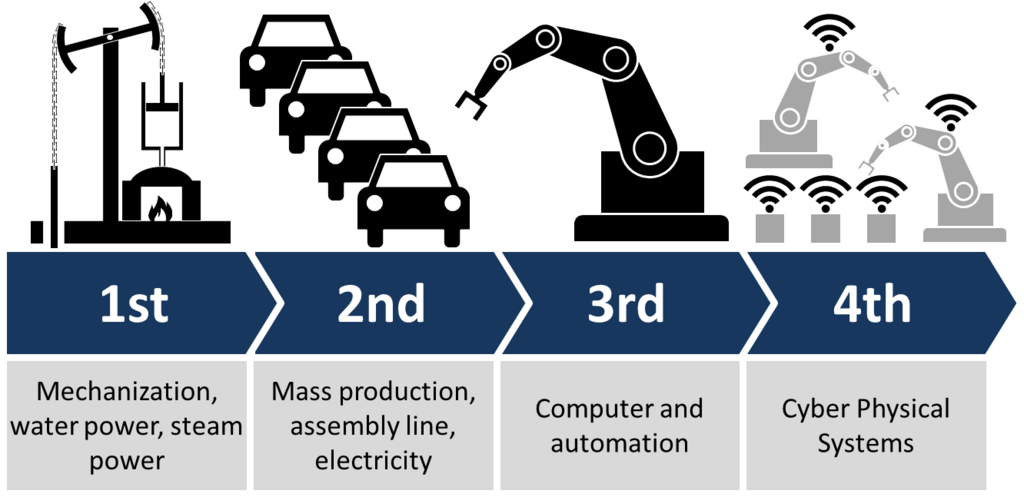
From industrial manufacturing to digital marketing, automation streamlines processes, reduces errors, and allows for operations at a scale previously unimaginable. Understanding its core principles is the first step toward seeing where and how it can be applied effectively.
Let's check your understanding of these foundational ideas.
What is the primary goal of automation?
How has automation evolved from its earliest forms to today's systems?
By mastering these fundamentals, you can better identify opportunities for automation and understand the logic behind how these systems function.