Understanding Artificial Intelligence
Introduction to Artificial Intelligence
What is Artificial Intelligence?
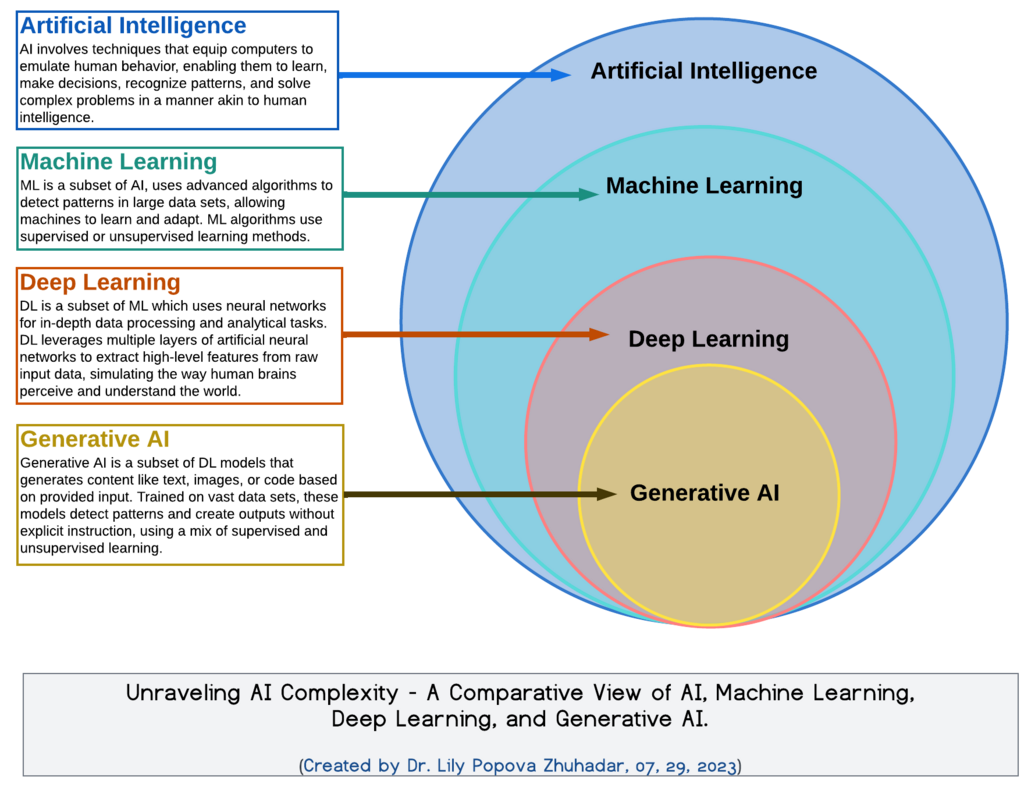
At its core, Artificial Intelligence (AI) is the science of making machines that can think and learn like humans. It's a broad field in computer science focused on creating systems that can perform tasks that typically require human intelligence. This includes things like recognizing speech, making decisions, translating languages, and identifying images.
Think of it this way: a traditional computer program follows instructions. An AI system, on the other hand, can learn from experience and adapt to new inputs.
Artificial Intelligence
noun
A field of computer science dedicated to creating systems capable of performing tasks that normally require human intelligence.
AI isn't a single technology. It's an umbrella term that covers various methods and approaches. Two of the most important concepts within AI are machine learning and deep learning, which are ways for computers to learn from data without being explicitly programmed for every single task.
A Brief History of AI
The idea of intelligent machines has been around for centuries, but the formal field of AI research began in the mid-20th century. The journey has been one of exciting breakthroughs and periods of slow progress, often called "AI winters."
The modern journey of AI began with pioneers who believed thinking machines were possible.
In 1950, computer scientist Alan Turing proposed the "Turing Test" as a way to measure a machine's intelligence. A few years later, in 1956, the term "artificial intelligence" was officially coined at a workshop at Dartmouth College. This event is widely considered the birth of AI as an academic field.
Early AI research was full of optimism, focusing on problem-solving and symbolic reasoning. However, the limited computing power and data of the time made progress difficult. Interest and funding waned during the AI winters of the 1970s and late 1980s.
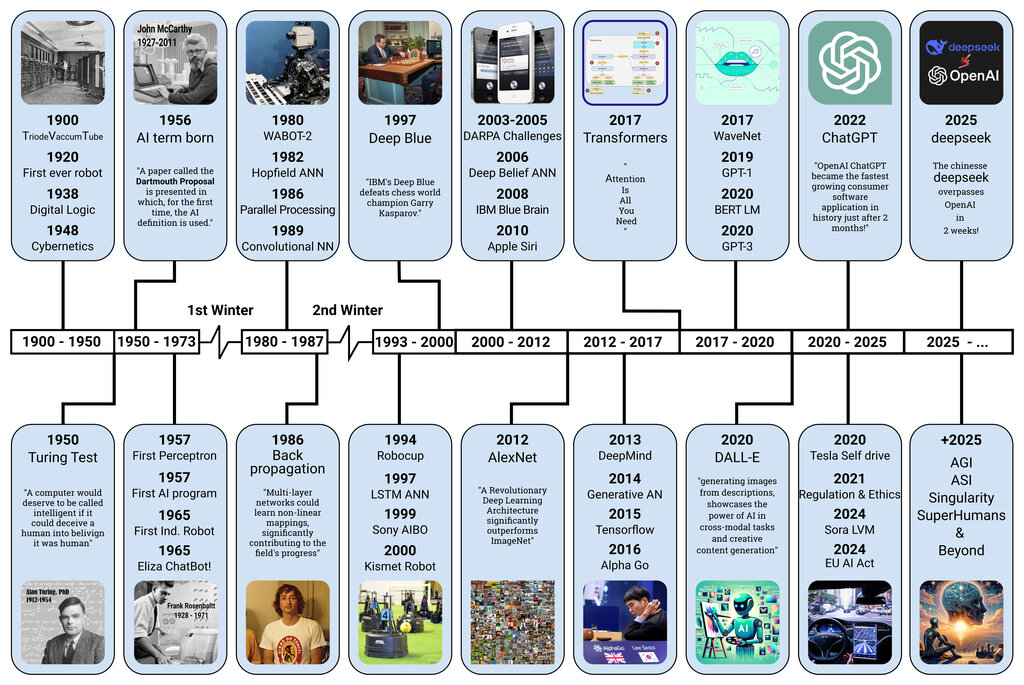
Things began to change in the 1990s and 2000s. The rise of the internet created vast amounts of data, and computers became exponentially more powerful. These two ingredients—big data and massive computing power—fueled the resurgence of machine learning and led to the deep learning revolution we're seeing today.
Why AI Matters Today
AI is no longer just a subject of science fiction. It has become a fundamental part of our modern world, quietly powering many of the services we use every day. From the recommendation engines that suggest what to watch next to the navigation apps that find the fastest route, AI is working behind the scenes.
Its significance lies in its ability to process and find patterns in amounts of data that are simply too large for a human to handle. This capability is transforming entire industries. In medicine, AI helps analyze medical images to detect diseases earlier. In finance, it identifies fraudulent transactions. In science, it accelerates research by analyzing complex datasets from experiments.
Essentially, AI is a tool for augmenting human capabilities, helping us solve complex problems more efficiently and effectively.
The Basic Principles
So, how does an AI system learn? The most common approach today is machine learning. Instead of writing step-by-step rules, developers feed the system a large amount of data and let it learn the patterns on its own.
There are three main types of machine learning:
| Type | Description | Example |
|---|---|---|
| Supervised Learning | The AI learns from data that is labeled. | Learning to identify cat pictures from a dataset where each photo is marked as "cat" or "not cat." |
| Unsupervised Learning | The AI finds hidden patterns in unlabeled data. | Grouping customers into different segments based on their purchasing behavior, without any prior labels. |
| Reinforcement Learning | The AI learns by trial and error, receiving rewards for good actions and penalties for bad ones. | An AI learning to play a video game by getting a high score (reward) for winning and a low score (penalty) for losing. |
These learning principles are the foundation of AI technologies. By using data to train models, AI systems can make predictions, classify information, and generate new content, all without explicit human instructions for each step. This ability to learn and adapt is what makes AI such a powerful and transformative technology.
What is the core concept of Artificial Intelligence (AI)?
What major event is widely considered the official birth of AI as an academic field?