Understanding Artificial Intelligence
Introduction to Artificial Intelligence
What Is Artificial Intelligence?
At its heart, artificial intelligence is the science of making machines smart. It's a field of computer science dedicated to creating systems that can perform tasks that normally require human intelligence. This includes things like learning from experience, solving problems, understanding language, and recognizing objects in an image.
Think of it this way: we're trying to build machines that can not only follow instructions, but can also think, reason, and adapt.
The term AI covers a vast range of technologies. It’s not just one thing, but a collection of different approaches and tools. Some AI is relatively simple, like the system that recommends movies based on what you've watched before. Others are incredibly complex, like the AI that helps scientists discover new medicines.
Artificial Intelligence
noun
A field of computer science focused on creating systems capable of performing tasks that typically require human intelligence, such as learning, reasoning, and problem-solving.
A Quick Trip Through Time
The idea of intelligent machines has been around for centuries, long before computers existed. But the modern field of AI officially began in the summer of 1956 at a workshop at Dartmouth College. It was here that a group of pioneering scientists coined the term "artificial intelligence" and laid out the ambitious goal of making machines that could think.
The early years were filled with excitement and bold predictions. Researchers developed programs that could solve algebra problems and play checkers better than most humans. However, the initial progress was slow. The computers of the day weren't powerful enough, and the problems turned out to be much harder than expected. This led to periods known as "AI winters," when funding dried up and public interest waned.
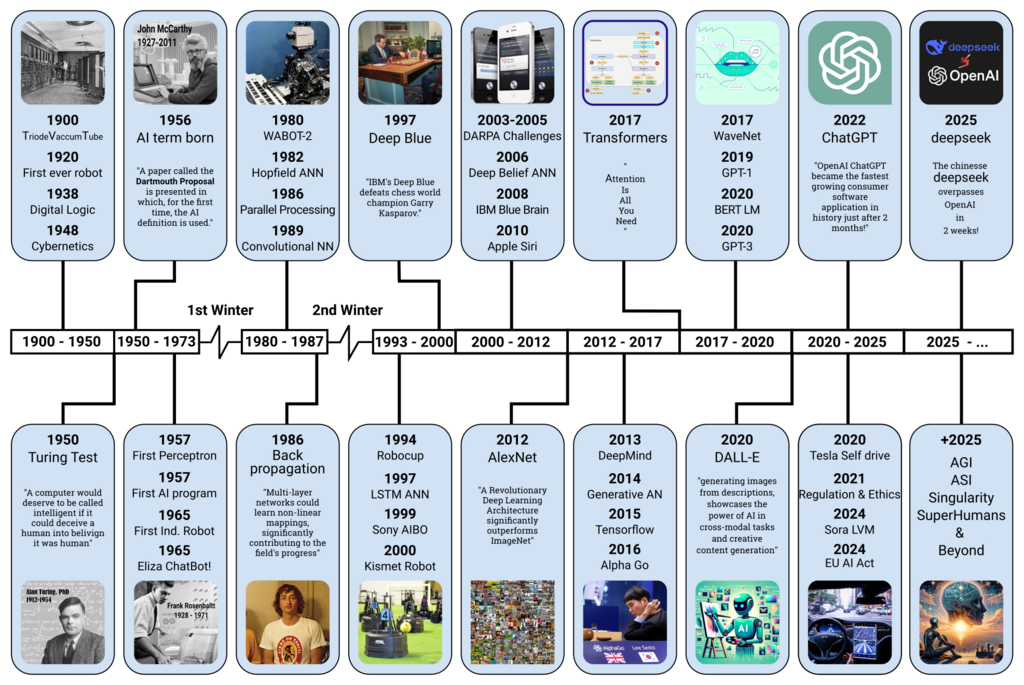
Things started to change in the 1990s and 2000s. The rise of the internet created massive amounts of data, and computers became exponentially more powerful. These two ingredients, big data and powerful hardware, fueled a resurgence in AI research, particularly in a subfield called machine learning. This led to breakthroughs like IBM's Deep Blue defeating chess champion Garry Kasparov in 1997, a landmark moment for AI.
The Three Flavors of AI
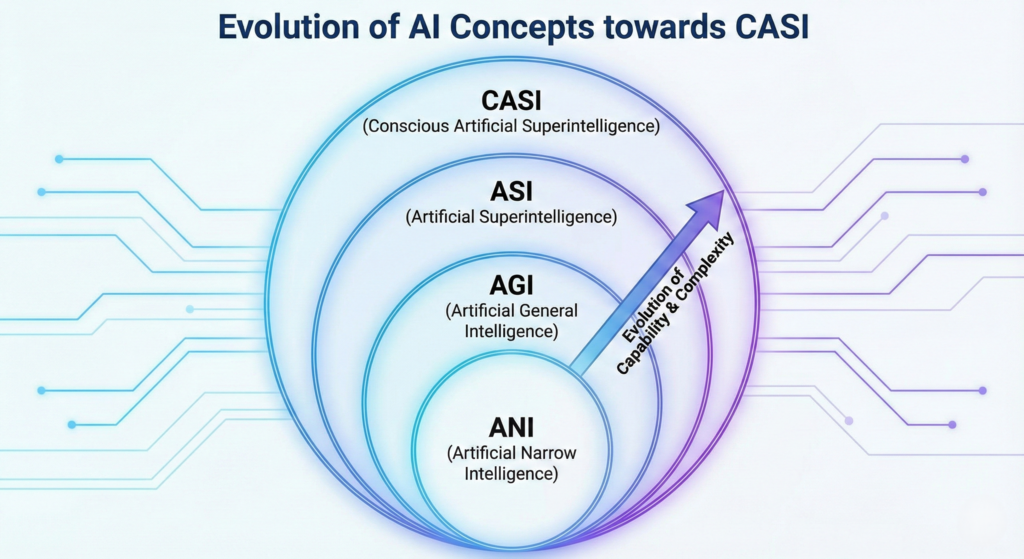
When people talk about AI, they are often referring to different concepts. We can group AI into three main categories based on its capabilities.
| Type | Description | Example |
|---|---|---|
| Artificial Narrow Intelligence (ANI) | Specializes in one specific task. | A spam filter, a chess program, or a voice assistant like Siri. |
| Artificial General Intelligence (AGI) | Possesses human-like intelligence; can understand, learn, and apply knowledge across various domains. | This is the AI seen in sci-fi movies like HAL 9000. It doesn't exist yet. |
| Artificial Superintelligence (ASI) | An intellect that is much smarter than the best human brains in virtually every field. | This is a hypothetical future AI that could solve problems beyond human comprehension. |
Right now, every AI system in the world is a form of Narrow AI. From self-driving cars to the algorithms that curate your social media feed, these systems are experts in their specific domain, but they can't take their skills and apply them to something completely new. The quest to build AGI is one of the most significant challenges in computer science today.
What is the primary goal of the field of artificial intelligence?
The term 'artificial intelligence' was officially coined at a workshop in 1956 at which institution?
Understanding these foundational concepts gives you a framework for thinking about AI's role in the world and where the technology might be heading next.