Understanding Artificial Intelligence
Introduction to AI
What Exactly is AI?
Artificial intelligence is the theory and development of computer systems able to perform tasks that normally require human intelligence. This includes things like visual perception, speech recognition, decision-making, and translation between languages. At its core, AI isn't about creating a machine that is a human, but one that can simulate human thinking to solve problems.
Artificial Intelligence
noun
A branch of computer science dealing with the simulation of intelligent behavior in computers.
Think of it as a broad field encompassing many different methods and technologies. Instead of being explicitly programmed with rules for every possible situation, many AI systems are designed to learn from vast amounts of data, identify patterns, and make predictions or decisions on their own.
A Journey Through Time
The dream of creating intelligent machines is ancient, but the formal field of AI research began in the mid-20th century. A pivotal moment was the Dartmouth Workshop in 1956, where the term "Artificial Intelligence" was officially coined. This event brought together pioneers who were optimistic about creating thinking machines within a few decades.
Early research was promising, with programs that could solve algebra problems and prove logical theorems. However, the initial excitement soon met the reality of limited computing power and data. Progress slowed, leading to periods known as "AI winters" in the 1970s and late 1980s, when funding and interest waned.
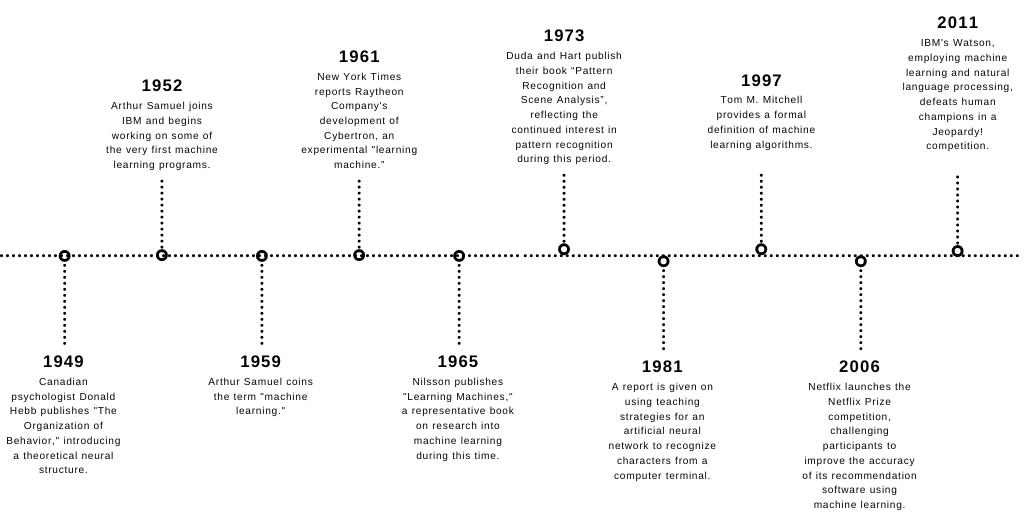
The tide turned with the advent of more powerful computers, the explosion of the internet, and the availability of massive datasets. These factors fueled a renaissance in AI, particularly in a subfield called machine learning. This revival led to breakthroughs that have transformed AI from a niche academic pursuit into a powerful technology shaping our world.
Key Milestones:
- 1950: Alan Turing proposes the Turing Test to determine a machine's ability to exhibit intelligent behavior.
- 1956: The term "Artificial Intelligence" is coined at the Dartmouth Workshop.
- 1997: IBM's Deep Blue defeats world chess champion Garry Kasparov.
- 2011: IBM's Watson wins the game show Jeopardy! against former champions.
- 2010s: The rise of deep learning leads to major advances in image recognition, natural language processing, and more.
The Many Faces of AI
AI is not a single entity but a collection of specialized subfields, each focused on a different aspect of intelligence. You've likely encountered these concepts before, but it's useful to see how they fit together.
Here’s a quick overview of some major branches:
-
Machine Learning (ML): This is the most common form of AI today. Instead of being programmed with explicit instructions, ML algorithms learn patterns from data. For example, a spam filter learns to identify junk mail by analyzing thousands of examples of spam and legitimate emails.
-
Deep Learning: A subfield of machine learning inspired by the structure of the human brain. It uses complex, multi-layered neural networks to learn from enormous datasets. Deep learning powers many modern AI applications, like voice assistants and self-driving car technology.
-
Natural Language Processing (NLP): This branch focuses on the interaction between computers and human language. NLP enables machines to read, understand, interpret, and generate human language. Think of translation apps or chatbots.
-
Computer Vision: This area deals with how computers can be made to gain high-level understanding from digital images or videos. It seeks to automate tasks that the human visual system can do, such as facial recognition or identifying objects in a photo.
Societal Impact
The rise of AI is more than a technological shift; it's a societal one. It's transforming industries from healthcare, where it helps diagnose diseases, to finance, where it detects fraudulent transactions. AI optimizes supply chains, personalizes entertainment, and powers the search engines we use every day.
This rapid integration also brings significant challenges. Questions around data privacy, algorithmic bias, and the future of work are becoming increasingly important. As AI systems make more decisions that affect our lives, ensuring they are developed and deployed ethically and responsibly is a critical task for technologists, policymakers, and society as a whole.

Understanding the fundamentals of AI is no longer just for computer scientists. It's becoming essential for navigating the modern world and participating in conversations about our collective future.
What is the primary goal of Artificial Intelligence as described in its modern context?
The event that is credited with officially coining the term "Artificial Intelligence" and bringing together pioneers in the field was the:
Now that we've covered the basics, let's move on to explore how these different areas of AI are applied in the real world.