Understanding Arabic Greetings
Arabic Alphabet
Meet the Arabic Alphabet
The Arabic alphabet is the foundation of the language. It has 28 letters, and unlike English, it's written from right to left. Almost all letters connect to each other, giving Arabic its distinct, flowing cursive look. This is different from English cursive, which is a stylistic choice. In Arabic, connecting letters is a rule.
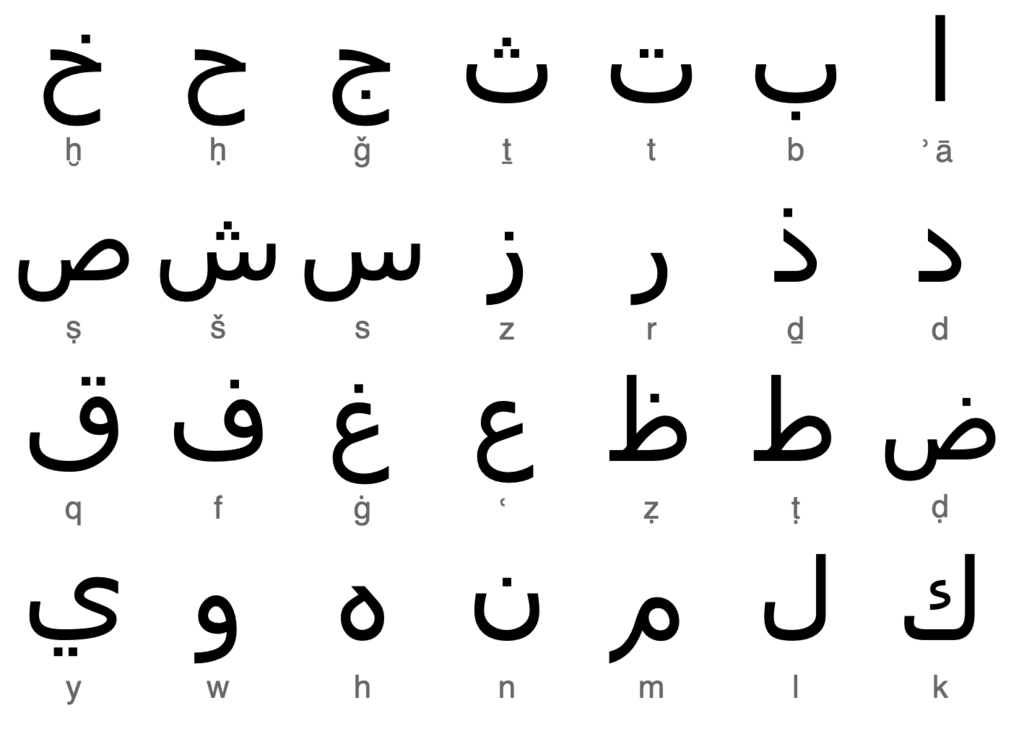
One of the first things you'll notice is that the shape of a letter changes depending on where it sits in a word. This might seem tricky at first, but it follows a consistent and logical pattern.
Four Forms of Every Letter
Each letter has up to four forms, depending on its position:
- Isolated: When the letter stands alone.
- Initial: When it's the first letter in a word.
- Medial: When it's in the middle of a word.
- Final: When it's the last letter in a word.
Think of it like puzzle pieces. Most letters have connectors on both sides, allowing them to link up with the letters before and after. The initial form connects to the left, the medial form connects to both sides, and the final form connects to the right.
| Letter | Isolated | Initial | Medial | Final |
|---|---|---|---|---|
| ب (bāʾ) | ب | بـ | ـبـ | ـب |
| ن (nūn) | ن | نـ | ـنـ | ـن |
| ج (jīm) | ج | جـ | ـجـ | ـج |
The table above shows three letters that connect on both sides. Notice the small horizontal line, called a kashida, that extends from the letter to connect it to the next one. This is what creates the continuous script.
A small group of six letters are 'one-way connectors.' They only connect to the letter on their right and never to the left. We'll point these out in the main alphabet chart.
The 28 Letters and Their Sounds
Now, let's look at all 28 letters. The chart below lists each letter, its name, and its approximate sound in English. Pay close attention to the pronunciation notes, as some Arabic sounds don't exist in English.
| Letter | Name | Approx. Sound | Notes |
|---|---|---|---|
| ا | ʾalif | a / ā | Like 'a' in 'cat' or 'father'. A one-way connector. |
| ب | bāʾ | b | Like 'b' in 'bed'. |
| ت | tāʾ | t | Like 't' in 'top'. |
| ث | thāʾ | th | Like 'th' in 'three'. |
| ج | jīm | j | Like 'j' in 'jam'. |
| ح | ḥāʾ | ḥ | A sharp, breathy 'h' from the throat. No English equivalent. |
| خ | khāʾ | kh | Like the 'ch' in Scottish 'loch'. |
| د | dāl | d | Like 'd' in 'dog'. A one-way connector. |
| ذ | dhāl | dh | Like 'th' in 'this'. A one-way connector. |
| ر | rāʾ | r | A rolled 'r', like in Spanish. A one-way connector. |
| ز | zāy | z | Like 'z' in 'zoo'. A one-way connector. |
| س | sīn | s | Like 's' in 'see'. |
| ش | shīn | sh | Like 'sh' in 'shoe'. |
| ص | ṣād | ṣ | An 'emphatic' s, pronounced with the back of the tongue raised. |
| ض | ḍād | ḍ | An 'emphatic' d, with the back of the tongue raised. |
| ط | ṭāʾ | ṭ | An 'emphatic' t. |
| ظ | ẓāʾ | ẓ | An 'emphatic' dh sound. |
| ع | ʿayn | ʿ | A deep sound from the back of the throat. No English equivalent. |
| غ | ghayn | gh | A gargling sound, similar to the French 'r'. |
| ف | fāʾ | f | Like 'f' in 'fish'. |
| ق | qāf | q | A 'k' sound made further back in the throat. |
| ك | kāf | k | Like 'k' in 'kite'. |
| ل | lām | l | Like 'l' in 'light'. |
| م | mīm | m | Like 'm' in 'moon'. |
| ن | nūn | n | Like 'n' in 'no'. |
| ه | hāʾ | h | Like 'h' in 'hat'. |
| و | wāw | w / ū | Like 'w' in 'water' or 'oo' in 'moon'. A one-way connector. |
| ي | yāʾ | y / ī | Like 'y' in 'yes' or 'ee' in 'see'. |
Some letters look very similar, differing only by the number or placement of dots. This is a common feature in Arabic script, so paying attention to the dots is crucial.
For example, compare:
- ب (b) with one dot below.
- ت (t) with two dots above.
- ث (th) with three dots above.
And another group:
- ج (j) with one dot below.
- ح (ḥ) with no dots.
- خ (kh) with one dot above.
Recognizing these patterns will make learning to read much faster. Take your time getting to know these shapes and sounds; they are the building blocks for everything else in Arabic.
Let's test your knowledge of the alphabet forms and sounds.
How many letters are in the Arabic alphabet?
What is the primary reason for the flowing, cursive appearance of written Arabic?
With the alphabet as your foundation, you're ready to start putting letters together to form words.