Understanding and Managing Dry Eye
Understanding Dry Eye
What is Dry Eye?
Dry eye disease is a common condition that occurs when your tears aren't able to provide adequate lubrication for your eyes. This can happen for two main reasons: your eyes don't produce enough tears, or they produce poor-quality tears that evaporate too quickly.
This imbalance can lead to inflammation and damage of the eye's surface. It might feel like a gritty or stinging sensation, and ironically, it can sometimes even cause watery eyes as the body tries to compensate for the irritation.
The Tear Factory
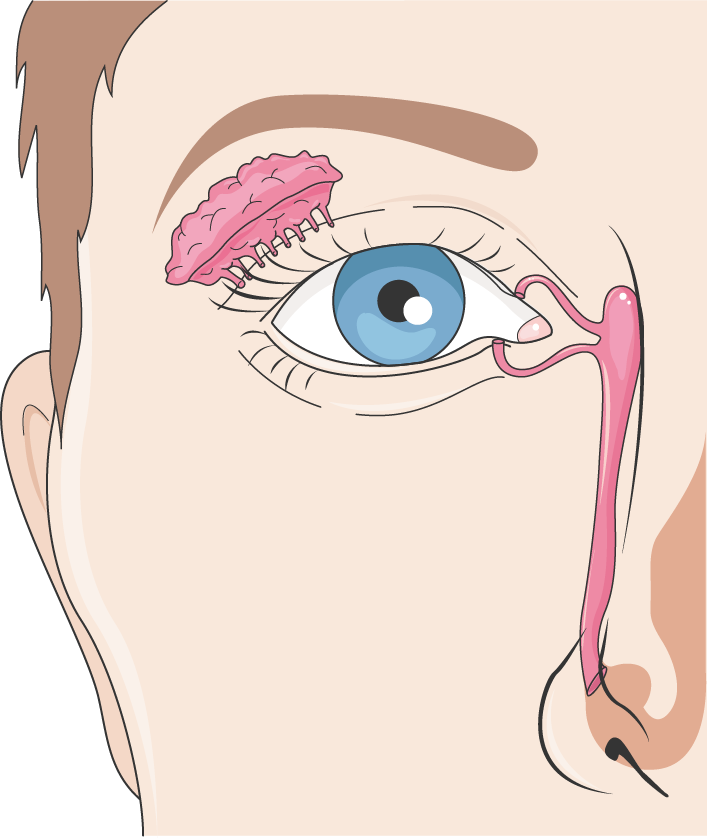
Your eyes have a sophisticated system for producing and maintaining tears. It’s not just one gland doing all the work. Three different types of glands collaborate to create the perfect tear film.
The main volume of your tears, the watery part, comes from the lacrimal glands, located above each eyeball. Think of them as tiny, automatic sprinklers that keep the eye moist.
But water alone would evaporate in seconds. That's where the meibomian glands come in. These are tiny oil glands lining the edge of your eyelids. With every blink, they release a small amount of oil that forms the outermost layer of your tears, preventing them from drying out.
Finally, microscopic goblet cells in the conjunctiva, the clear tissue covering the white of your eye, produce a mucus-like substance. This mucus helps the tear film spread evenly and stick to the surface of the eye.
More Than Just Water
A healthy tear isn't just salty water. It's a complex, three-layered coating called the tear film. Each layer has a specific job to protect and nourish your eyes.
- The Mucus Layer: This innermost layer is super thin and acts like a primer, helping the watery layer spread evenly over the cornea and stick to it.
- The Watery (Aqueous) Layer: This is the thickest layer. It cleanses the eye, washes away foreign particles, and provides essential oxygen and nutrients to the cornea.
- The Oily (Lipid) Layer: The outermost layer is a thin film of oil. Its crucial job is to seal the tear film and prevent the watery layer from evaporating.
When these three layers are in balance, your eyes stay comfortable, clear, and protected. Dry eye disease occurs when something disrupts this delicate balance.
Who Gets Dry Eye?
Dry eye is extremely common, affecting millions of people worldwide. While anyone can experience it, certain factors increase the risk.
Age is a significant factor. People over 50 tend to produce fewer tears, making them more susceptible. The condition is also more prevalent in women, particularly after menopause, due to hormonal changes that can affect tear production.
Environmental factors play a role too. Living in a dry, windy, or smoky climate can accelerate tear evaporation. Similarly, prolonged screen time and extensive reading can lead to dry eye symptoms because people tend to blink less frequently during these activities.
Understanding the basics of tear production and function is the first step in recognizing why our eyes sometimes feel uncomfortable. The tear film is a small but vital part of maintaining clear vision and overall eye health.
What are the two main reasons a person might develop dry eye disease?
Which glands are responsible for producing the oily layer of the tear film that prevents evaporation?