Understanding AI Language Models
Introduction to Large Language Models
What Are Large Language Models?
At its core, a large language model, or LLM, is a type of artificial intelligence designed to understand and generate human language. Think of it as a sophisticated pattern-matching system. By analyzing vast amounts of text, it learns the statistical relationships between words, allowing it to predict the next word in a sentence with remarkable accuracy.
A large language model (LLM) is an AI model trained on massive amounts of text data that can understand and generate human-like text, recognize patterns in language, and perform a wide variety of language tasks without task-specific training.
The "large" in LLM is not an exaggeration. These models contain billions, sometimes trillions, of parameters, which are like internal knobs that get tuned during training. This immense scale allows them to capture the complex nuances, grammar, and even reasoning embedded in human language.
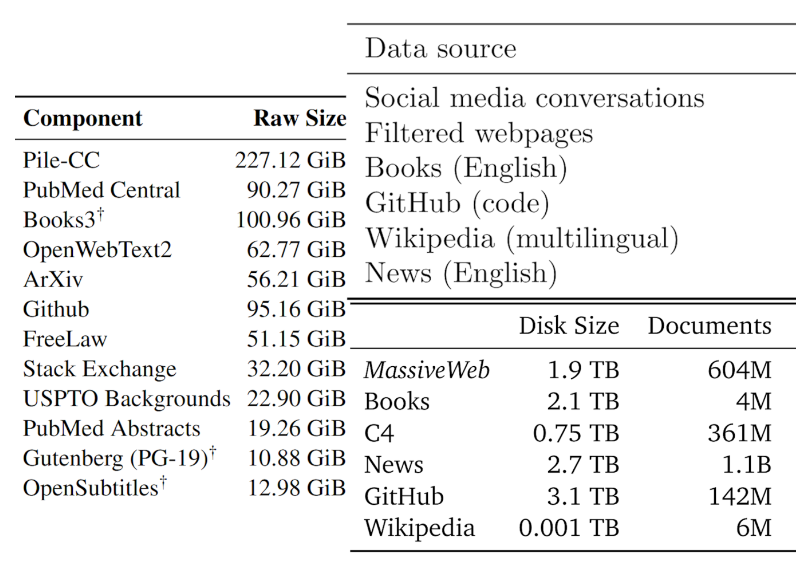
To build such a model, you need a colossal amount of data. LLMs are trained on diverse and massive datasets, often scraped from the internet, containing everything from books and articles to websites and code. This variety is crucial for developing a broad understanding of the world.
How We Got Here
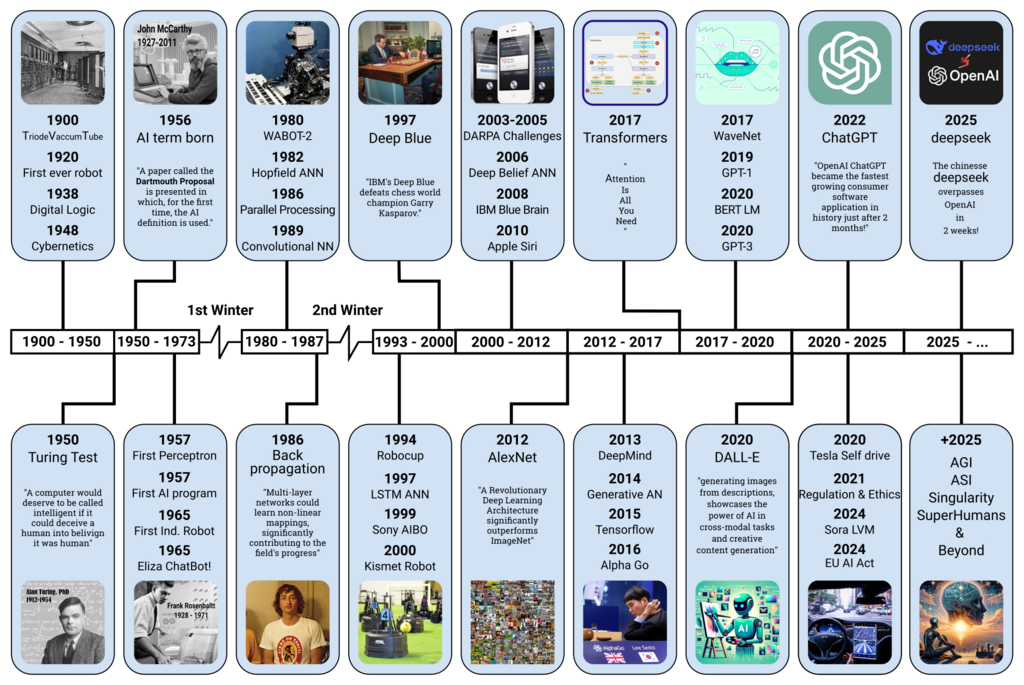
The journey to today's LLMs is a story of steady progress. Early attempts at language modeling, known as statistical language models, were much simpler. For instance, an n-gram model would look at a sequence of words and calculate the probability of the next word. A 2-gram (or bigram) model might know that after the word "thank," the word "you" is highly probable.
These models were useful but had a major limitation: they couldn't grasp long-range context. They didn't understand that a word at the beginning of a paragraph could influence a word at the end. The breakthrough came with the development of neural networks, particularly a type of architecture called the Transformer, introduced in 2017. This new model was exceptionally good at handling long sequences of data, paving the way for the LLMs we use today.
Training an LLM
So how does a model learn from all that data? Most LLMs are trained using a technique called self-supervised learning. This is a clever approach where the training data itself provides the supervision. There's no need for humans to manually label every piece of text.
Instead, the model is given a simple task. For example, it might be presented with a sentence where a word has been removed. The model's goal is to predict the missing word.
Consider the sentence: "The cat sat on the ___."
The model makes a guess. Initially, its guesses are random. But when it's told the correct answer is "mat," it adjusts its internal parameters slightly to make it more likely to guess "mat" in a similar context in the future. Repeat this process billions of times with trillions of words, and the model starts to build an intricate internal representation of language.
This self-supervised process allows LLMs to learn grammar, facts, and reasoning abilities directly from the raw text data they are fed, without explicit human instruction for each detail.
The basic architecture behind modern LLMs is the Transformer. While the details are complex, its key innovation is a mechanism called attention. Attention allows the model to weigh the importance of different words in the input text when it's producing an output. This is how it solves the long-range context problem. It can "pay attention" to a word from many sentences ago if it's relevant to what it's generating now.
This structure, combined with massive scale and self-supervised training, is the fundamental recipe for creating a large language model.
At its most fundamental level, what is a large language model (LLM) designed to do?
What key architectural innovation, introduced in the Transformer model, allows modern LLMs to handle long-range context effectively?
This foundational knowledge sets the stage for understanding the more specific components and applications of LLMs.