Understanding AI Language Model Capabilities
Introduction to AI Language Models
What Are Language Models?
At its core, an AI language model is a system trained to understand and generate human language. Think of it as a sophisticated prediction engine. Its primary goal is to look at a sequence of words and predict what the next word should be. It does this over and over, stringing together predictions to form coherent sentences and paragraphs.
For example, if you give it the phrase "The cat sat on the...", the model uses its vast knowledge of language patterns to predict that the next word is likely "mat," "couch," or "floor," rather than "banana" or "sky."
This simple principle of next-word prediction, when scaled up with massive amounts of data and computing power, allows language models to perform a wide range of tasks, from answering questions and summarizing articles to writing code and translating languages.
A Brief History
The journey to today's powerful AI models wasn't a short one. Early attempts at language processing in the mid-20th century were based on hand-written rules. Linguists and programmers would try to explicitly define the rules of grammar for a computer. This approach was incredibly difficult and brittle; language is full of exceptions and nuances that are hard to capture in a rulebook.
A bigger leap came with statistical models, like n-grams, which became popular in the 1990s. Instead of using grammar rules, these models calculated the probability of a word appearing after a sequence of previous words. For example, a 2-gram (or bigram) model would look at the previous word to guess the next one. This was a significant improvement, but it lacked a deeper understanding of context.
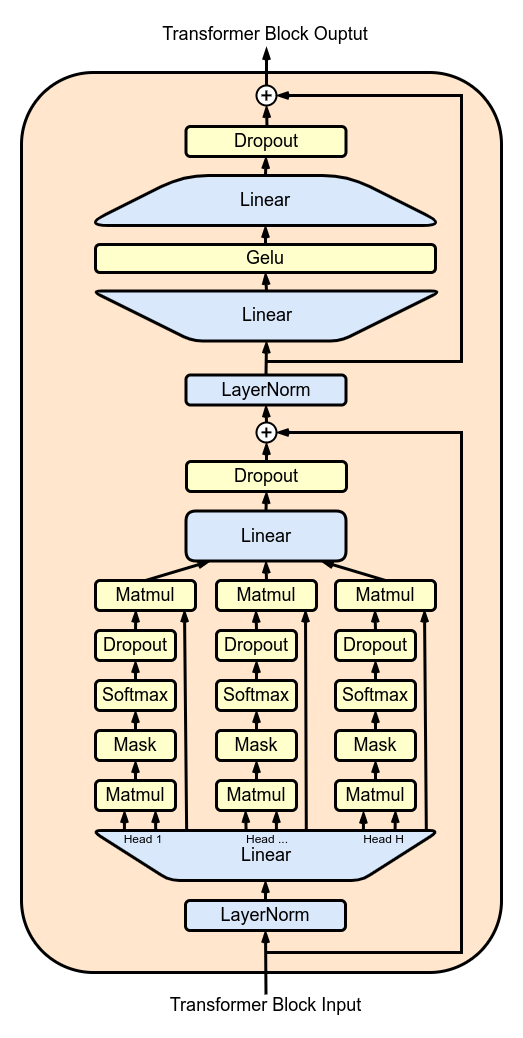
The real revolution began with the rise of neural networks and, specifically, the invention of the Transformer architecture in 2017. This new design allowed models to handle long-range dependencies in text and weigh the importance of different words when making predictions. It's the foundation for nearly all modern language models.
How They Learn
Modern language models learn through a process called deep learning, which involves training a large neural network on an enormous amount of text data. This process happens in two main stages: pre-training and fine-tuning.
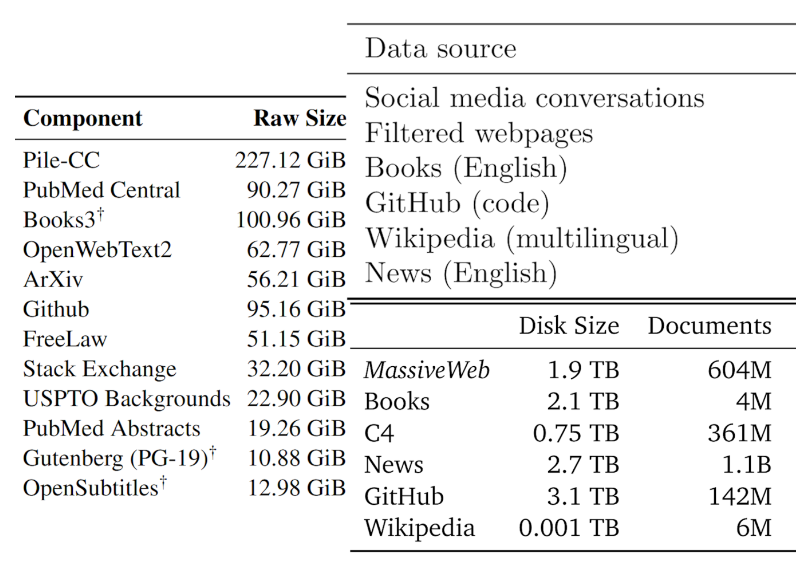
Pre-training is the foundational step. The model is fed a massive dataset, typically scraped from the internet, containing books, articles, websites, and more. During this phase, the model learns grammar, facts about the world, reasoning skills, and the statistical relationships between words. It isn't taught anything explicitly; it simply learns to predict the next word in all the text it sees. The scale of this data is hard to overstate, often measured in terabytes.
Fine-tuning comes next. After the general knowledge is established, the model is trained on a smaller, more specialized dataset. This process refines the model's abilities for a specific purpose, like carrying on a conversation, following instructions, or adhering to safety guidelines. This is how a general-purpose model becomes a helpful assistant like ChatGPT.
Large language models (LLMs) are AI systems that understand and create human language, doing tasks like summarizing articles, answering questions, writing code, and more.
The architecture that makes this possible is the Transformer. A key innovation within the Transformer is the "attention mechanism." This allows the model to weigh the importance of different words in the input text when generating a response. For example, in the sentence "The robot picked up the red ball because it was light," the attention mechanism helps the model understand that "it" refers to the "ball," not the "robot."
Prominent Models
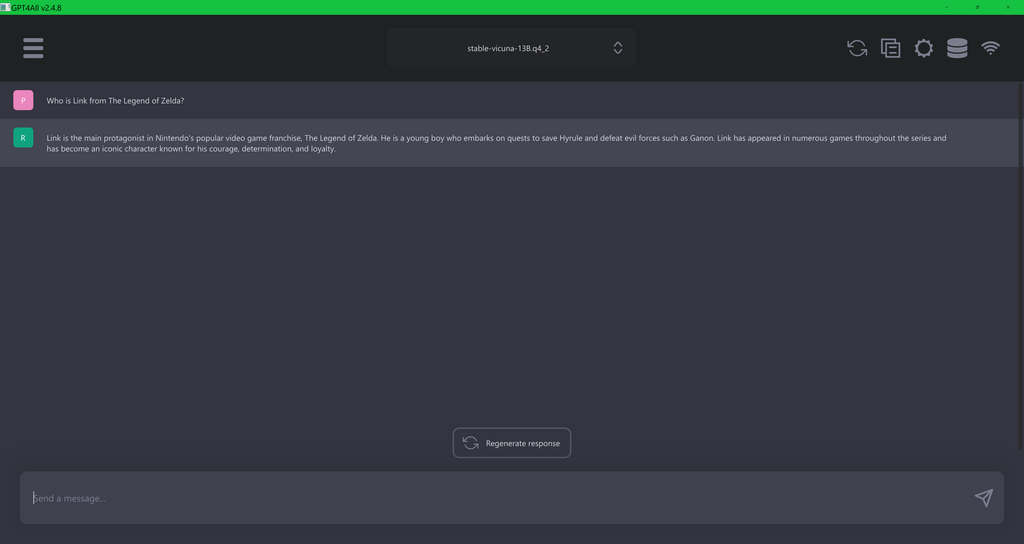
The field of language models is fast-moving, with many different models developed by various organizations. One of the most well-known families of models is OpenAI's Generative Pre-trained Transformer, or GPT. This series has seen rapid evolution, from the initial GPT model to the highly capable GPT-4 that powers many current applications.
These models are not just academic curiosities. They are the engines behind the chatbots, writing assistants, and search tools that millions of people use every day. They demonstrate a powerful ability to understand context, generate creative text, and synthesize information in a useful way.
Understanding these fundamentals—the goal of next-word prediction, the evolution from rules to statistics to neural networks, and the massive scale of the training process—is the first step to appreciating what these powerful tools can do.
Let's check your understanding of the core concepts of AI language models.
What is the fundamental task an AI language model is trained to perform at its most basic level?
Which of the following represents the correct chronological evolution of language processing techniques, from oldest to newest?
Now that you have a foundational understanding, you're ready to explore how these models are applied in the real world.