Understanding AI Fundamentals
Introduction to Artificial Intelligence
What Is Artificial Intelligence?
Artificial Intelligence, or AI, is the science of making machines that can think and act like humans. It's a broad field in computer science focused on building smart systems that can perform tasks that typically require human intelligence. This includes things like learning from experience, solving problems, understanding language, and recognizing objects and sounds.
Think of AI not as a single thing, but as a collection of related technologies. You've likely heard terms like Machine Learning and Deep Learning. These are subsets of AI. Machine Learning allows systems to learn from data without being explicitly programmed. Deep Learning is an even more specialized type of machine learning that uses complex neural networks to handle intricate patterns, like recognizing a face in a photo.
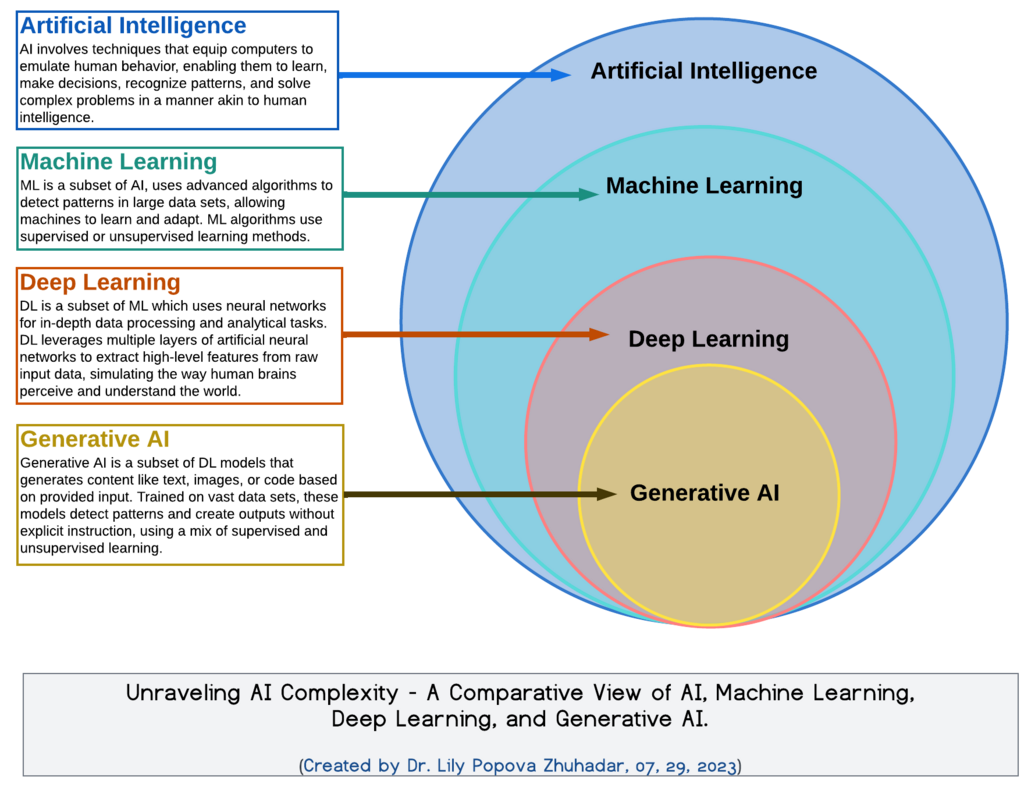
These concepts build on each other, with each layer enabling more sophisticated capabilities. At its core, AI aims to replicate or simulate human intelligence in machines.
A Quick History
The history of artificial intelligence reveals a fascinating journey from philosophical thought experiments to technologies that are now reshaping our world.
The dream of intelligent machines has been around for centuries, but the formal field of AI research began in the summer of 1956 at a workshop at Dartmouth College. It was there that the term "Artificial Intelligence" was coined.
The early years were filled with optimism. Researchers created programs that could solve algebra problems, prove theorems, and speak simple English. But the initial excitement soon faded as problems turned out to be much harder than expected. This led to periods known as "AI winters," when funding and interest in the field dried up.
Despite these setbacks, progress continued. The development of more powerful computers and the availability of vast amounts of data fueled a resurgence. Key milestones marked AI's growing power, such as IBM's Deep Blue computer defeating chess champion Garry Kasparov in 1997. This victory showed that a machine could master a complex, strategic game once thought to be the exclusive domain of human intellect.

Recent years have seen an explosion in AI capabilities, driven by advances in deep learning. This has led to the powerful AI tools we see today, from virtual assistants to self-driving cars.
Types of AI
Not all AI is created equal. We can categorize AI based on its capabilities. The two main types are Narrow AI and General AI.
Narrow AI
noun
Also known as Weak AI, this is AI designed and trained for a particular task. All the AI we use today is Narrow AI.
Narrow AI is everywhere. It powers the recommendation engine that suggests movies for you on Netflix. It's the technology behind spam filters in your email and the software that recognizes your face to unlock your phone. While these systems can seem very intelligent, their intelligence is limited to a narrow, predefined range.
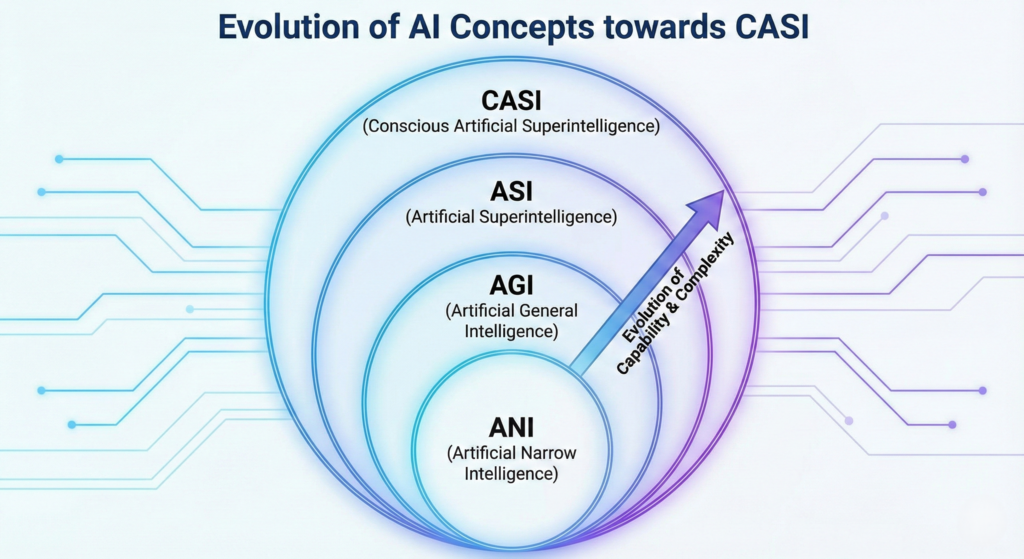
Artificial General Intelligence (AGI), or Strong AI, is different. It refers to a machine with the ability to understand, learn, and apply its intelligence to solve any problem, much like a human being. AGI doesn't exist yet; it's still the stuff of science fiction and a long-term goal for many researchers.
Beyond AGI is the concept of Artificial Superintelligence (ASI), an intellect that would be much smarter than the best human brains in practically every field. This progression from simple, task-specific intelligence to something that matches and then surpasses human intellect is a central idea in the future of AI.
Impact and Ethics
AI is already changing our world. In medicine, it helps doctors diagnose diseases earlier and more accurately. In transportation, it's paving the way for self-driving vehicles that could make our roads safer. It's automating repetitive tasks, freeing up humans for more creative work.
But with great power comes great responsibility. The rise of AI raises important ethical questions that we need to address as a society.
| Ethical Consideration | Description |
|---|---|
| Bias | AI models learn from data. If the data reflects existing societal biases (like gender or racial prejudice), the AI will learn and even amplify those biases. |
| Privacy | Many AI systems require massive amounts of data to work, raising concerns about how personal information is collected, stored, and used. |
| Accountability | If a self-driving car causes an accident, who is responsible? The owner, the manufacturer, or the AI programmer? Establishing accountability is a complex challenge. |
| Job Displacement | As AI automates more tasks, it could displace human workers, leading to significant economic and social disruption. |
Navigating these challenges is crucial. Developing AI responsibly means creating systems that are fair, transparent, and accountable. It requires careful thought and regulation to ensure that AI benefits everyone.

Understanding the basics of AI, from its history to its ethical implications, is the first step toward engaging with this transformative technology thoughtfully.
Now, let's test your knowledge of these foundational ideas.
What is the primary goal of Artificial Intelligence as a field of computer science?
The term "Artificial Intelligence" was first coined at a workshop in 1956. Where was this workshop held?
With these fundamentals in mind, you're ready to explore the specific ways AI is being built and applied in the world today.