Understanding AI Assistants
Introduction to Large Language Models
The Next Word
At its core, a language model is a system that predicts the next word in a sequence. If you've ever used a smartphone keyboard that suggests the next word as you type, you've used a simple language model. It analyzes the words you've already written and calculates the probability of what might come next.
Large Language Models (LLMs) operate on the same fundamental principle but at an unimaginable scale. They are trained on vast amounts of text data from the internet, books, and other sources. This massive dataset allows them not just to predict the next word, but to understand grammar, context, nuance, and even reasoning.
Think of it like the difference between someone who has read a few dozen books and someone who has read a significant portion of a massive library. The latter has a much deeper and more interconnected understanding of language and the world it describes.
A Large Language Model (LLM) is a type of artificial intelligence program designed to understand, generate, and work with human language.
This ability to process and generate human-like text enables LLMs to perform a wide range of tasks, from writing emails and summarizing articles to answering complex questions and even generating computer code.
The Transformer Revolution
For many years, language models processed text sequentially, word by word. This was like reading a sentence through a tiny pinhole, only seeing one word at a time. This approach struggled with long-range dependencies—connecting a word at the beginning of a long paragraph to a word at the end.
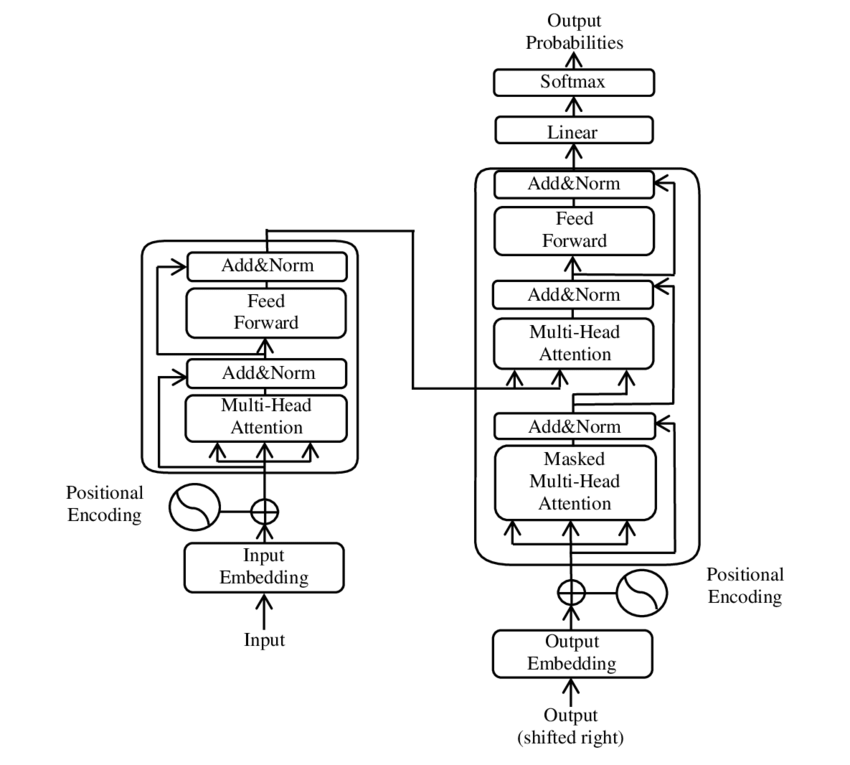
A breakthrough came in 2017 with the introduction of the Transformer architecture. Instead of processing words one by one, Transformers can look at an entire sentence or passage all at once. The key innovation that makes this possible is the self-attention mechanism.
Self-attention allows the model to weigh the importance of different words in the input text and draw connections between them, no matter how far apart they are.
Imagine the model is processing the sentence: "The cat, which was chasing a mouse, sat on the mat." When it looks at the word "sat," the self-attention mechanism helps it understand that "cat" is the important subject performing the action, not the "mouse."
This architecture fundamentally changed the game, enabling models to handle much longer contexts and capture more complex relationships within the text.
Key Milestones
The introduction of the Transformer architecture opened the floodgates for a new generation of powerful LLMs. Several models have marked significant milestones in this rapid evolution.
BERT (Bidirectional Encoder Representations from Transformers) Released in 2018, BERT was revolutionary because it learned to understand context from both directions (left-to-right and right-to-left) simultaneously. This bidirectional approach gave it a much deeper understanding of language, leading to massive improvements in tasks like search and question answering.
PaLM (Pathways Language Model) Introduced in 2022, PaLM demonstrated the power of scale. Trained on a massive dataset with 540 billion parameters, it showed remarkable reasoning abilities, including explaining jokes and solving logic puzzles that required multiple steps of thought.
Gemini Announced in 2023, Gemini represents another leap forward. It's a natively multimodal model, meaning it was designed from the ground up to understand and process not just text, but also images, audio, and video seamlessly. This allows it to handle queries that mix different types of information, like analyzing a diagram while reading its accompanying text.
What Are LLMs Used For?
The capabilities of modern LLMs have unlocked a vast array of applications across many fields. Their ability to understand and generate text makes them incredibly versatile tools.
| Application | Description |
|---|---|
| Content Creation | Writing articles, emails, marketing copy, and even creative fiction. |
| Summarization | Condensing long documents, articles, or research papers into key points. |
| Translation | Translating text between dozens of different languages with high accuracy. |
| Chatbots | Powering sophisticated conversational AI for customer service and personal assistants. |
| Code Generation | Writing and debugging code in various programming languages based on natural language descriptions. |
| Sentiment Analysis | Analyzing text to determine the emotional tone (positive, negative, neutral). |
As these models continue to evolve, they are becoming integrated into more and more aspects of our daily lives and work, acting as powerful partners that can augment human creativity and productivity.
Ready to test your knowledge? Let's see what you've learned about Large Language Models.
What is the fundamental task of a language model at its core?
The key innovation of the Transformer architecture that allows it to understand relationships across long sentences is known as:
Large Language Models, built upon the innovative Transformer architecture, have rapidly evolved from simple word predictors to powerful tools that are reshaping how we interact with information and technology.