Understanding AI and Me
Introduction to Artificial Intelligence
What Is Artificial Intelligence?
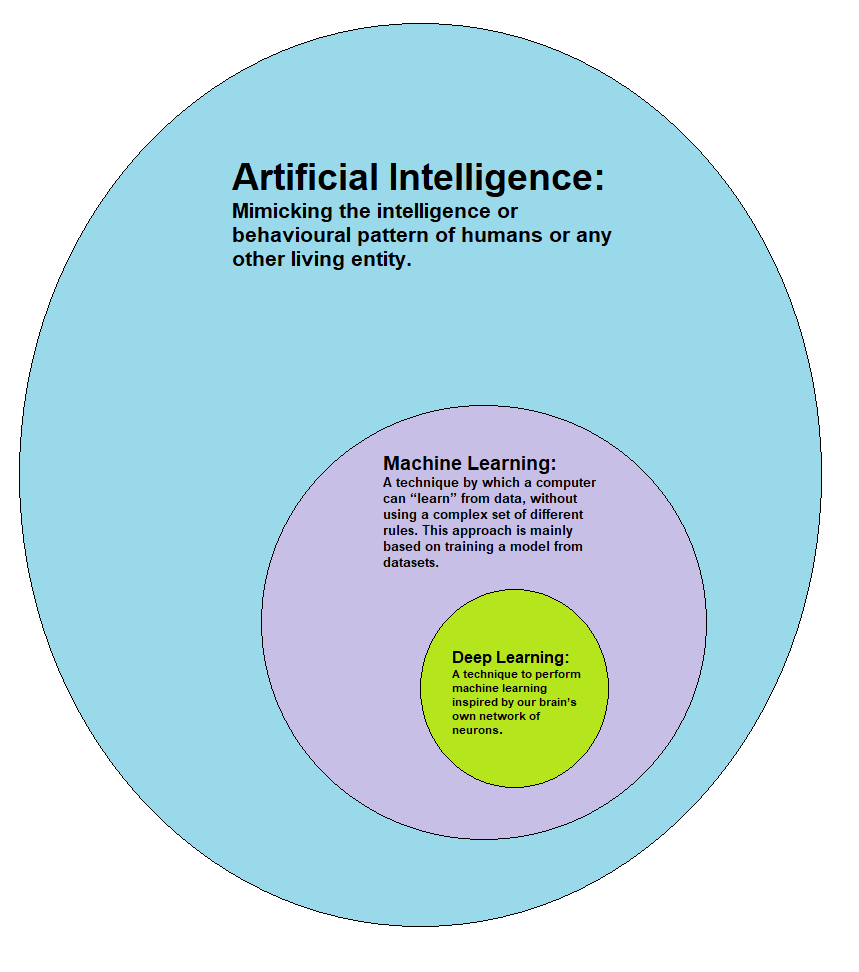
Artificial intelligence, or AI, is the science of making computers do things that normally require human intelligence. Think of it as teaching a machine to learn, reason, and solve problems on its own.
At its core, AI isn't about creating a robot that thinks and feels exactly like a person. It's about building systems that can analyze data, recognize patterns, and make decisions. Some AI is simple, like the software that suggests the next word in your text message. Other AI is incredibly complex, capable of driving cars or discovering new medicines.
AI gives a computer a mind of its own, allowing it to interpret data, learn from it, and use that knowledge to achieve specific goals through flexible adaptation.
AI is a broad field that contains many subfields. Two of the most important are machine learning and deep learning, which are methods for teaching computers to learn from data without being explicitly programmed.
A Brief History of AI
The idea of intelligent machines has been around for centuries, but the formal field of AI research began in the 1950s. The term "artificial intelligence" was coined in 1956 at a conference at Dartmouth College. Early researchers were optimistic, believing that a machine as intelligent as a human being was just a few decades away.
Progress wasn't always a straight line. The 1970s and 80s saw periods known as "AI winters," when funding dried up due to slow progress and unfulfilled promises. But breakthroughs in computing power and the availability of massive amounts of data in the 1990s and 2000s led to a resurgence. In 1997, IBM's Deep Blue computer defeated world chess champion Garry Kasparov, a major milestone that showed AI's potential.
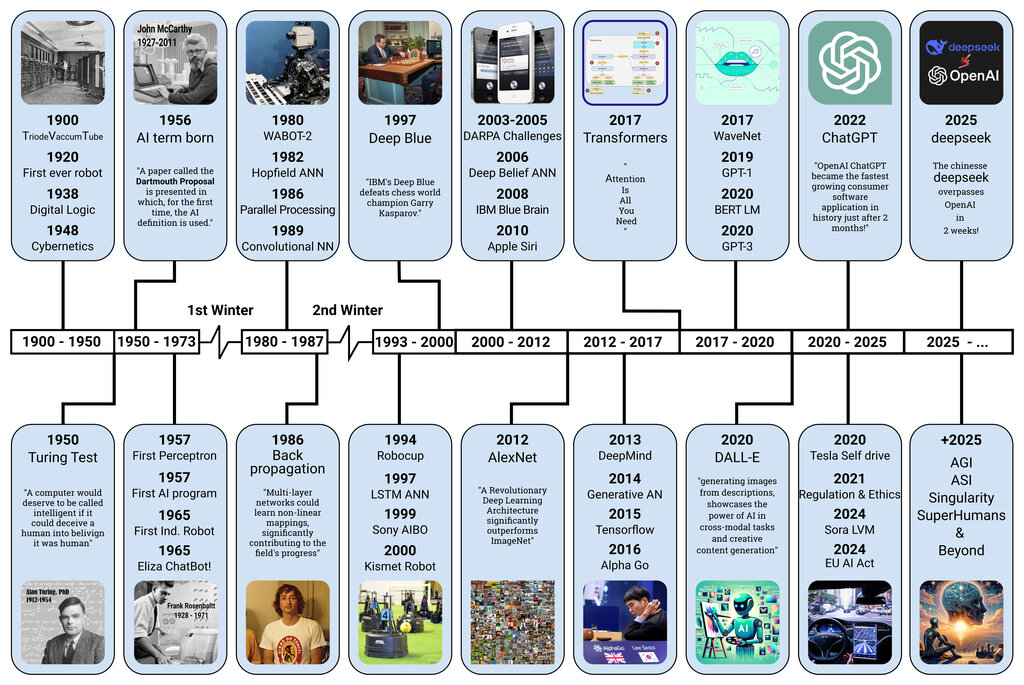
Today, we're in an AI boom. Advancements in deep learning have fueled rapid progress, leading to the powerful AI tools we see in our daily lives.
Two Flavors of AI
Not all AI is created equal. We can categorize AI into two main types based on its capabilities: narrow AI and general AI.
Artificial Narrow Intelligence
noun
Often called "weak AI," this is the only type of AI we have successfully created so far. It's designed and trained for a specific task.
Narrow AI is all around us. It's what powers the voice assistant on your phone, the recommendation engine on a streaming service, and the spam filter in your email. While it can perform its specific task with superhuman ability, it can't operate outside of that narrow domain. A chess-playing AI can't write a poem or diagnose a disease.
Artificial General Intelligence
noun
Often called "strong AI," this is the type of AI seen in movies. It would have the ability to understand, learn, and apply knowledge across a wide range of tasks at a human-like level.
AGI is still theoretical. Creating a machine with the flexible, creative, and common-sense reasoning of a human is an enormous challenge that researchers are still working to solve. For now, every AI system in existence is a form of narrow AI.
AI in the Real World
AI isn't just a futuristic concept; it's a practical tool that's transforming industries. Its ability to process vast amounts of data and find patterns helps businesses operate more efficiently and create new products and services.
In healthcare, AI helps doctors analyze medical images to detect diseases like cancer earlier and more accurately. It can also predict which patients are at high risk for certain conditions, allowing for preventative care.
In finance, AI algorithms are used to detect fraudulent transactions in real-time and to create personalized financial advice for customers. They also power high-frequency trading on stock markets.
In entertainment, AI curates the content you see. Recommendation systems on platforms like Netflix and Spotify learn your preferences to suggest movies, shows, and music you might enjoy.
Even in agriculture, AI helps farmers monitor crop health using drones and satellite imagery, optimizing irrigation and fertilizer use to increase yields and reduce waste.
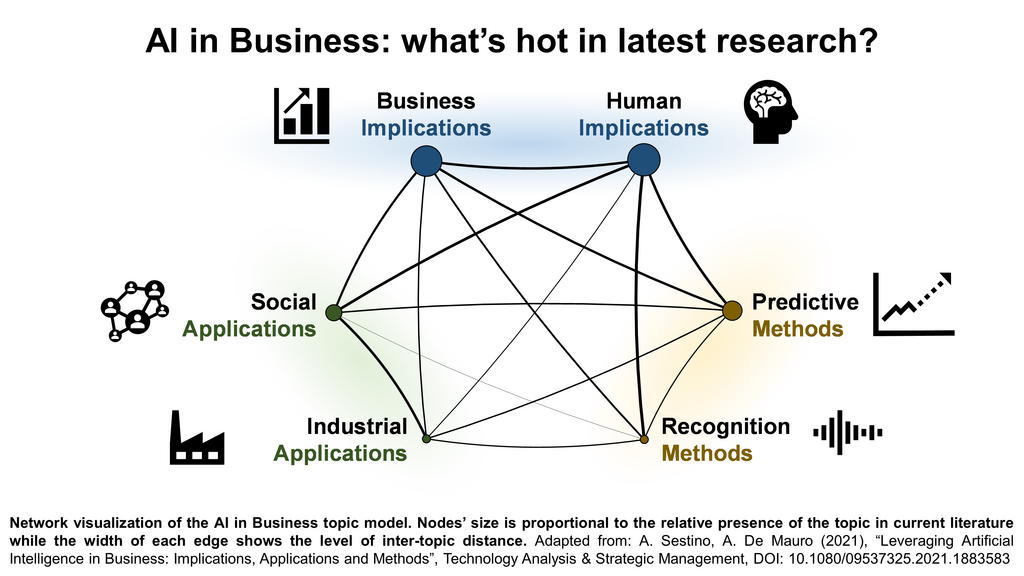
These are just a few examples. As the technology continues to evolve, AI will find its way into even more aspects of our lives, changing how we work, play, and connect with each other.
Now, let's test your knowledge on these foundational AI concepts.
What is the primary goal of Artificial Intelligence?
The voice assistant on your smartphone, which can answer questions and set alarms but cannot write a novel, is an example of what type of AI?
Understanding these core ideas provides a solid foundation as we explore more about the world of artificial intelligence.