Understanding AI Agents
Introduction to AI Agents
What Are AI Agents?
An AI agent is an entity that perceives its environment and acts upon that environment to achieve a specific goal. Think of it as an autonomous decision-maker. While a standard program follows a rigid set of instructions, an agent operates more flexibly. It uses sensors to gather information about its surroundings and actuators to perform actions.
A smart thermostat is a simple agent. Its sensor is a thermometer, and its actuator is the switch that controls the heating or cooling system. It perceives the room temperature and acts to maintain the temperature you've set as its goal.
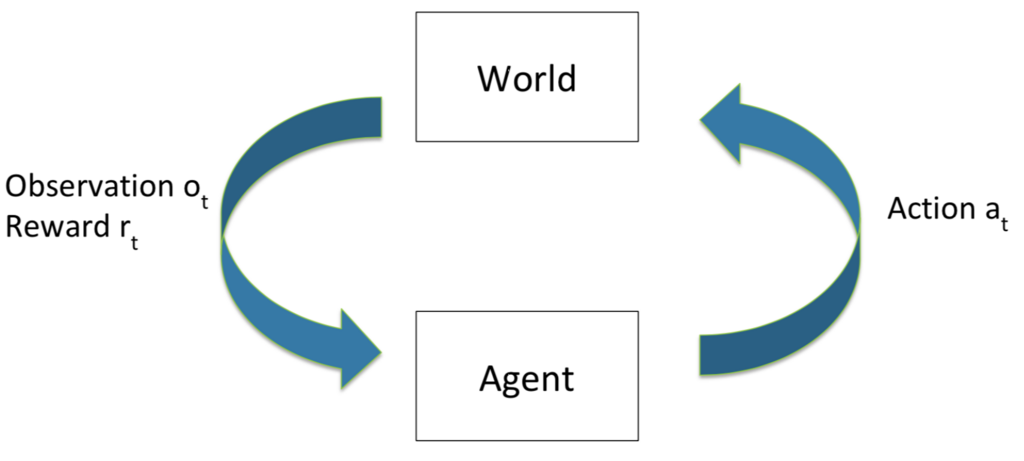
This perception-action loop is the core of every agent, from the simplest to the most complex. The agent takes in data (observation), processes it, and then chooses an action. The complexity lies in how it makes that choice.
Key Characteristics
Not every AI is an agent. Three main characteristics set agents apart:
- Autonomy: Agents can operate without direct, constant human intervention. They have control over their own actions and internal state.
- Adaptability: They can react to changes in their environment. A truly intelligent agent can also learn from experience, improving its performance over time.
- Goal-Oriented Behaviour: An agent's actions are purposeful. It isn't just reacting randomly; it's trying to achieve a specific, defined objective.
An agent isn't just a program that runs. It's a system that perceives, decides, and acts on its own to reach a goal.
A Tour of Agent Types
Agents come in several varieties, distinguished by how they decide which action to take. The complexity ranges from simple reactive machines to systems that can plan and weigh the desirability of different world states.
| Agent Type | Basis for Action | Key Feature |
|---|---|---|
| Simple Reflex | Current perception only | Pre-defined condition-action rules |
| Model-Based Reflex | Internal model of the world | Tracks the state of the environment |
| Goal-Based | Desired future states | Considers outcomes of actions |
| Utility-Based | A measure of "happiness" | Chooses the most desirable outcome |
A Simple Reflex Agent is the most basic type. It maps perceptions directly to actions. If condition X is met, it does Y. It has no memory of the past.
A Model-Based Reflex Agent is a step up. It maintains an internal model of how the world works. This allows it to handle situations where the current perception isn't enough to make a decision. It keeps track of the world's state.
Goal-Based Agents act with the future in mind. They don't just react; they consider how their actions will help them achieve their goals. This requires some form of searching or planning.
Finally, Utility-Based Agents are for when achieving a goal isn't enough. These agents try to achieve it in the best possible way. They use a utility function to measure the desirability, or "happiness," of different world states, aiming to maximise that utility.
What is the fundamental cycle that defines how an AI agent operates?
Which of the following is NOT a necessary characteristic of an AI agent?
Understanding these fundamental types provides a framework for exploring the more complex and powerful agents used in modern AI.