Understanding AI Agents
Introduction to AI Agents
What Are AI Agents?
Think of an AI agent as an autonomous worker. It’s a piece of software designed to operate on its own to achieve a specific goal. You’ve probably already encountered simple versions of them.
A smart thermostat is a basic AI agent. It perceives the room temperature, decides if it’s too hot or cold based on your settings, and then takes action by turning the heat or air conditioning on or off. It does this without you needing to tell it what to do every minute. That's autonomy in a nutshell.
Agents in AI are autonomous entities that perceive their environment, process information, and take actions to achieve specific goals.
This definition highlights the core job of any agent: to sense, think, and act. Whether it's a character in a video game, a stock-trading bot, or a system that manages a power grid, all agents share these fundamental abilities.
A Quick Trip Through Time
The idea of AI agents isn't new. Early concepts date back to the mid-20th century, but the first agents were quite simple. They were rule-based systems, meaning they followed a strict set of "if-then" instructions. For example, if the temperature is below 68°F, then turn on the heat. They were predictable but not very flexible.
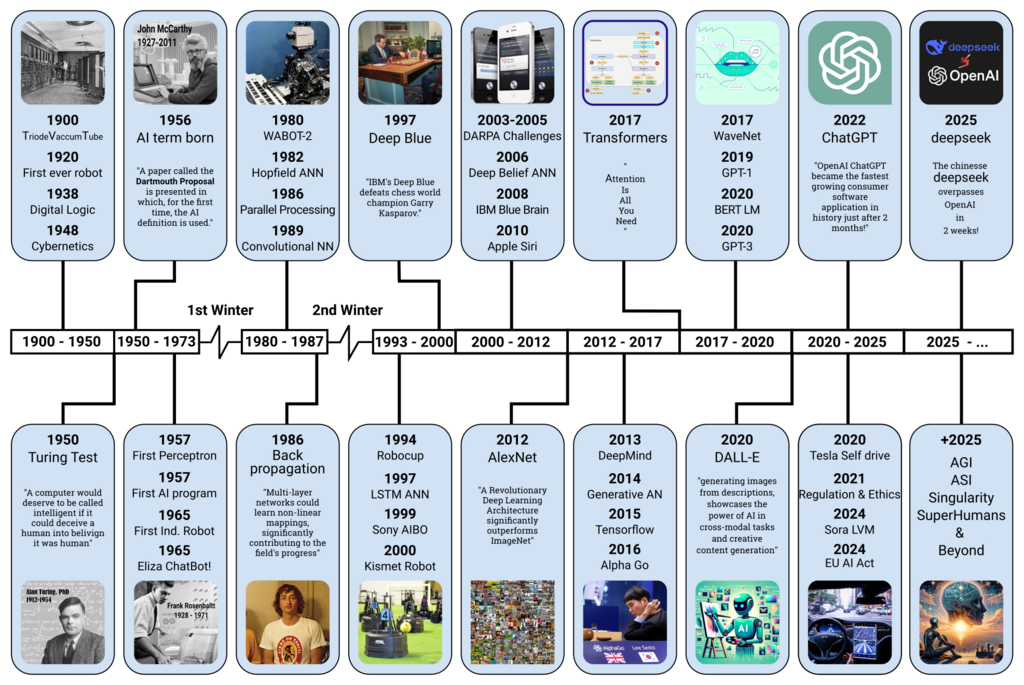
As computing power grew and AI research advanced, agents became more sophisticated. They started incorporating learning and planning, allowing them to adapt to new situations instead of just following a script. Today's agents, often powered by large language models, can handle complex, multi-step tasks that require reasoning and interaction with various digital tools.
The Agent's Core Loop
Every AI agent, from the simplest to the most complex, operates on a continuous cycle. It’s a loop of perceiving its environment, making a decision, and then taking an action. This is often called the perceive-decide-act loop.
Let’s break this down:
-
Perception: An agent needs to gather information about its surroundings. For a software agent, the "environment" is the digital world it operates in. Its "sensors" might be APIs, system logs, user inputs, or data from a website.
-
Decision-Making: This is the agent's brain. After perceiving the current state of its environment, it uses its internal logic to decide what to do next. This logic could be a simple rule, a complex statistical model, or a goal-based plan.
-
Action: Once a decision is made, the agent acts. Its "actuators" are the tools it uses to affect its environment. This could mean sending an email, buying a stock, adjusting a robot's arm, or displaying a message on a screen.
Three Flavors of Agents
While all agents follow the same basic loop, they don't all "think" the same way. We can group them into a few main categories based on how they make decisions.
| Agent Type | How It Works | Simple Example |
|---|---|---|
| Reactive | Acts based only on the current situation. No memory or planning. | A Roomba changing direction when its bumper hits a wall. |
| Deliberative | Considers its goals and plans a sequence of actions to achieve them. | A GPS app recalculating the route to avoid a traffic jam. |
| Hybrid | Combines reactive speed with deliberative planning. | A self-driving car making instant reflex moves while planning its overall route. |
Reactive agents are the simplest. They work on a stimulus-response basis. They see something, and they react. They're fast and efficient but can't plan for the future.
Deliberative agents are more thoughtful. They maintain an internal model of their world and think ahead. They can create and follow long-term plans to achieve their objectives. This makes them smarter but often slower to react.
Hybrid agents try to get the best of both worlds. They often have a reactive layer for quick, instinctual responses and a deliberative layer for higher-level planning. This layered approach allows them to handle both immediate needs and long-term goals effectively.
Now that you understand the basics of what an agent is and how it works, let's test your knowledge.
What is the core operational cycle that all AI agents, from simple to complex, follow?
Early AI agents were typically which type of system?