Understanding AI Agents
Introduction to AI Agents
What is an AI Agent?
Think about a self-driving car, a smart thermostat, or even a character in a video game. What do they have in common? They all operate on their own to some extent. In artificial intelligence, we call these systems agents.
An AI agent is a program that can perceive its environment and act upon it to achieve a specific goal. It's like a digital robot with a job to do. The environment could be anything: a webpage, a game world, a user's request, or the physical world via sensors. The agent takes in information, decides what to do next, and then performs an action.
Essentially, an AI agent is an autonomous entity that senses, thinks, and acts.
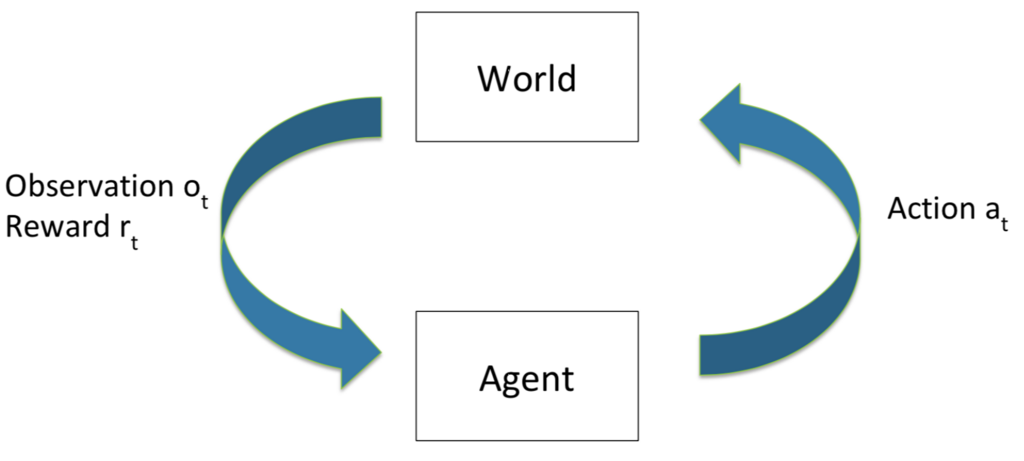
All effective agents share a few key characteristics that allow them to function intelligently and independently.
autonomy
noun
The ability to operate without direct human control. An autonomous agent can make its own decisions based on its perceptions and internal programming.
Besides autonomy, agents also exhibit:
- Reactivity: They can perceive their environment and respond to changes in it in a timely manner. A smoke detector reacting to smoke is a simple example.
- Proactivity: They don't just wait for something to happen. Proactive agents take initiative to achieve their goals. A smart thermostat might pre-cool your house before you get home from work on a hot day.
- Social Ability: Agents can communicate with other agents and even humans. Think of how multiple self-driving cars might communicate to avoid collisions, or how a chatbot interacts with you to solve a problem.
Types of Agents
Not all agents are created equal. They range from very simple to incredibly complex, depending on their task. We can classify them into a few main types, each building on the last.
Simple Reflex Agents are the most basic type. They make decisions based only on the current situation, following a simple "if-then" rule. For example, if an autonomous vacuum's sensor detects an object, it turns. It has no memory of the past.
Model-Based Reflex Agents are a step up. They maintain an internal "model" or representation of the world. They use this model, along with what they currently perceive, to make decisions. This allows them to handle situations where they can't see everything at once. A self-driving car that remembers the location of a parked car even after it passes it is using a model.
Goal-Based Agents act to achieve specific goals. Instead of just reacting, they think ahead. If you ask a GPS to find the fastest route, it's acting as a goal-based agent. It considers different paths and chooses the one that best meets the goal.
Utility-Based Agents are more advanced. They act to maximize their own "utility," which is a measure of how desirable an outcome is. This is useful when there are conflicting goals or when achieving a goal isn't a sure thing. A shopping bot might choose a product that has the best balance of price, quality, and shipping time to maximize your satisfaction.
Learning Agents are the most sophisticated. They can improve their performance over time through experience. The agent starts with some basic knowledge and an ability to learn. As it acts, it receives feedback, which it uses to update its internal knowledge and make better decisions in the future. A spam filter that gets better at identifying junk mail as you mark emails is a learning agent.
Now that you understand the different types of AI agents, let's test your knowledge.
A smart thermostat that learns your daily schedule and pre-heats your home before you typically arrive is primarily demonstrating which agent characteristic?
An autonomous vacuum cleaner bumps into a wall and immediately changes direction. It does not remember where the wall is and will bump into it again if it encounters it from a different angle. What is the simplest type of agent that describes this vacuum?
These agent types form the building blocks for many of the AI systems we interact with daily, from simple automations to complex, adaptive programs.