Understanding AI Agents
Introduction to AI Agents
What is an AI Agent?
At its core, an AI agent is something that can operate on its own to achieve a goal. Think of it as an autonomous entity that perceives its environment and takes actions. It could be a physical robot navigating a warehouse or a piece of software bidding on online ads. The key idea is that it senses, thinks, and acts.
An AI agent is a system that perceives its environment and takes actions to achieve specific goals.
Consider a simple thermostat. It has a sensor to perceive the room's temperature. It has a goal, like keeping the temperature at 70°F. If the sensor reads 68°F, the agent's decision-making process kicks in, and it uses an actuator—the switch for the furnace—to take action and turn on the heat. Once it perceives the temperature is 70°F, it acts again by turning the heat off. This continuous loop of perceiving, deciding, and acting is fundamental to all AI agents.
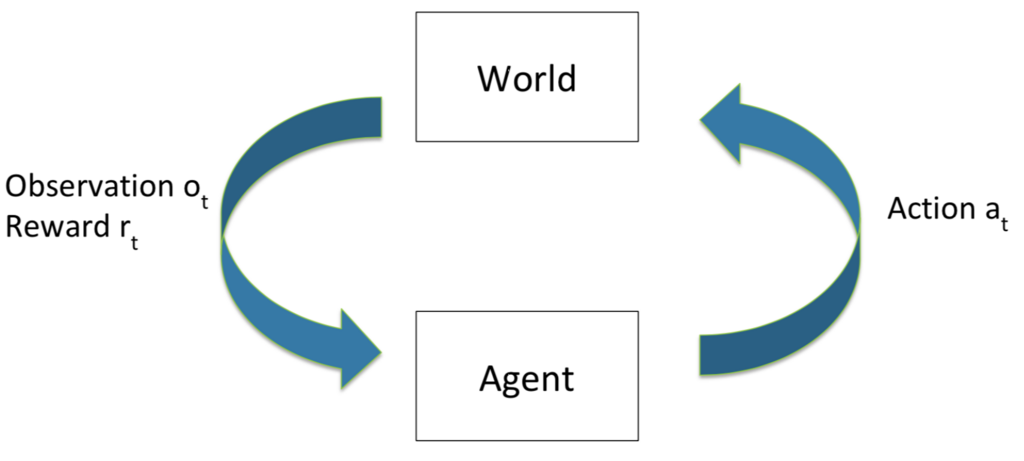
This concept scales up from simple thermostats to complex systems like self-driving cars, which process vast amounts of sensory data to navigate busy streets, or AI assistants that manage your calendar and book appointments. They all operate on the same basic principle.
The Core Components
Every AI agent is built around a few key components that allow it to interact with its environment. Let's break them down.
Sensors are the agent's input devices. They gather information from the environment, allowing the agent to perceive what's going on. For a physical robot, sensors might include cameras, microphones, GPS, and touch sensors. For a software agent, like a spam filter, the "sensors" are the parts of the program that read incoming emails, check the sender's address, and analyze the text.
Actuators are the components an agent uses to take action and affect its environment. They are the agent's
If sensors are the agent's senses, actuators are its hands, feet, and voice.
A robot's actuators could be its wheels, arms, or speakers. A stock-trading bot's actuators are the functions that execute buy or sell orders. For a chatbot, the actuator is what displays its text response on your screen.
Decision-Making is the brain of the operation. This is the program or model that processes the perceptions gathered by the sensors and decides what action to take with the actuators. It connects the 'seeing' to the 'doing'. This could be a simple set of 'if-then' rules (IF temperature < 70, THEN turn on heat) or a complex neural network that has learned from millions of examples.
Why Agents Matter
AI agents are the fundamental building blocks of almost all modern AI systems. They are the entities that actually do things. Without agents, AI would just be a passive tool for analyzing data. Agents turn that analysis into action.
By framing problems in terms of agents, environments, and goals, we can create systems that tackle complex, dynamic tasks. From managing a city's traffic flow to helping doctors diagnose diseases, AI agents provide a powerful framework for building intelligent systems that can operate in the real world.
An AI agent is an autonomous software entity capable of understanding goals, reasoning through multiple steps, interacting with tools or environments, and adjusting its actions based on outcomes.
Understanding this basic structure is the first step. Next, we'll explore the different ways these agents can be designed to think and learn.