Understanding AI Agents
Introduction to AI Agents
What Is an AI Agent?
Think of an AI agent as a digital employee you hire to do a specific job. You give it a goal, and it works on its own to figure out how to achieve it. It's more than just a simple program that follows a strict set of instructions; an AI agent can sense its surroundings, make decisions, and take action in a changing environment.
An AI agent is a program or system that can perceive its environment, process information, and take actions to achieve a specific goal.
This ability to operate independently is what makes agents so powerful. Instead of telling a program every single step to take, you just tell the agent what you want done. It could be something simple, like a thermostat agent maintaining a room's temperature, or something complex, like a self-driving car navigating a busy city.
The Core Components
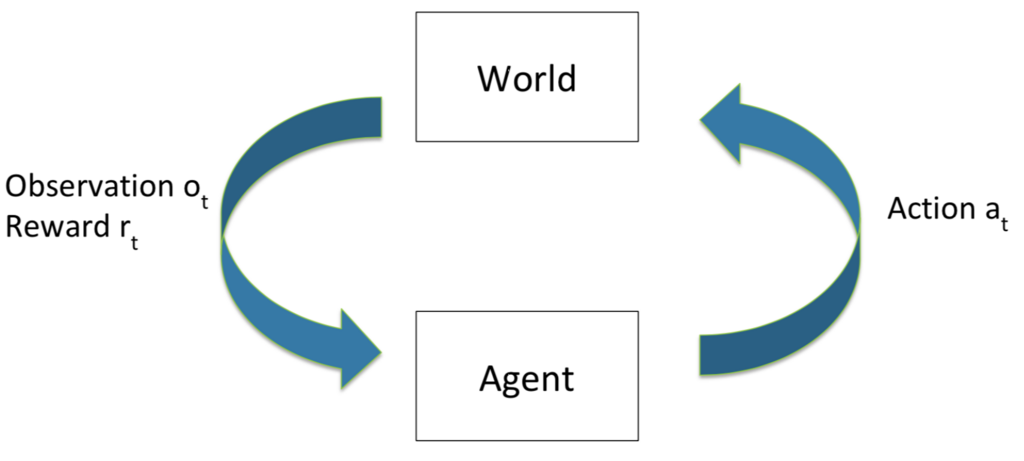
Every AI agent, no matter how simple or complex, operates on a fundamental loop of three components: perception, reasoning, and action.
1. Perception: This is how the agent gathers information about its environment. For a robot vacuum, perception might come from sensors that detect walls, furniture, and dirt. For a stock-trading agent, it would be real-time market data from the internet.
2. Reasoning: Once the agent perceives its environment, it needs to decide what to do. This is the “thinking” part. The robot vacuum uses its programming to decide that if it perceives a wall, it should turn. The trading agent analyzes market data to decide whether to buy, sell, or hold a stock.
3. Action: This is the final step, where the agent carries out its decision. The robot vacuum turns its wheels, and the trading agent executes a trade. The action changes the environment, and the agent perceives this new state, starting the loop all over again.
Agents in the Wild
You probably interact with AI agents every day without realizing it. They are the backbone of many modern technologies.
Virtual Assistants: When you ask Siri or Alexa to play a song, you're using an AI agent. It perceives your voice command, reasons about what you're asking for, and takes action by contacting a music service to play the song.
Autonomous Vehicles: A self-driving car is a highly sophisticated agent. It uses cameras, lidar, and other sensors to perceive the road, other cars, and pedestrians. It reasons about traffic laws and safety to plan its path, and it takes action by controlling the steering, acceleration, and brakes.
Video Games: Non-player characters (NPCs) in many games are AI agents. They perceive the player's location and actions, reason about their own goals (like finding cover or attacking), and take actions within the game world.
These examples show the range of tasks agents can handle, from simple requests to complex, real-time navigation. As AI technology advances, agents are becoming more capable and autonomous, able to tackle increasingly challenging goals.
Ready to check your understanding?
What is the defining characteristic of an AI agent compared to a simple program?
An AI agent's fundamental operational cycle consists of three components: Perception, ______, and Action.
Understanding what AI agents are and how they work is the first step to seeing their massive potential across almost every industry.