Understanding Agents
Introduction to Agents
What Is an Agent?
Think of a real estate agent. Their job is to understand your goal (buying a house with a big yard) and then act on your behalf to achieve it. They search listings, schedule tours, and negotiate offers. In essence, an agent is anything that perceives its environment and acts upon that environment to achieve a goal.
This simple idea applies to many things, from people to complex software. Every agent, regardless of its form, has a few key components:
- A goal: The objective it's trying to accomplish.
- Perception: How it gathers information about its surroundings.
- Action: What it does to try and meet its goal.
Agents All Around Us
Once you know what to look for, you'll start seeing agents everywhere. They can be broadly grouped into a few categories.
Human Agents: These are people acting on behalf of others. Besides real estate agents, think of sports agents negotiating contracts for athletes or literary agents representing authors. Their 'environment' is the market, their 'perception' is through research and phone calls, and their 'actions' are negotiations and deals.
Software Agents: These are computer programs designed to perform specific tasks for a user. They are often simple and rule-based. Your email's spam filter is a perfect example. It 'perceives' incoming emails, uses rules to identify junk, and 'acts' by moving them to a separate folder. A smart thermostat is another one. It senses the room temperature and acts by turning the heat or AC on or off to meet its goal temperature.
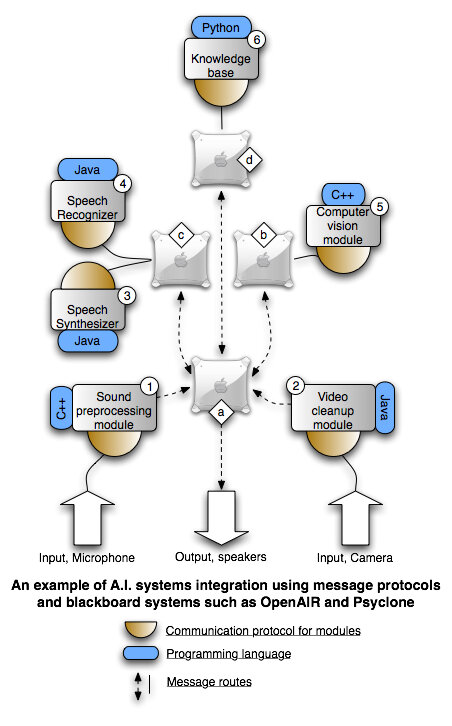
Artificial Agents (AI Agents): This is where things get more interesting. AI agents are a sophisticated type of software agent. Instead of just following pre-programmed rules, they can learn, reason, and make decisions on their own. Virtual assistants like Siri and Alexa are AI agents. They perceive your voice commands, process the language, and act by playing a song or searching the web. More advanced examples include AI opponents in video games that adapt to your strategy or a self-driving car navigating a busy street.
Key Characteristics
While agents vary in complexity, they share a few fundamental characteristics that define their behavior.
autonomy
noun
The ability to perform tasks in complex environments without constant guidance or intervention by a user.
An agent's level of autonomy can vary. A simple thermostat has very little; it just reacts to temperature. A self-driving car, on the other hand, has a high degree of autonomy, making thousands of independent decisions every minute to navigate safely.
Reactivity: Agents perceive their environment and respond to changes in it. When the car in front of a self-driving vehicle brakes, the agent reacts by slowing down.
Pro-activeness: Agents don't just react; they can take initiative to achieve their goals. A robotic vacuum doesn't wait for the floor to get dirty. It proactively follows a schedule to keep it clean.
These basic concepts of perception, action, and goals are the building blocks for understanding how complex artificial intelligence systems work. Whether it's a person, a simple program, or a sophisticated AI, the principle is the same: an agent acts to get things done.
What is the most fundamental definition of an agent?
Which of the following lists the three essential components of any agent?