Understanding Agents
Introduction to Agents
What is an AI Agent?
At its heart, an agent is simply something that does things. In the world of artificial intelligence, this definition gets a bit more specific. An AI agent is an entity that perceives its environment and acts upon it to achieve a goal.
Think of a robotic vacuum cleaner. It doesn't just move randomly. It uses sensors to detect walls, furniture, and dirt. Based on that information, it decides where to move, when to turn, and when to increase suction. The vacuum is an agent. Its environment is your floor, and its goal is to clean it.
An agent is an autonomous entity that observes an environment and takes actions to achieve specific goals.
This concept is fundamental to AI. Whether we're talking about a self-driving car navigating traffic or a smart thermostat adjusting your home's temperature, we're talking about agents. They are the actors in the world of AI, the systems designed to operate independently to get a job done.
The Core Architecture
Every agent, no matter how simple or complex, is built on the same basic framework. It needs a way to perceive the world and a way to act on it. These two functions are connected by the agent's internal 'brain' or decision-making logic.
Sensors
noun
Input devices that allow an agent to perceive its environment.
Sensors are the agent’s senses. For a software agent browsing the web, its sensors might be the ability to read HTML code. For a robot, it could be cameras, microphones, or touch sensors.
Actuators
noun
Output devices that allow an agent to perform actions in its environment.
Actuators are the agent's hands, legs, or voice. They are the mechanisms the agent uses to interact with its surroundings. A self-driving car's actuators include the steering wheel, accelerator, and brakes. A voice assistant's actuator is a speaker.
Connecting these two is the agent function. This is the core intelligence of the system. It's an internal mapping that decides which action to take based on the information received from the sensors. We can think of it as a function that takes the agent's entire history of perceptions, or percepts, and returns an action.
The goal of an AI designer is to create the best possible agent function. A good one will lead to rational, successful behavior. A poor one will cause the agent to make mistakes, like a robotic vacuum repeatedly bumping into the same chair leg.
The Role of Agents
Why is this agent-based view so important? Because it gives us a powerful way to think about and build AI. By framing problems in terms of agents, environments, goals, sensors, and actuators, we can create autonomous systems that solve problems in the real world.
An agent isn’t just a piece of code; it’s an active participant in an environment. This perspective shifts the focus from just processing data to making intelligent decisions that have consequences. It’s the difference between a calculator that computes a result and a Mars rover that decides how to navigate treacherous terrain on its own.
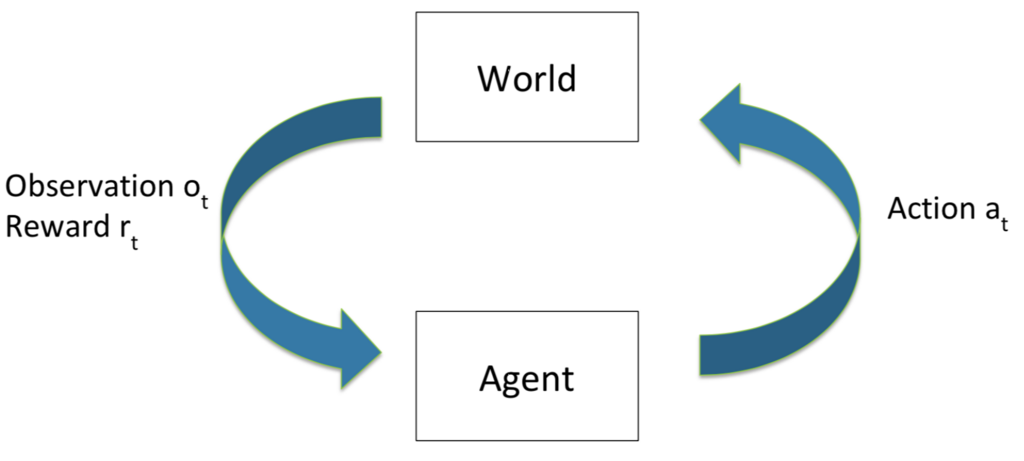
This continuous loop of perception and action is what allows agents to be autonomous. They don't need a human to guide every step. They can operate independently, adapt to changing conditions, and work towards their objectives. This autonomy is the ultimate goal for many AI systems, and it all starts with the simple, powerful concept of an agent.