Ukulele Fundamentals
Ukulele Basics
Meet the Ukulele
Welcome to the ukulele! This small, four-stringed instrument is known for its bright, happy sound. It's relatively easy to learn and incredibly fun to play. Before you can start making music, let's get to know the instrument itself. Understanding its parts will help you follow along in future lessons.
Let's break these down:
- Body: This is the large, hollow part of the ukulele that amplifies the sound. The vibrations from the strings resonate inside the body and come out through the soundhole.
- Neck: The long piece of wood that connects the body to the headstock. Your fretting hand will spend most of its time here.
- Headstock: Located at the top of the neck, it holds the tuning pegs.
- Tuning Pegs: You turn these to tighten or loosen the strings, which changes their pitch. This is how you tune the instrument.
- Fretboard: The flat piece of wood on the front of the neck where you press down the strings. It has metal strips called frets embedded in it.
- Frets: These metal strips mark the exact spots to place your fingers to produce different notes.
- Nut & Saddle: The nut is the small grooved strip at the top of the fretboard, and the saddle is the strip on the bridge. They are the two points where the vibrating part of the string begins and ends.
- Bridge: This piece on the body anchors the strings and transfers their vibrations to the top of the ukulele.
- Strings: The four nylon strings are what you strum or pluck to create sound. The strings are numbered 4-3-2-1, from the top (closest to your chin) to the bottom.
Finding Your Size
Ukuleles come in several sizes. The size affects the instrument's tone, volume, and feel. While there are many variations, the four main types are soprano, concert, tenor, and baritone.
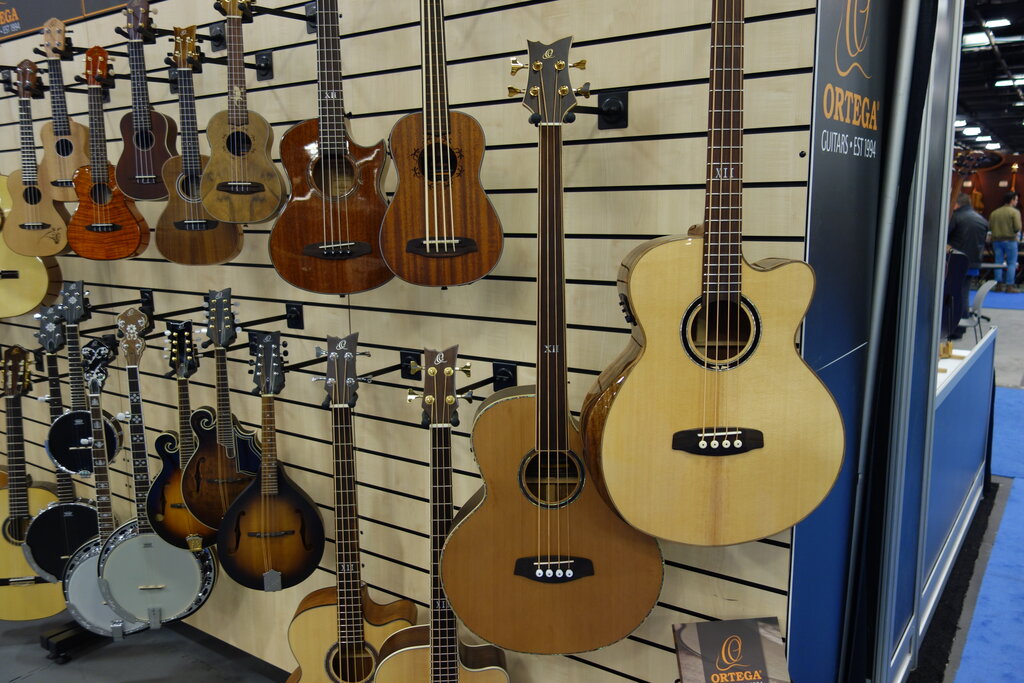
The soprano is the smallest and most traditional size, known for its classic, bright, and plinky sound. Because of its small size and narrow fretboard, it can be a bit tricky for players with larger hands.
The concert ukulele is a little bigger than the soprano. This gives it a slightly fuller sound and more room between the frets, making it a popular choice for beginners and players of all levels.
The tenor is larger still, producing a deeper, richer, and louder sound. Many professional players prefer the tenor for its wide fret spacing and resonant tone.
Finally, the baritone is the largest of the four. It has the deepest tone and is tuned differently from the other three, resembling the top four strings of a guitar. This gives it a unique, guitar-like sound.
| Type | Size | Sound | Common Tuning |
|---|---|---|---|
| Soprano | Smallest | Bright, classic "plinky" | G-C-E-A |
| Concert | Small | Fuller than soprano | G-C-E-A |
| Tenor | Medium | Deep, rich, resonant | G-C-E-A |
| Baritone | Largest | Warm, guitar-like | D-G-B-E |
How to Hold It
Proper posture is key to playing comfortably and preventing bad habits. Whether you're sitting or standing, the goal is to be relaxed. Sit up straight in a chair without arms, or stand with your feet shoulder-width apart.
Your ukulele should rest comfortably against your chest and be supported by your right forearm (for right-handed players). Press the body of the instrument against you with your forearm, just above the elbow. This should hold it securely in place without needing help from your left hand.

Your left hand's job is to press the strings, not to hold up the neck. The neck should rest gently in the U-shape between your thumb and index finger. Keep your wrist straight and your thumb pointed towards the headstock, behind the neck.
Try to angle the headstock slightly upwards, about 45 degrees. This position makes it easier for your left hand to reach the frets and for your right hand to strum the strings naturally.
The ukulele should feel like a part of you, not something you're fighting to hold onto. A light but firm grip is all you need.
Now that you've been introduced to your new instrument, let's review the key terms.
Ready to test your knowledge?
What is the primary function of the ukulele's body?
Which part of the ukulele do you turn to tighten or loosen the strings, thereby changing their pitch?
Great work! You now know the essential parts of the ukulele, the different sizes, and how to hold it correctly. You're ready to make some sound.