UK Hardcore Production Masterclass
Advanced Sound Design Techniques
Warping Wavetables
Wavetable synthesis is a powerhouse for creating the complex, shifting sounds of UK Hardcore. Instead of a single, static waveform like a saw or square wave, a wavetable synthesizer uses a collection of different waves, or a "wavetable." You can then scan through this table, creating a sound that evolves over time.
The real magic happens when you start warping the wavetable itself. Warping is the process of twisting, stretching, and mangling the individual waveform being played. This is how you create those aggressive, metallic, and screechy tones that define the genre.
Think of it like this: scanning the wavetable changes which wave you're hearing. Warping changes the actual shape of that wave.
Most modern wavetable synths have several warp modes. Let's look at a few common ones:
- Bend: This mode squeezes one half of the waveform while stretching the other. It can add a sharp, nasal quality to the sound, perfect for cutting through a dense mix.
- Twist: This mode twists the waveform around its center point, almost like wringing out a towel. It introduces complex harmonics and can make a simple sound much richer and more aggressive.
- Asymmetry: This squashes the waveform towards one side, altering its harmonic content. It's great for creating formant-like, vowel sounds.
By modulating the warp amount, you can create sounds that are constantly in motion, shifting from a simple tone to a complex, screeching lead in an instant.
Dynamic Modulation with LFOs
Movement is everything in UK Hardcore. A static sound is a boring sound. Low-Frequency Oscillators (LFOs) are your primary tool for creating this movement, but we can go far beyond a simple wobble or vibrato by using multiple LFOs to modulate each other.
This technique, called multi-LFO routing, allows you to create incredibly complex and unpredictable patterns. Instead of a simple, repeating modulation, you get a sound that evolves and seems to have a life of its own.
Here’s a classic example: imagine you have an LFO modulating the wavetable position of your synth. This creates a sweeping sound that moves through the different waveforms. Now, take a second LFO and use it to modulate the rate of the first LFO. Suddenly, the speed of your sweep is changing over time. It might start slow, speed up, and then slow down again, creating a dynamic, rhythmic effect that's far more interesting than a constant sweep.
Don't stop there. You can route LFOs to almost any parameter: the wavetable warp amount, the filter cutoff, distortion levels, or even the parameters of your effects. By using multiple LFOs running at different speeds, you can build layers of modulation that make your sounds feel alive and constantly shifting.
Extreme Audio Processing
UK Hardcore is not a subtle genre. The sounds are often pushed to their absolute limits through extreme audio processing. This is where you can take a relatively simple synthesized sound and transform it into something completely new and powerful.
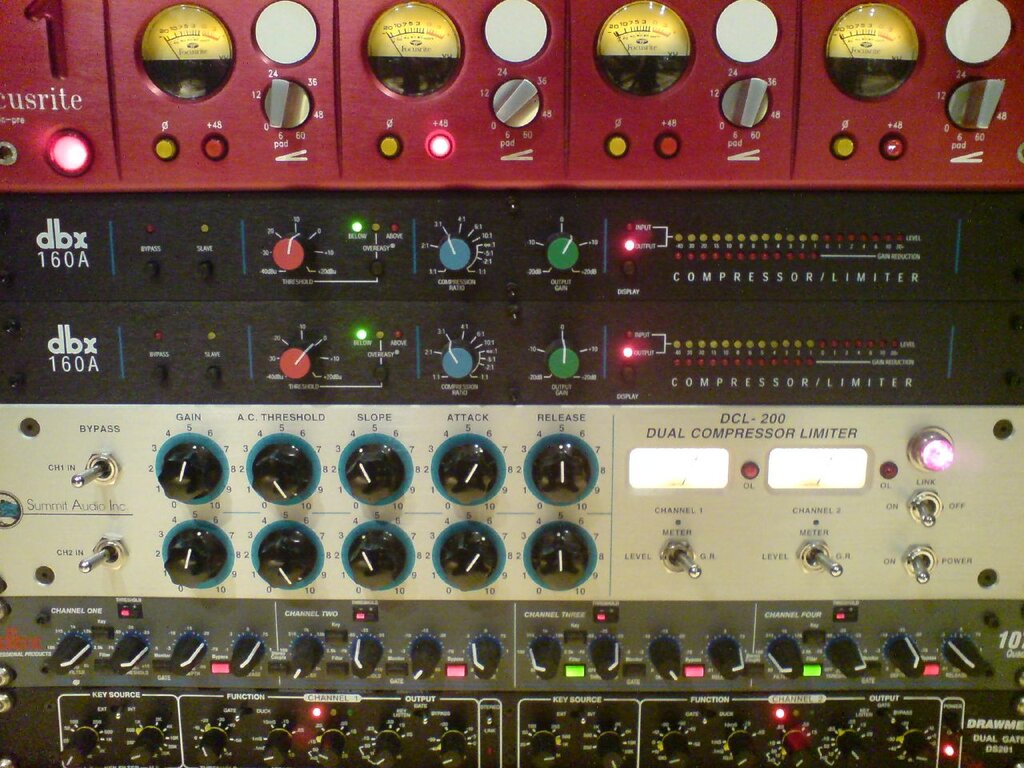
A key technique is heavy distortion and saturation. Don't be afraid to push the distortion so hard that the sound starts to break apart. Different types of distortion (tube, tape, bit-crushing) will produce vastly different textures. Often, producers will chain multiple distortion plugins together to create a unique, layered grit.
Another powerful tool is the frequency shifter. Unlike a pitch shifter, which preserves the harmonic relationships in a sound, a frequency shifter adds or subtracts a specific number of Hertz to every frequency component. This creates dissonant, inharmonic, and metallic textures that are a staple of the genre. A small amount can add a subtle shimmer, while a large amount will completely mangle the sound into a robotic, alien texture.
Resampling is also a cornerstone of advanced sound design. Play your synthesized part, add some effects, and then bounce the result to a new audio file. Now, you can load that new audio file into a sampler and start processing it all over again. Pitch it up, reverse it, chop it up, or run it through more effects. This process allows you to build incredibly complex and unique sounds that would be impossible to create in a single synth.
Ready to test your knowledge of these advanced techniques?
Which wavetable warp mode is best described as squeezing one half of the waveform while stretching the other, often resulting in a sharp, nasal tone?
In the context of UK Hardcore sound design, what is the main purpose of using a second LFO to modulate the rate of a primary LFO?
By combining these methods—wavetable warping, complex modulation, and extreme processing—you can create the dynamic, aggressive, and textured sounds that drive UK Hardcore tracks.