UI UX Design Fundamentals
Introduction to UI/UX Design
What Are UI and UX?
You've likely seen the terms UI and UX floating around. They often appear together, but they represent two distinct, yet closely related, aspects of design. Let's break them down.
UI (User Interface) Design is about the look and feel of a product. It's the visual part: the buttons you click, the colors, the fonts, and the layout of the screens. The goal of a UI designer is to create an interface that is visually appealing and easy to understand.
UX (User Experience) Design is about the overall experience a person has while using a product. It's the whole journey. Is the product easy to use? Does it solve the user's problem effectively? Does it feel logical and satisfying? A UX designer's job is to make sure the answer to these questions is a resounding "yes."
Think of it like building a house. UX is the blueprint: the overall structure, the flow from room to room, and ensuring it meets the family's needs. UI is the interior design: the paint colors, the furniture, the light fixtures that make the house look and feel like a home.
The People Behind the Pixels
So, what do UI and UX designers actually do all day? While their roles can overlap, they have different primary focuses.
A UI Designer is a visual specialist. They are concerned with aesthetics and presentation. They create style guides, design individual screens and elements like buttons and icons, and ensure a consistent visual language across the entire product. They work to make the product beautiful and intuitive at a glance. Their toolkit often includes software like Figma, Sketch, and Adobe XD.
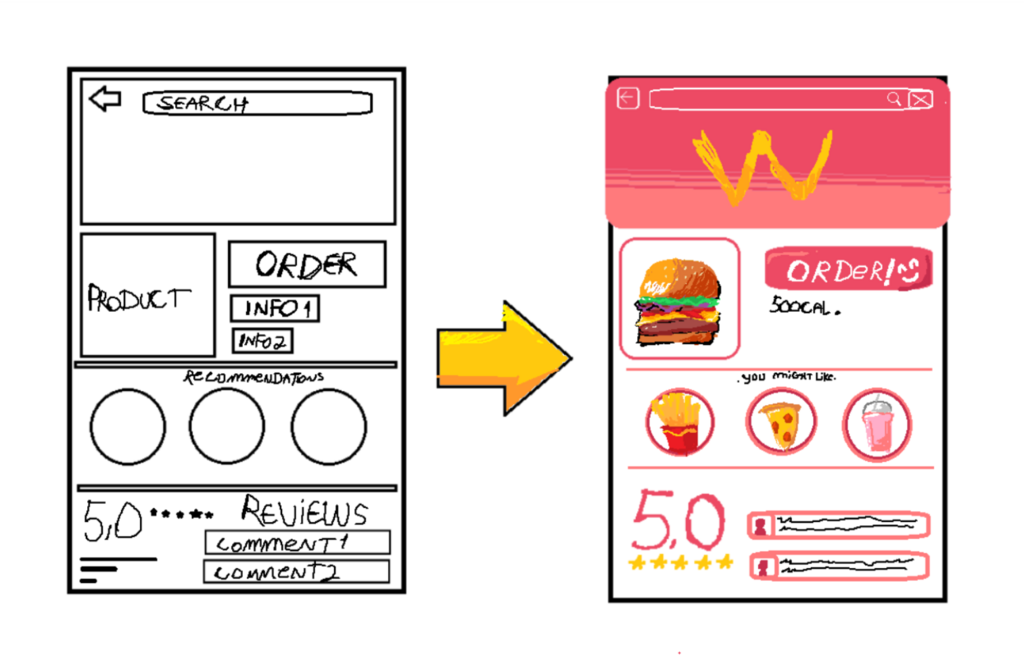
A UX Designer, on the other hand, is a problem-solver and an advocate for the user. They start by understanding the user's needs through research, interviews, and creating user personas. They map out the user's journey through the product, ensuring every step is logical and frustration-free. They create wireframes and prototypes to test the product's flow before any visual design is applied. Their goal is function and usability over pure aesthetics.
By taking the time to understand the users they are designing for, UI designers will create interfaces that are more likely to suit users’ needs, both visually and functionally.
In many companies, especially smaller ones, one person might handle both UI and UX roles. However, in larger organizations, these are specialized positions that require close collaboration to create a product that not only works well but also looks great.
Why Design Matters
Good UI/UX design is not just a nice-to-have; it's essential for business success. A product with a poor user experience will be abandoned, no matter how powerful its features are. Think about an app you deleted because it was confusing, or a website you left because you couldn't find what you were looking for. That's the impact of bad UX.
On the flip side, great design creates loyal customers. When a product is intuitive and enjoyable to use, people will return to it again and again. It builds trust and can be a major competitive advantage in a crowded market.
| Bad UI/UX | Good UI/UX |
|---|---|
| Confusing navigation | Intuitive information flow |
| Inconsistent visual style | Consistent, clean branding |
| High user frustration | High user satisfaction |
| Low user retention | High user retention & loyalty |
| Negative reviews | Positive reviews & word-of-mouth |
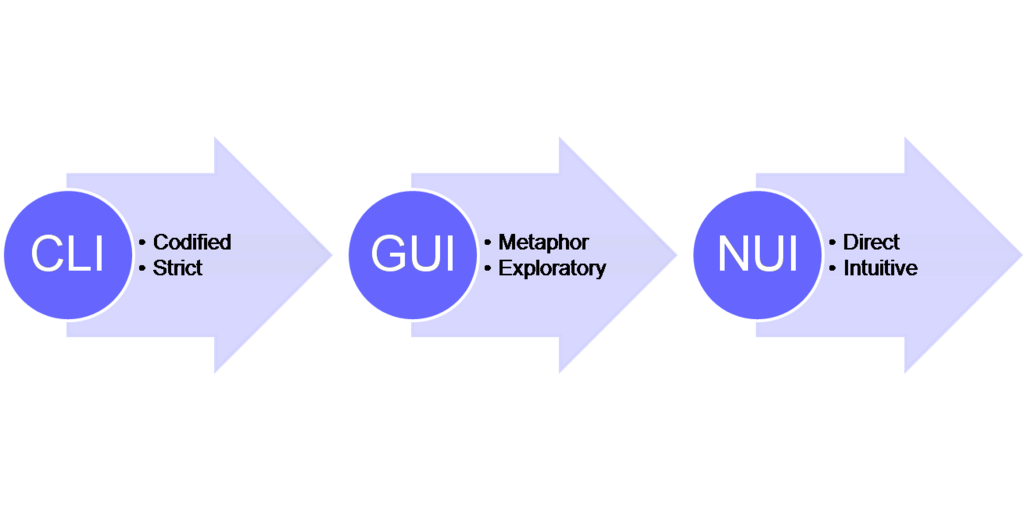
From the command line interfaces of the past to the voice-activated assistants and virtual reality worlds of today, UI/UX has evolved dramatically. Early interfaces required users to learn a specific, rigid language. The invention of the Graphical User Interface (GUI) with its windows, icons, and mouse pointers was a revolutionary step, making computers accessible to everyone.
Today, trends continue to shift. We're seeing a rise in minimalist design, a focus on accessibility for users with disabilities, and the integration of artificial intelligence to create more personalized experiences. As technology becomes more integrated into our lives, the role of UI/UX design will only become more critical.
Let's review the key terms we've covered.
Now, check your understanding of these core concepts.
Which statement best describes the primary focus of User Experience (UX) design?
A designer is conducting interviews and creating user personas to understand user needs. This work is a core activity of which role?
Understanding the distinction between how a product looks and how it feels to use is the first step in appreciating the power of thoughtful design.