UI Design for Product Managers
User-Centered Design
Putting Users First
Great products don't happen by accident. They are the result of a deep understanding of the people who will use them. This is the core idea behind user-centered design (UCD), an approach that places the user at the heart of every decision in the product development process. Instead of building what you think users want, UCD forces you to find out what they actually need.
UCD is a framework focused on understanding users' needs, preferences, and limitations to create products that are both effective and satisfying.
Imagine building a powerful new software tool with dozens of features. You launch it, but nobody uses it. Why? It might be too complicated, or it might solve a problem nobody actually has. UCD helps you avoid this expensive mistake by grounding your product in reality. It ensures that the final product isn't just functional, but also intuitive, enjoyable, and genuinely useful to your target audience.
The Core Principles
User-centered design isn't a rigid set of rules, but rather a philosophy guided by a few key principles. Embracing these will fundamentally change how you approach product development.
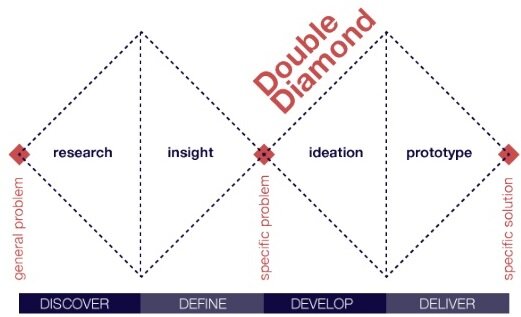
The whole process can be broken down into four main stages: user research, design, testing, and implementation.
First is user involvement. This means engaging with real end-users at every stage, not just at the end for a final review. It starts with research to understand their goals and frustrations and continues with getting their feedback on early sketches, prototypes, and finished features. You're not designing for users; you're designing with them.
Second is the iterative design process. Product development is not a straight line from idea to launch. UCD is a cycle: you create a design, test it with users, learn from their reactions, and then refine the design based on that feedback. This loop repeats until the product effectively meets user needs. This prevents you from investing heavily in a flawed idea.
Finally, the entire process is focused on achieving high usability. A product is usable if people can achieve their goals with it effectively, efficiently, and with satisfaction. If a user can't figure out how to complete a task, the design has failed, no matter how clever it seems.
The Payoff of a User Focus
Adopting a user-centered approach requires time and resources, but the benefits are substantial. Products designed with UCD principles are more likely to succeed because they're built on a solid foundation of user needs, not assumptions.
One of the biggest benefits is reduced risk. By testing ideas with users early and often, you can identify and fix problems when they are cheap and easy to solve. A small change to a wireframe is much easier than re-engineering a feature after it has already been built and launched. This saves development time and money.
Ultimately, UCD leads to products that people love. When a product is intuitive and helps someone solve a real problem, they are more likely to use it, recommend it to others, and remain a loyal customer. This enhanced user satisfaction is a powerful competitive advantage.
Consider the evolution of online banking. Early websites were often just digital versions of paper forms, clunky and confusing. But through user research and iterative design, banks learned what customers actually wanted: quick balance checks, easy transfers, and mobile deposits. By focusing on the user's core tasks, they transformed a frustrating chore into a simple, everyday convenience. That transformation is a direct result of user-centered design in action.
Let's check your understanding of these core concepts.
What is the central philosophy of user-centered design (UCD)?
The user-centered design process is described as a cycle. Which sequence best represents this iterative loop?
By consistently applying these principles, you can guide your team to create products that not only meet business goals but also earn a valued place in your users' lives.