Type 26 Frigate Fuel System Explained
Introduction to Marine Fuel Systems
Fueling the Fleet
A ship's engine is its heart, and fuel is the lifeblood. Without a reliable supply of clean fuel, a vessel is just a floating piece of steel. But marine engines aren't as simple as the one in your car; they can run on a variety of fuels, each with different properties.
The most common types are distillates, like Marine Gas Oil (MGO), and residual fuels, often called Heavy Fuel Oil (HFO) or bunker fuel.
MGO is similar to diesel fuel. It's cleaner and less viscous, making it easier to use. HFO, on the other hand, is a thick, residual product left over from the oil refining process. It's cheaper but needs to be heated before it can be pumped and burned. Many large commercial vessels use HFO for long voyages to save on costs and switch to cleaner distillates when they are near ports or in regulated waters.
The System's Anatomy
Getting fuel from the storage tank to the engine involves a network of specialized components. It’s more than just a pipe and a pump; it's a complete system designed for safety, efficiency, and reliability. The journey begins in large storage tanks deep within the ship's hull.
From the storage tanks, transfer pumps move the fuel into smaller tanks called settling tanks. Here, some of the water and heavy sediment naturally separate and settle at the bottom. The fuel then passes through purifiers and filters, which are crucial for cleaning it before it's ready for use.
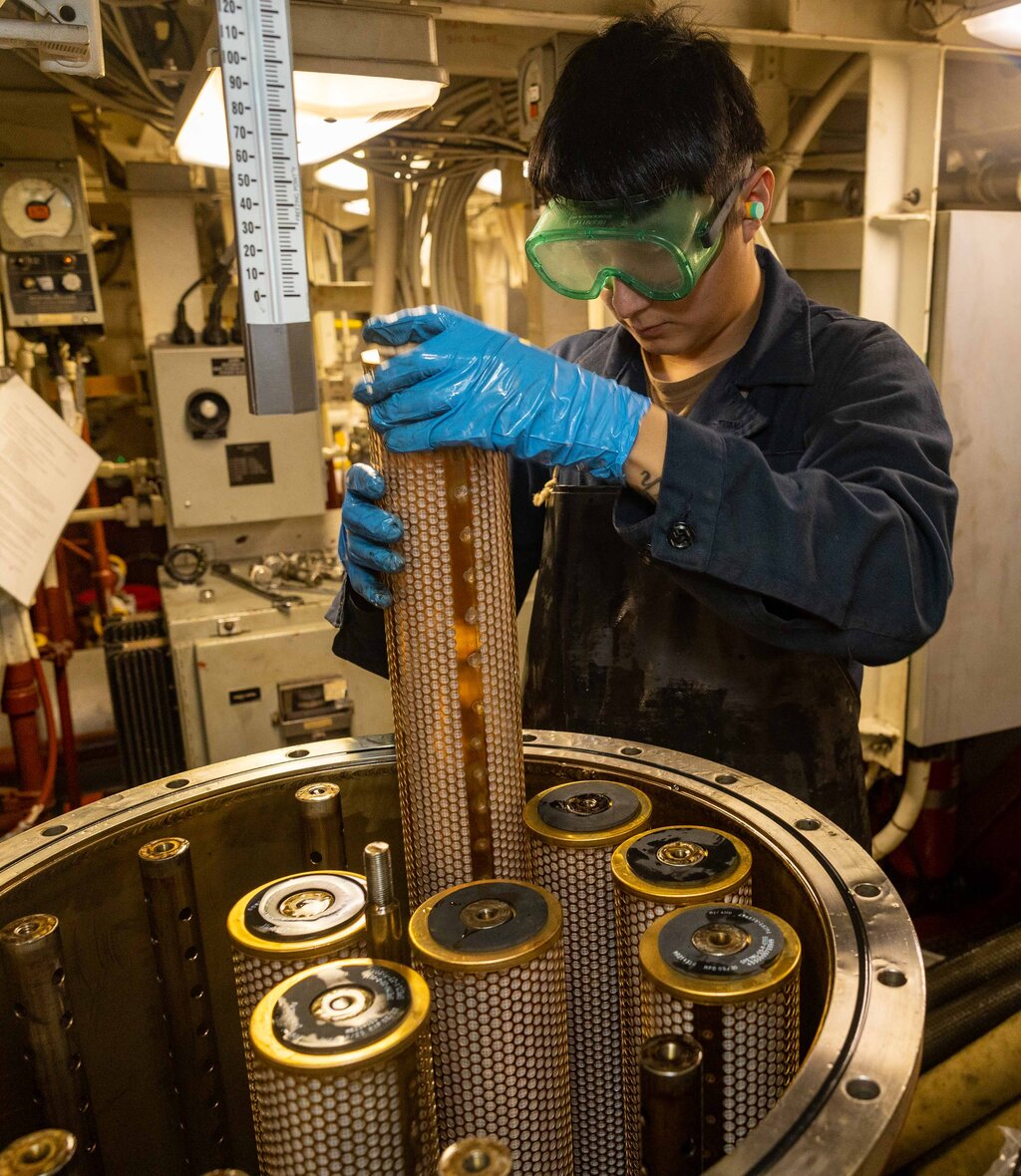
Finally, the clean fuel is moved to a service tank, also called a day tank, which directly feeds the engine. This entire network is connected by pipes and controlled by numerous valves that direct the flow.
From Tank to Thrust
The operational sequence is a carefully managed process. After a ship takes on fuel—a process called bunkering—the fuel might sit in storage tanks for weeks. When needed, it's pumped to the settling tank.
Here, if it’s heavy fuel oil, it gets heated to reduce its viscosity, making it thin enough to flow properly. The real cleaning happens in the purifiers, which are centrifugal separators that spin at high speeds. This process slings dense contaminants, like water and solid particles, to the outside, where they can be removed. Think of it like the spin cycle on a washing machine, but for fuel.
This purification step is non-negotiable. Dirty fuel can quickly damage sensitive engine components like fuel injectors, leading to costly repairs and potential engine failure.
Once purified, the fuel is stored in the service tank, ready to be delivered to the engine by another set of pumps. The engine's fuel injection system then atomizes the fuel, spraying it as a fine mist into the cylinders for combustion, which creates the power to turn the propellers.
The Importance of Maintenance
A marine fuel system is under constant stress from vibration, temperature changes, and the corrosive nature of the fuel itself. Without regular maintenance, problems are inevitable. A clogged filter, a leaking pipe, or a failed pump can disable a ship, which is a dangerous situation in the open ocean.
Routine maintenance involves several key tasks:
| Task | Description |
|---|---|
| Fuel Testing | Regularly sampling and testing fuel to check for water, microbes, and contaminants. |
| Filter Cleaning | Cleaning or replacing fuel filters and strainers to ensure a clear flow. |
| Tank Cleaning | Periodically cleaning storage and service tanks to remove accumulated sludge and water. |
| System Inspection | Checking all pipes, valves, and pumps for leaks, corrosion, or other signs of wear. |
Proper upkeep ensures the engine receives a steady supply of clean fuel, maximizing efficiency and preventing breakdowns. For the crew of any vessel, from a small fishing boat to a massive aircraft carrier, a well-maintained fuel system means reliability and, above all, safety at sea.
What is the primary reason large commercial vessels often use Heavy Fuel Oil (HFO) for long ocean voyages?
What is the correct sequence of tanks through which fuel travels from storage to the engine?