Turkic Studies in Armenia
Introduction to Turkic Studies in Armenia
The Start of a Field
The study of Turkic languages and cultures in Armenia didn't begin in a vacuum. It grew from centuries of direct contact with Turkic-speaking peoples, particularly within the Ottoman and Persian empires. This long history of interaction, both cooperative and conflicting, made understanding Turkic languages, history, and literature a practical necessity and an academic pursuit.
Initial efforts were often driven by linguists and philologists. One of the most foundational figures was Hrachia Adjarian, a brilliant linguist who made monumental contributions to Armenian dialectology but also extensively studied the influence of Turkish and other languages on Armenian. His work helped establish a rigorous, scholarly approach to language studies that laid the groundwork for future generations.
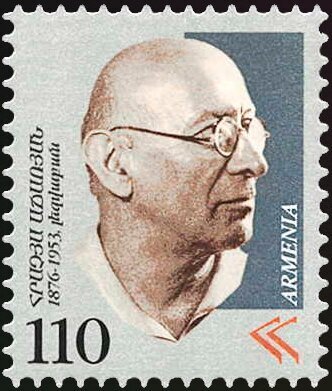
Early Armenian scholars meticulously documented dialects, translated literary works, and analyzed historical chronicles. Their work wasn't just about language; it was about understanding the history and culture of powerful neighbors. This scholarship provided a crucial lens through which Armenians could interpret their own history and geopolitical situation.
Key Institutions
As the field matured, it became institutionalized within Armenia's leading academic centers. The primary hub for Turkic studies is Yerevan State University (YSU), particularly its Faculty of Oriental Studies. Founded in 1968, this faculty has dedicated departments for Turkic languages and history, training new generations of specialists.
Another cornerstone is the National Academy of Sciences of the Republic of Armenia. Its Institute of Oriental Studies functions as a major research center, where scholars conduct in-depth research on the history, literature, and politics of Turkey, Azerbaijan, and Central Asian states. These institutions ensure that the study is not just an individual pursuit but a coordinated, national academic endeavor.
Together, YSU and the National Academy of Sciences form the backbone of Turkic studies in the country. They publish academic journals, host conferences, and maintain archives, creating a robust ecosystem for research and education on the Turkic world.
Shifting Perspectives
The focus of Turkic studies in Armenia has evolved significantly over time, often reflecting the changing political landscape. During the Soviet period, research was heavily influenced by official Soviet ideology. Studies often centered on historical materialism, class struggle, and the prescribed narrative of relations between peoples within the USSR and its neighbors.
After Armenia gained independence in 1991, the field underwent a dramatic transformation. Scholars were free to explore topics previously considered sensitive. The focus broadened to include contemporary issues, such as Turkish and Azerbaijani foreign policy, regional security dynamics, and the Nagorno-Karabakh conflict. The approach became more pragmatic, geared toward understanding the modern political and social realities of neighboring Turkic states.

Today, Armenian Turkologists continue to produce valuable research on a wide range of topics, from medieval Turkic history to modern energy politics. The field remains dynamic, adapting to new challenges and questions as the region continues to change.
Time to check what you've learned.
What were the primary motivations for the initial development of Turkic studies in Armenia?
Which scholar is highlighted as a foundational figure for his work on the influence of Turkish on the Armenian language?
This overview shows how Turkic studies in Armenia developed from the work of pioneering individuals into a structured academic field, adapting its focus in response to historical and political shifts.