Turkey: Geopolitics, History, and Culture
Imperial Legacies
Forging a Nation from Two Empires
Modern Turkey didn't spring from a vacuum. It was forged in the crucible of two successive empires: the Byzantine and the Ottoman. When the Republic of Turkey was founded in 1923, it inherited more than just territory. It inherited a complex DNA of governance, identity, and power that stretched back over a millennium.
The shift from the sprawling, multi-ethnic Ottoman Empire to a centralized Turkish nation-state was a profound transformation. Leaders of the new republic, many of whom were former Ottoman military officers and bureaucrats, selectively repurposed the imperial machinery they knew. This wasn't simply a rejection of the past but a strategic adaptation of it. The administrative frameworks, legal precedents, and even the mental maps of statecraft were carried over from the Ottoman era, which itself had absorbed and adapted many Byzantine structures after the conquest of Constantinople in 1453.
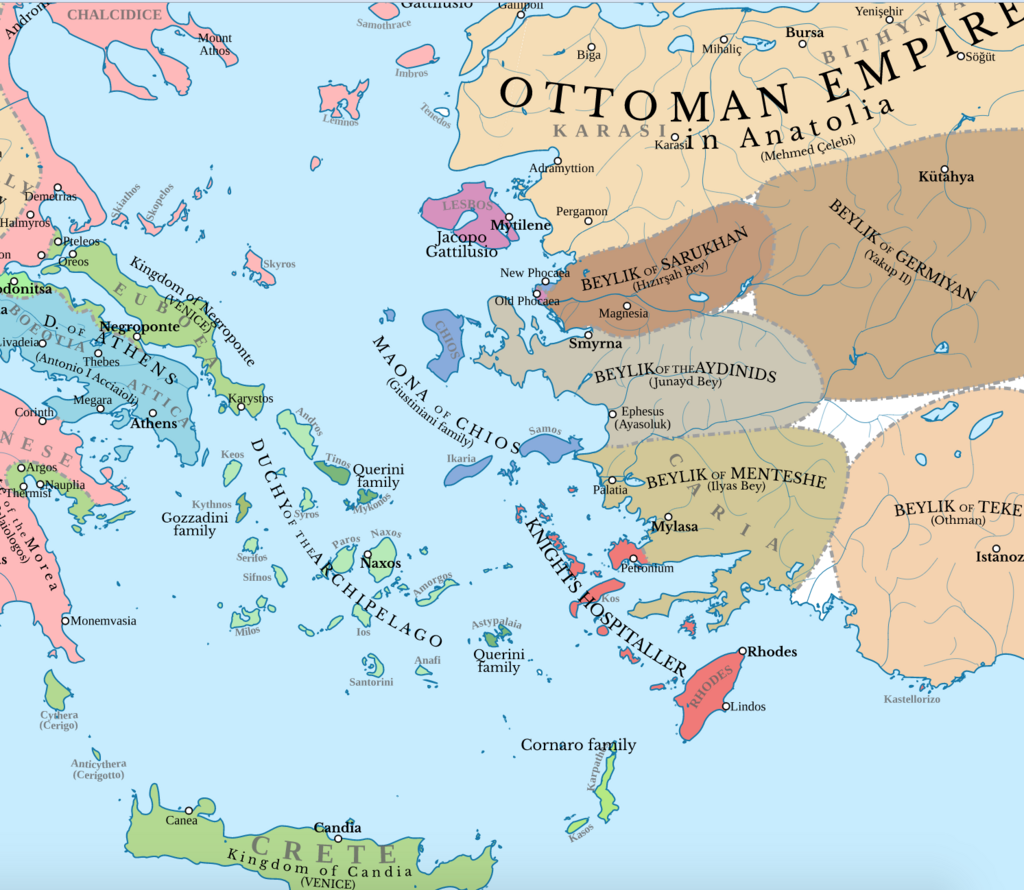
A key concept in this fusion is the identity of 'Rumi,' or Roman. After conquering Anatolia, the Seljuk and later Ottoman Turks began to see themselves not just as invaders but as the new Romans of the land. This created a unique synthesis, blending Turkic and Islamic traditions with the deep-rooted imperial culture of the Eastern Roman Empire. This legacy of a state built on a specific, prestigious territory—rather than just on a single ethnicity—is a powerful undercurrent in Turkish national identity.
The State and the Altar
One of the most direct lines of continuity runs through the state's relationship with religion. The Byzantine Empire was defined by , a political theory in which the head of state is also the head of the church. The emperor had supreme authority over the ecclesiastical councils and bishops, ensuring the church served the interests of the state. The Ottoman Sultans, while ruling under Islamic law, adopted a similar model. As Caliph, the Sultan held ultimate religious authority, and the clerical class was effectively an arm of the state bureaucracy.
This tradition of state control is directly visible in modern Turkey. The Ottoman Sheikh-ul-Islam, the highest religious office, was replaced by the Presidency of Religious Affairs, or Diyanet. Established by Mustafa Kemal Atatürk, the Diyanet oversees all of Turkey's mosques, employs all imams, and issues religious rulings. While the Republic is constitutionally secular, this centralized control over religious life is a direct institutional descendant of Byzantine and Ottoman practice, designed to ensure religion supports national unity rather than challenges the state.
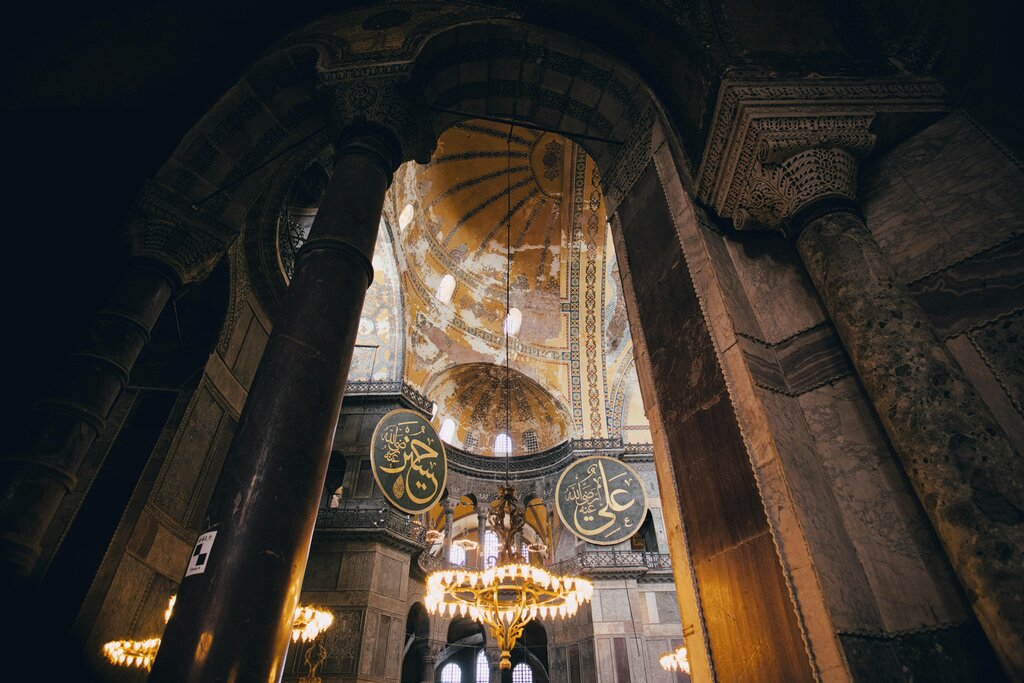
Nowhere is this layered history more visible than in the Hagia Sophia. Originally the principal cathedral of the Byzantine Empire, it was converted into an imperial mosque by Mehmed the Conqueror. In 1935, the secular republic turned it into a museum, symbolizing a new, modern identity. Its recent reconversion into a mosque in 2020 was a powerful statement about Turkey's contemporary political and cultural direction, drawing directly on its Ottoman past. The building itself is a physical archive of this civilizational shift.
Old Guard, New Republic
The leadership of the new Turkish Republic didn't emerge from nowhere. Most, including Atatürk himself, were products of the Ottoman military and political system. They were part of the movement, a group of reform-minded nationalists who sought to modernize the Ottoman Empire in its final decades. Frustrated by the empire's decay, they seized power in 1908, but their efforts were too late to prevent its collapse in World War I.
After the war, these same men channeled their organizational skills and nationalist ideology into the Turkish War of Independence. They repurposed the Ottoman bureaucracy—itself a sophisticated system of record-keeping and administration—to build their new nation-state. This created a strong continuity in governance. The top-down, centralized, and bureaucratic nature of the Turkish state today owes much to its Ottoman predecessor.
The transition involved a brutal process of ethnic homogenization. The multi-cultural tapestry of the Ottoman Empire, which included significant Greek, Armenian, and Jewish populations, was replaced by a state centered on a singular Turkish identity.
This imperial legacy informs Turkey's modern foreign policy, sometimes described through the concept of . This idea posits that Turkey's historical and cultural ties to former Ottoman territories give it a unique sphere of influence. This reliance on a glorious past fuels a potent nationalist pride, but it can also clash with the historical reality of an empire built on multi-ethnic diversity, not Turkish homogeneity. This tension between the imperial past and the nationalist present continues to shape Turkey's identity on the world stage.
What is the term for the Byzantine political theory in which the head of state also holds supreme authority over the church?
How does the modern Turkish Diyanet (Presidency of Religious Affairs) demonstrate continuity from the Ottoman and Byzantine eras?