Truth vs Reality
Defining Truth
What Makes Something True?
We use the word “true” every day. But what does it actually mean for a statement to be true? Is it about matching reality, fitting in with other beliefs, or something else entirely? Philosophers have debated this for centuries, and they’ve come up with a few compelling answers. Let's explore three major theories of truth.
Truth as a Mirror
The most intuitive idea is the correspondence theory. It states that a belief or statement is true if it corresponds to, or matches, a fact about the world. It’s the common-sense view we all use when we say, “It’s true that the cat is on the mat,” because we can look over and see the cat, in reality, on the mat. The statement mirrors the world.
According to this theory, truth is a relationship between what you say or think and the way the world actually is.
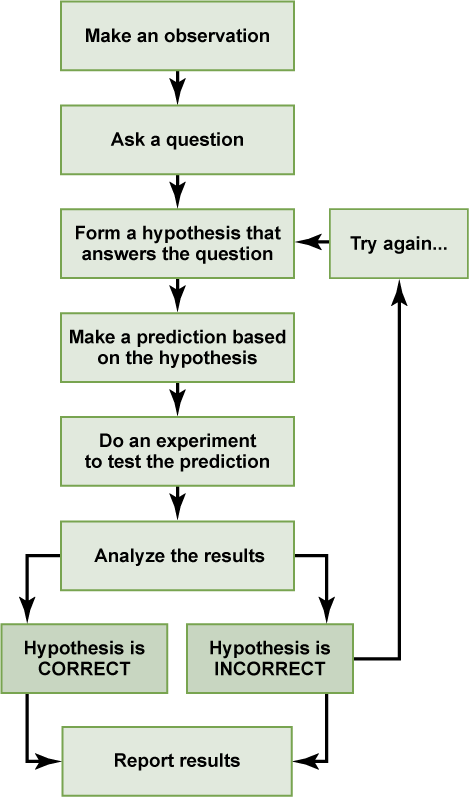
This theory works beautifully for statements about the physical world. It forms the basis of the scientific method, where a hypothesis is tested against observable evidence. If an experiment confirms the hypothesis, we consider it to be a true representation of reality, at least for now.
But what about statements where there’s no simple, physical fact to point to? Consider mathematical truths like $2 + 2 = 4$ or ethical statements like “Stealing is wrong.” What in the physical world do these statements “correspond” to? This challenge leads some thinkers to a different approach.
Truth as a Web
The coherence theory offers a different perspective. It suggests that a statement is true if it fits logically into a larger, consistent web of beliefs. Truth isn’t about matching the world one-to-one, but about being part of a coherent system.
Think of a detective solving a crime without a confession or physical evidence. The detective builds a case by piecing together a story where all the witness testimonies, motives, and timelines fit together without contradiction. The story is considered “true” because it’s the most coherent explanation of all the available information. No single piece of evidence proves the case, but the whole system of beliefs supports it.
Mathematics is another great example. The statement $2 + 2 = 4$ is true because it coheres perfectly with the entire system of arithmetic rules and axioms. Its truth comes from its logical fit within that system, not from finding two objects, adding two more, and checking the result every time.
Truth as a Tool
Finally, the pragmatic theory takes a more practical approach. For pragmatists, a belief is true if it works—if it allows us to make accurate predictions, solve problems, and navigate the world effectively. The truth of a belief is determined by its practical consequences.
For example, the belief that “washing your hands prevents the spread of disease” is true because acting on it leads to a useful outcome: people get sick less often. Its truth is grounded in its utility.
Pragmatists argue that the meaning and truth of an idea are found in its real-world application.
This theory can even apply to scientific models. The old Bohr model of the atom, which depicts electrons orbiting the nucleus like planets, isn't how physicists see atoms today. It doesn't fully correspond to reality. However, for a high school chemistry student, believing in that model is incredibly useful for understanding chemical bonds. In that context, the model is pragmatically true because it works as a tool for learning.
Each of these theories captures a different facet of what we mean by “truth.” Whether it’s a mirror to reality, a piece in a logical puzzle, or a useful tool, understanding these definitions helps us think more clearly about the claims we encounter every day.
Ready to test your understanding?
According to the correspondence theory, a statement is true if it...
A detective concludes a suspect is guilty because their story is the only one that makes all the evidence—motive, witness accounts, and timeline—fit together without contradiction. This is a classic example of which theory of truth?
These different ways of defining truth give us a framework for thinking about knowledge and belief, which we'll build on as we continue.