Truss Design Essentials
Introduction to Trusses
The Structure of Strength
Look at a bridge, the roof of a large building, or even a construction crane. You'll likely see a familiar pattern: a web of triangles. This framework is called a truss, and it's one of the most important inventions in structural engineering. A truss is a structure made of straight members connected at their ends to form a rigid shape. Its job is to support weight over a wide area using the least amount of material possible.
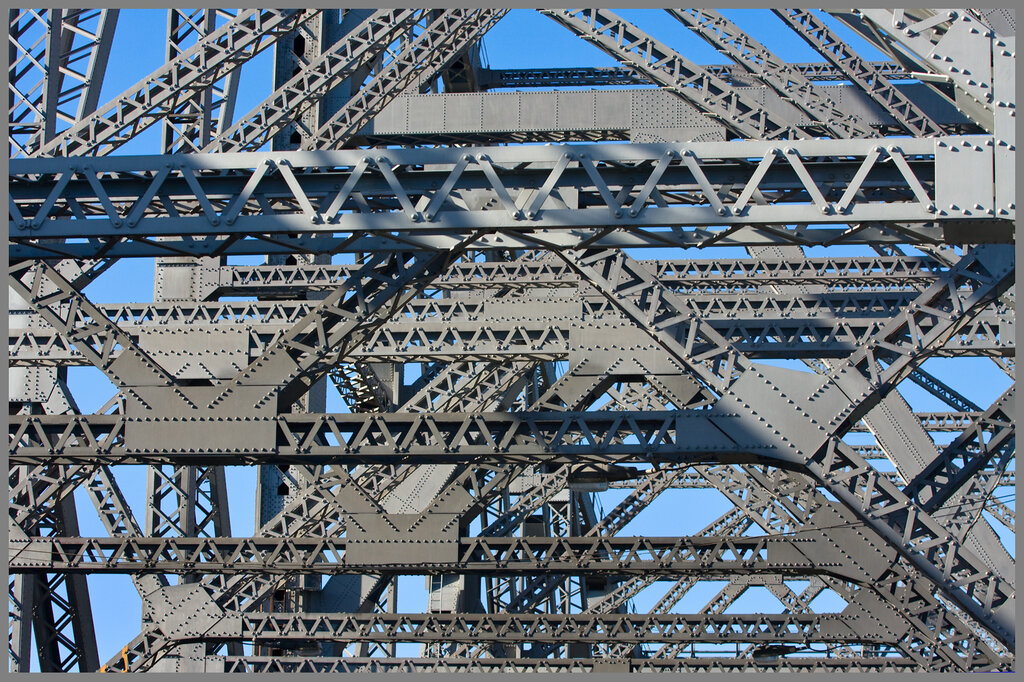
Instead of using a single, solid beam, which would be incredibly heavy and expensive, engineers use trusses to create strong, lightweight, and efficient structures. They are the hidden skeletons that hold up many of the world's largest constructions.
The Parts of a Truss
While trusses can look complex, they are all built from the same basic components. Understanding these parts helps demystify how they work.
The main parts are:
- Top Chord: The line of members along the upper edge of the truss.
- Bottom Chord: The line of members along the lower edge.
- Web Members: The internal members that connect the top and bottom chords. They form the triangular pattern.
Forces from a load, like the weight of cars on a bridge, are transferred through these components. Generally, the top chord gets squeezed together (compression), and the bottom chord gets pulled apart (tension). The web members carry forces between them to keep the whole structure stable.
Why Triangles?
The triangle is the secret to a truss's success. It's a special shape in geometry and engineering. If you take three planks and join them at the corners to form a triangle, the shape is rigid. You can push on it and pull on it, but it won't change its shape unless the planks themselves break.
Now, imagine a four-sided shape like a square. If you push on one of its corners, it easily collapses. To make the square rigid, you need to add another member—a diagonal brace. What have you created? Two triangles.
This simple principle is why trusses are made entirely of triangles. Each triangle resists being deformed, and when they are all connected, the entire structure becomes incredibly strong and stable. The forces are neatly channeled through the members as simple tension or compression, making the most efficient use of the material.
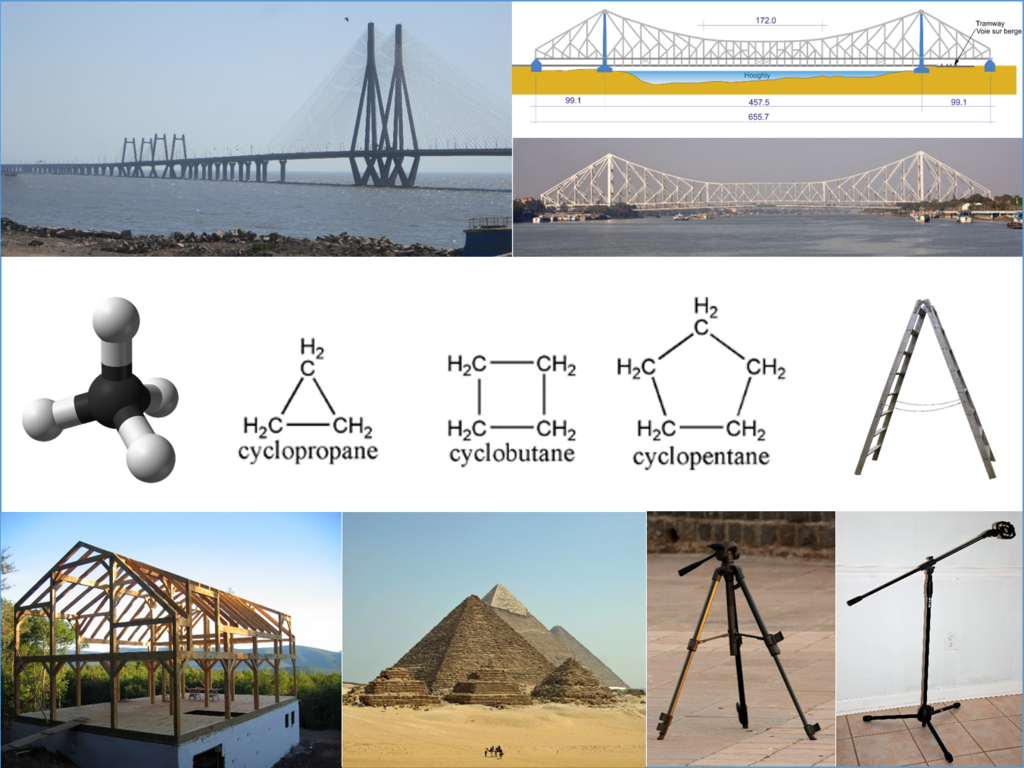
By understanding these basic ideas, you can start to see the engineering genius behind some of the world's most iconic structures.
What is the primary advantage of using a truss structure compared to a single, solid beam?
Why are triangles the fundamental shape used in truss construction?