Trousers Measurement and Pattern Drafting
Understanding Body Measurements
The Foundation of Fit
Before you can draft a pattern or even cut fabric, you need a precise map of the body you're sewing for. Creating well-fitting trousers is all about translating those body dimensions into a pattern. Inaccurate measurements are the number one reason a handmade garment doesn't fit right. Let's walk through the key measurements for trousers and how to take them accurately.
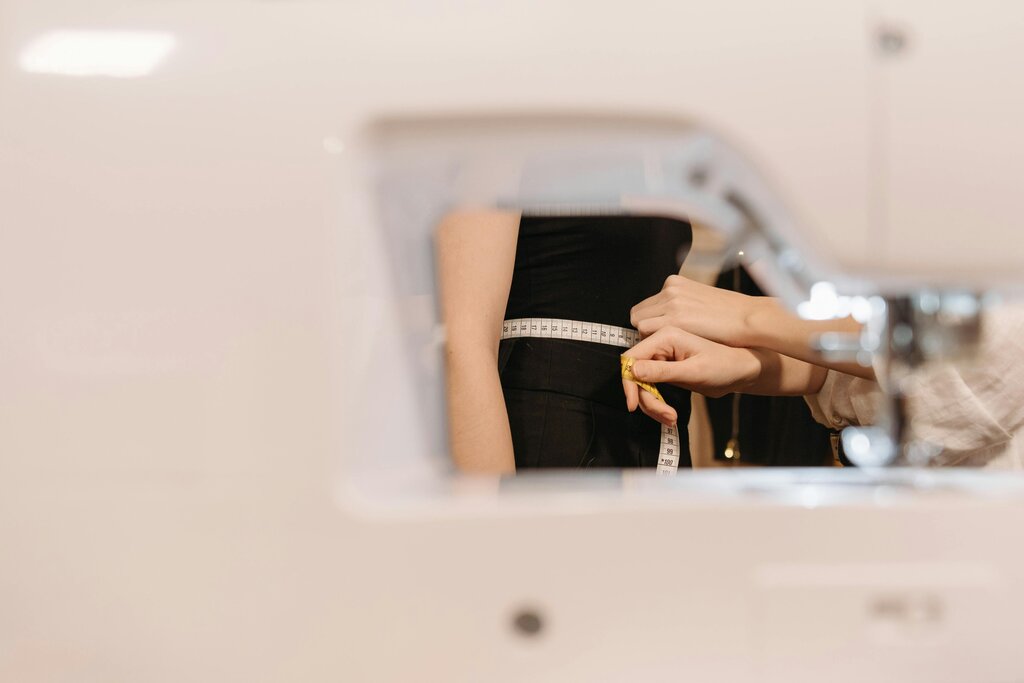
For best results, wear fitted clothing, like leggings and a tank top, not baggy clothes. Stand in a relaxed, natural posture. It's often easier and more accurate to have someone help you, especially for measurements like the inseam.
Core Circumferences
The first measurements define the core fit of the trousers around your torso.
Waist: Find your natural waist. This is the narrowest part of your torso, usually just above your belly button. Wrap the measuring tape around it, keeping the tape parallel to the floor. Don't pull it tight; one finger should fit comfortably between the tape and your body.
Hips: This measurement should be taken at the fullest part of your hips and bottom. Again, keep the tape measure level with the floor. Getting this right is key for ensuring you can pull the trousers on and sit comfortably.
Always keep the measuring tape level with the floor for circumference measurements. A tilted tape will give you an inaccurate, larger number.
Length and Depth
Next, we'll determine the length of the trousers and how they sit on the body. These measurements are crucial for comfort and style.
Outseam and Inseam: The outseam is the length from your natural waist down the outside of your leg to your desired hem length. The inseam runs from the very top of your inner thigh down to where you want the trousers to end. This is one measurement where a helper is almost essential.
Rise and Crotch Depth: These related measurements determine the fit through the crotch. To measure the rise, sit on a flat chair and measure from your natural waist down to the chair's surface. Crotch depth is the full length of the crotch seam on a pair of well-fitting pants, from the front waistband, down through the legs, to the back waistband.
Leg Shape
Finally, these circumference measurements will define the silhouette of your trousers, whether you want a skinny, straight, or flared leg.
- Thigh: Measure around the fullest part of your thigh.
- Knee: Slightly bend your knee and measure around its widest point.
- Calf: Measure around the fullest part of your calf.
When taking these, think about the desired fit. Do you want the trousers to be snug against the leg, or have more ease? You can add extra length to the measurement to account for this.
| Measurement | How to Take It |
|---|---|
| Waist | Around the narrowest part of your torso, above the belly button. |
| Hips | Around the fullest part of your hips and bottom. |
| Inseam | From the top of the inner thigh down to the desired hem. |
| Outseam | From the natural waist down the outside of the leg to the hem. |
| Rise | While seated, from the natural waist down to the chair surface. |
| Crotch Depth | Full seam length on existing pants, from front to back waistband. |
| Thigh | Around the fullest part of the thigh. |
| Knee | Around the widest point of a slightly bent knee. |
| Calf | Around the fullest part of the calf. |
Now that you have your measurements, double-check them. Precision at this stage saves a lot of headaches later. Ready to test your knowledge?
Where should the tape measure be placed to find the natural waist?
Which measurement is most critical for ensuring you can pull the trousers on and sit down comfortably?
With these numbers recorded, you have the essential blueprint for drafting a pair of trousers that will fit perfectly. This is the first and most critical step in garment construction.