Trigonometric Functions Explained
Right Triangle Basics
What Makes a Triangle 'Right'?
A triangle has three sides and three angles. A right triangle is a special kind of triangle where one of those angles is a right angle, which measures exactly 90 degrees. Think of the corner of a square or a book—that’s a 90-degree angle. Because this angle is fixed, it gives right triangles some very useful and predictable properties.
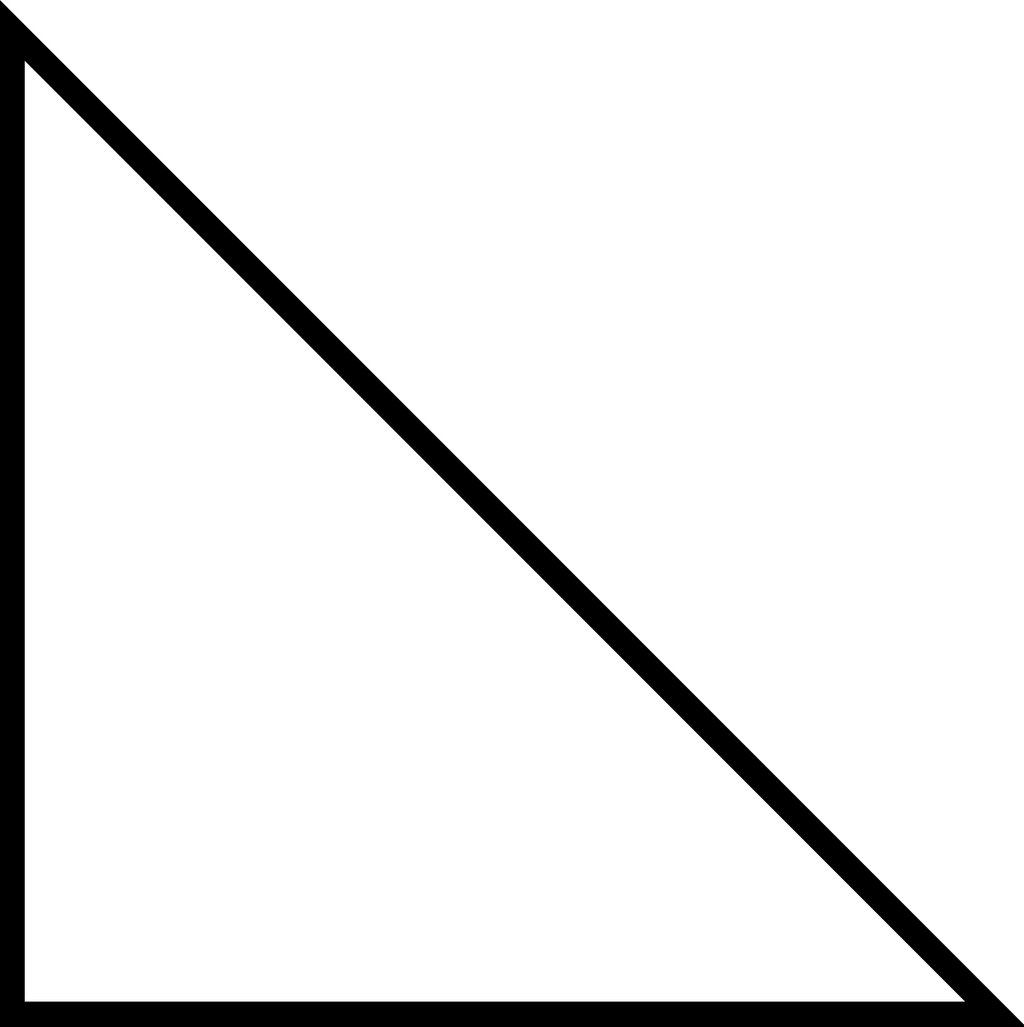
The other two angles in a right triangle are always acute, meaning they are both less than 90 degrees. The sum of all three angles in any triangle is always 180 degrees. In a right triangle, since one angle is 90 degrees, the other two must add up to 90 degrees.
Naming the Sides
Every right triangle has three sides, and each has a specific name. The names depend on which of the acute angles you are focusing on.
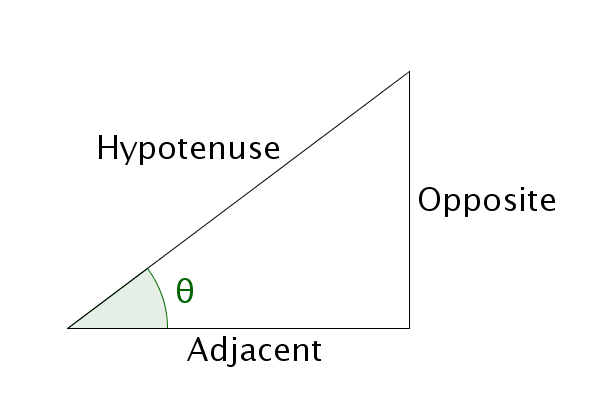
First, there's the hypotenuse. This is always the longest side and is directly across from the right angle. It never changes, no matter which acute angle you're looking at.
The other two sides are called legs. Their names depend on their relationship to a specific acute angle, which we often label with a Greek letter like theta ().
- The opposite side is the leg across from the angle .
- The adjacent side is the leg next to the angle that is not the hypotenuse.
If you switch your focus to the other acute angle, the opposite and adjacent sides will also switch.
The Pythagorean Theorem
The sides of a right triangle share a special relationship described by the Pythagorean theorem. This theorem states that if you square the lengths of the two legs (let's call them and ) and add them together, you get the square of the length of the hypotenuse (called ).
This simple formula is incredibly powerful. If you know the lengths of any two sides of a right triangle, you can always find the length of the third.
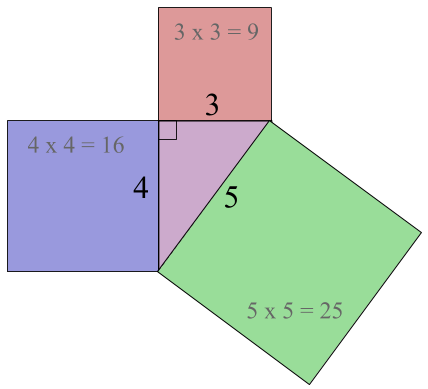
Let's try an example. Imagine a right triangle where one leg is 5 units long and the other is 12 units long. To find the hypotenuse (), we can plug these values into the theorem.
So, the hypotenuse is 13 units long. The theorem also works in reverse. If you know the hypotenuse and one leg, you can find the other leg by rearranging the formula, like this: .
Ready to test your knowledge? Let's see what you've learned.
In any right triangle, the two angles that are not the right angle must add up to 90 degrees.
Which side of a right triangle is always the longest and located directly across from the right angle?
Understanding these basics is the first step into the world of trigonometry. With a solid grasp of right triangles, you're ready for what comes next.