Trichology Essentials for Hair Stylists
Hair and Scalp Anatomy
The Scalp's Foundation
To understand hair, you first need to understand where it comes from: the scalp. The scalp isn't just skin; it's a complex, multi-layered environment that supports hair growth. Think of it as the soil from which hair sprouts. Just like plants need healthy soil, your hair needs a healthy scalp.
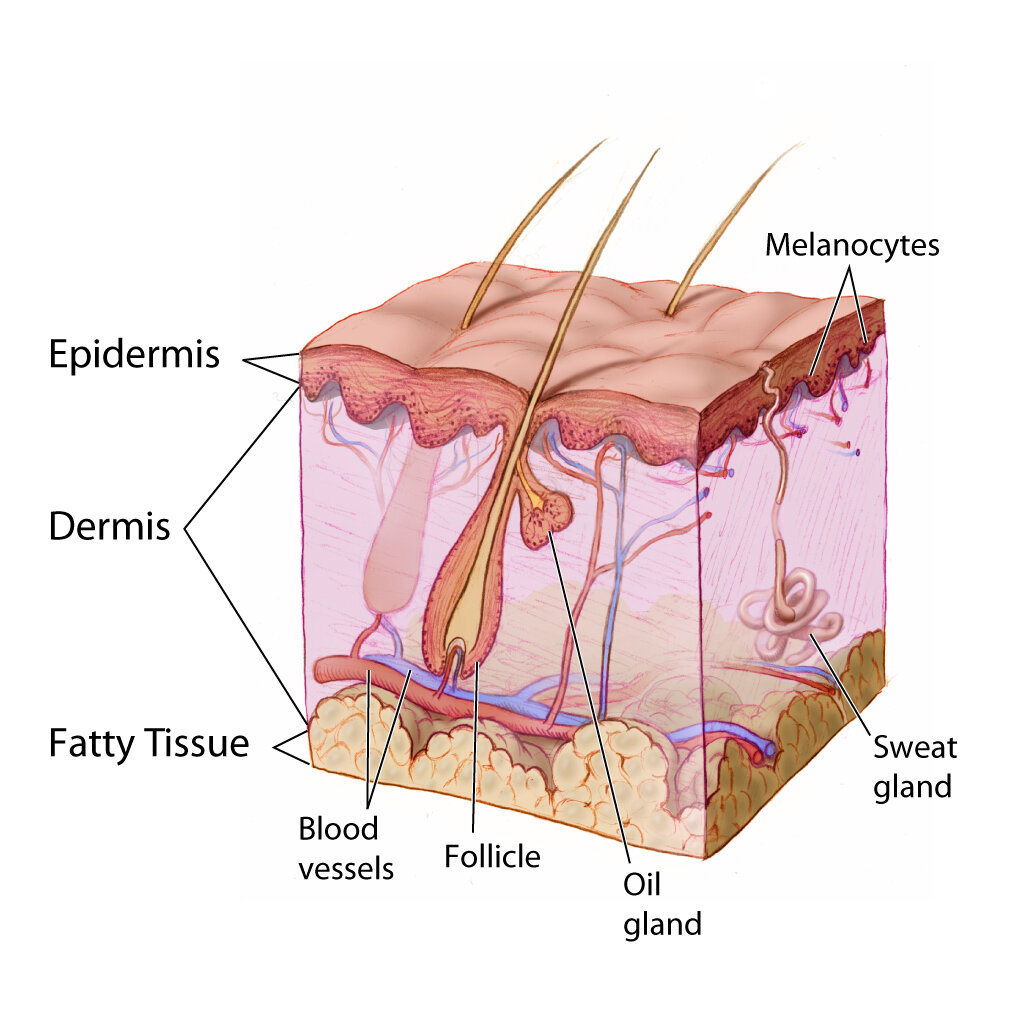
The scalp is made of several layers, but the two most important for hair are the epidermis and the dermis.
- Epidermis: This is the outermost layer, the part you can touch. It acts as a protective shield against the outside world. It's constantly renewing itself by shedding old cells and creating new ones.
- Dermis: Located just beneath the epidermis, the dermis is the functional powerhouse. It contains everything the hair needs to thrive: hair follicles, nerves, blood vessels, and sebaceous glands.
The Hair Follicle
Embedded deep within the dermis is the hair follicle. This isn't just a simple hole; it's a dynamic, living organ responsible for producing each strand of hair. Every single hair on your head grows from its own individual follicle.
Follicle
noun
A tunnel-shaped structure in the epidermis (outer layer) of the skin. Hair starts growing at the bottom of a hair follicle.
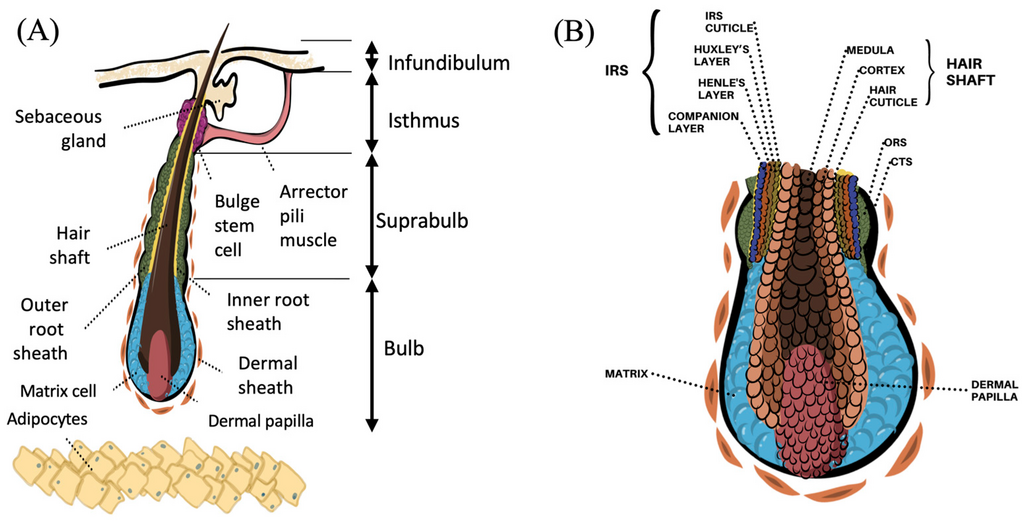
At the base of the follicle is the dermal papilla, which connects to tiny blood vessels. This connection is the hair's lifeline, delivering the oxygen and nutrients needed for cell division and growth. Surrounding the papilla is the hair bulb, where these cells divide and build the hair strand.
The Hair Shaft
The part of the hair you can actually see and touch is called the hair shaft. It’s technically not living tissue, which is why it doesn't hurt to get a haircut. The shaft is primarily made of a strong protein called keratin. It has three distinct layers.
The hair shaft consists of three main layers: the medulla, cortex, and cuticle, each with specific physiological roles.
-
Cuticle: The outermost layer. It’s formed by overlapping, flattened cells that look like shingles on a roof. A healthy, smooth cuticle lies flat, reflecting light and giving hair its shine. When damaged, the cuticle scales lift, making hair look dull and frizzy.
-
Cortex: This is the middle layer and makes up the bulk of the hair shaft. It contains the long keratin fibers that give hair its strength and elasticity. The cortex also holds the melanin, the pigment that determines your hair color.
-
Medulla: The innermost core of the hair shaft. This layer isn't always present, especially in very fine hair. Its exact function isn't fully understood, but it's thought to add structure.
Support Systems
Hair can't grow in isolation. It relies on a couple of key support systems within the scalp to stay healthy and moisturized.
Sebaceous gland
adjective
A small gland in the skin which secretes a lubricating oily matter (sebum) into the hair follicles to lubricate the skin and hair.
Attached to each hair follicle is a sebaceous gland. This gland produces an oily, waxy substance called sebum. Sebum travels up the follicle and onto the scalp and hair shaft. This natural oil is essential. It waterproofs the hair, protects it from drying out, and keeps the scalp's skin supple.
Finally, none of this would be possible without a robust blood supply. A dense network of blood vessels throughout the dermis delivers a constant stream of oxygen and nutrients directly to the base of each follicle. Good circulation is non-negotiable for healthy hair growth.
Healthy blood flow ensures that hair follicles receive all the building blocks they need to produce strong, vibrant hair.
Now that you understand the basic parts, let's test your knowledge.
Which layer of the scalp is considered the 'functional powerhouse' because it contains hair follicles, blood vessels, and sebaceous glands?
What is the primary function of the dermal papilla at the base of the hair follicle?
Understanding these anatomical structures is the first step for any hair professional. It provides the foundation for identifying client needs and promoting hair health from the root up.