Triangles for Grade 5
Triangle Basics
What Makes a Triangle?
At its core, a triangle is one of the simplest shapes in geometry. It's a polygon, which is a flat, closed shape made of straight lines. Specifically, a triangle has three sides, three corners (called vertices), and three inside angles.
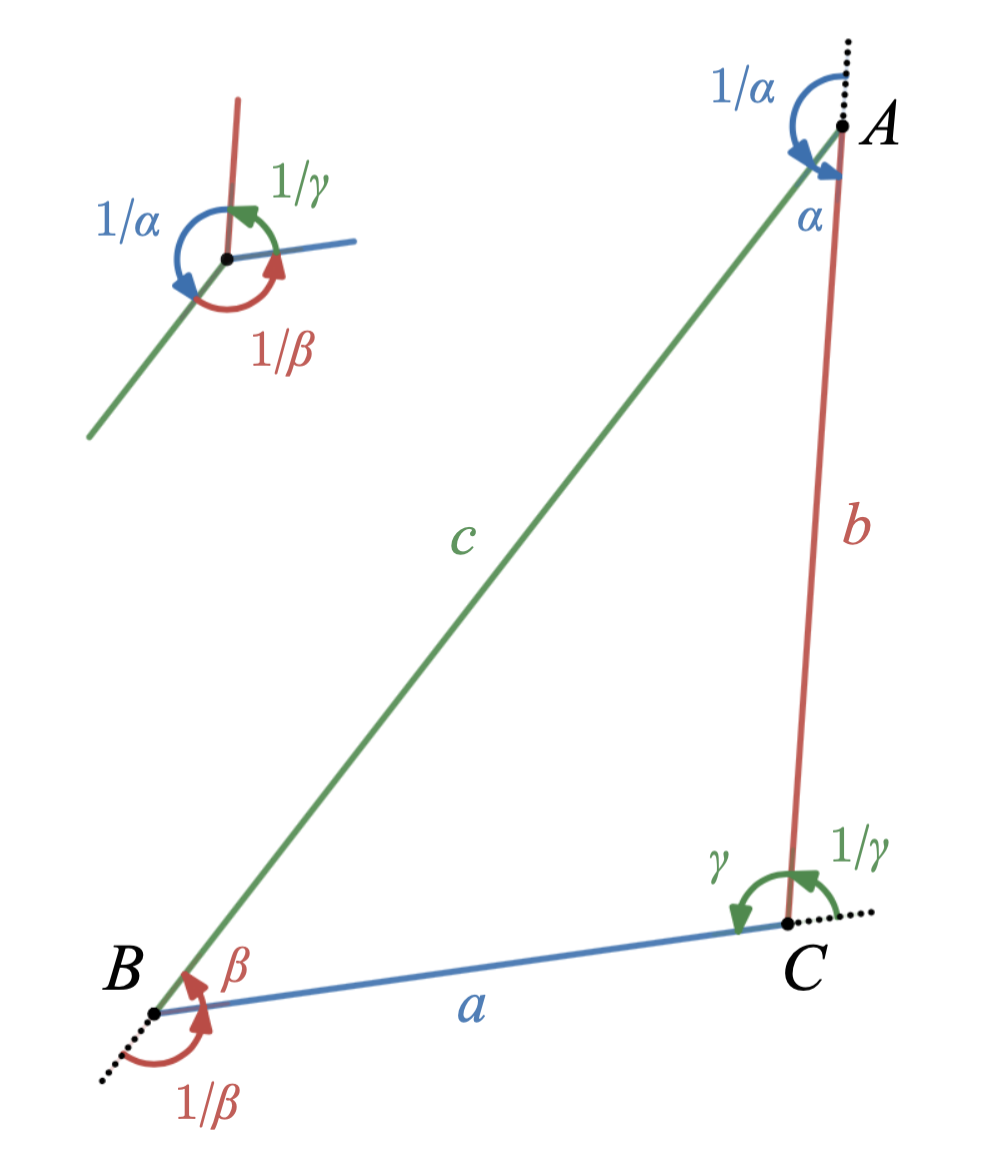
You can find triangles everywhere, from the slice of a pizza to the trusses of a bridge. But not just any three lines can form a triangle. They have to follow a couple of very important rules.
The 180-Degree Rule
The first rule is about angles. If you measure the three interior angles of any triangle, they will always add up to exactly 180 degrees. It doesn’t matter if the triangle is long and skinny or short and wide. The sum is always the same.
Think of it like this: if you cut a triangle out of paper, tear off the three corners, and place them side-by-side, they will form a perfect straight line. A straight line is 180 degrees.
The Rule of Sides
The second rule governs the lengths of the sides. It's called the Triangle Inequality Theorem, and it's simpler than it sounds. It just means that the sum of the lengths of any two sides of a triangle must be greater than the length of the third side.
Imagine you have three sticks. One is 2 inches long, another is 3 inches long, and the third is 6 inches long. Can you make a triangle? Try connecting them end to end. The 2-inch and 3-inch sticks together are only 5 inches long. They can't reach far enough to connect the ends of the 6-inch stick. They'll just lie flat on top of it. To form a closed shape, those two shorter sides would need to add up to more than 6 inches.
For any triangle, the sum of the lengths of two sides must always be greater than the length of the third side.
This principle ensures that the three sides can actually connect to form a closed, three-cornered shape. If this rule isn't met, you just have three lines that can't form a triangle.
Ready to test your knowledge on these fundamental rules?
The sum of the interior angles of any triangle will always be exactly...
Which of the following sets of side lengths can form a valid triangle?
These two simple rules, one for angles and one for sides, are the foundation for everything else you'll learn about triangles.