Transparency in Responsible AI for Developers
Introduction to Responsible AI
What Is Responsible AI?
Artificial intelligence is becoming a bigger part of our daily lives, from how we get news to how medical decisions are made. As these systems become more powerful, we need to ensure they are built and used in a way that is safe, fair, and beneficial to everyone. This is the core idea behind Responsible AI.
Responsible AI, often shortened to RAI, is an approach to developing and using AI systems that aligns with ethical principles and human values. It's not just about making AI that works; it's about making AI that we can trust.
This is the topic of responsible AI, which emphasizes the need to develop trustworthy AI systems that minimize bias, protect privacy, support security, and enhance transparency and accountability.
Think of it as a blueprint for building AI that helps society, rather than harms it. To make this abstract idea more concrete, RAI is guided by a set of core principles.
Three Core Principles
While there are many facets to responsible AI, three principles stand out as fundamental: fairness, accountability, and transparency. Let's look at each one.
Fairness
noun
The principle that AI systems should treat all individuals and groups equitably, avoiding the creation or reinforcement of unjust biases.
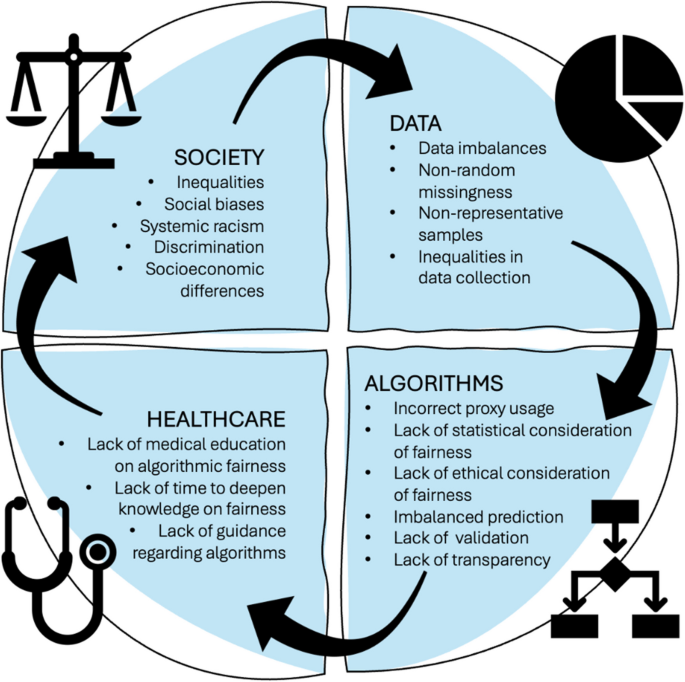
An AI system learns from the data it's given. If that data reflects existing societal biases, the AI will learn and even amplify those biases. For example, if a company historically hired more men than women for technical roles, an AI trained on that hiring data might learn to favor male candidates, even if gender isn't explicitly considered. Fairness in AI means actively working to identify and correct these kinds of biases to ensure equitable outcomes for everyone.
Accountability
noun
The principle that there should be clear responsibility and oversight for the outcomes of an AI system, especially when things go wrong.
If an AI system makes a critical error, who is responsible? Is it the developer who wrote the code, the organization that used the system, or the user who acted on its recommendation? Accountability means having clear answers to these questions. It involves creating systems of governance and oversight so that people and organizations can be held responsible for the AI they build and deploy. Without it, mistakes could go uncorrected and harm could go unaddressed.
Transparency
noun
The principle that an AI system's decision-making process should be understandable to the people who use it and are affected by it.
Many advanced AI models are incredibly complex, often referred to as "black boxes" because even their creators don't fully understand how they arrive at a specific conclusion. Transparency is the opposite of this.
It's the idea that we should be able to look inside the box and understand the AI's reasoning. If an AI denies someone a loan, transparency means the person can find out why. This is crucial for debugging systems, challenging incorrect decisions, and building public trust.
Why It Matters
Adopting a responsible approach to AI isn't just an ethical choice; it's a practical one. Systems that are fair, accountable, and transparent are more likely to be trusted and accepted by the public. They produce better, more reliable results and are less likely to cause unintended harm, which can lead to legal, financial, and reputational damage.
As AI continues to evolve, these principles provide a vital framework for steering its development in a direction that benefits all of humanity.
Let's review what you've learned.
What is the primary goal of Responsible AI (RAI)?
An AI model used for hiring is found to consistently favor applicants from one demographic because its training data reflected historical hiring biases. This is a failure of which core principle of Responsible AI?