Transitioning to AI Product Management
Introduction to AI Product Management
The AI Product Manager
So, you're a product manager. You build roadmaps, talk to users, and work with engineers to ship features. Now, add artificial intelligence to the mix. The game changes, and so does your role. Welcome to AI product management.
AI Product Management is the practice of managing the product lifecycle of AI-powered software, focusing on the integration of artificial intelligence to solve real-world problems and deliver value to users.
An AI Product Manager, or AI PM, steers the development of products that have machine learning or other AI technologies at their core. Instead of just defining how a feature should work, you're also guiding a system that learns and makes decisions on its own. This isn't about just building software; it's about training a model, feeding it the right data, and ensuring it behaves as expected.
A Different Kind of PM
While the fundamentals of product management still apply, the AI element introduces unique challenges and responsibilities. Traditional product development is often predictable. You design a button, and engineers build it. It either works or it doesn't.
AI development is different. It's experimental. You might have a great idea and plenty of data, but the model might not perform well. Success isn't guaranteed. AI PMs live in a world of probabilities, not certainties. They work more like scientists, forming hypotheses, running experiments with data, and iterating based on the results.
| Aspect | Traditional PM | AI PM |
|---|---|---|
| Primary Focus | User-facing features and workflows | Data, models, and system performance |
| Development Cycle | Linear and predictable (Agile sprints) | Experimental and iterative (Hypothesize, test, refine) |
| Success Metrics | User adoption, engagement, revenue | Model accuracy, business impact, user trust |
| Key Inputs | User feedback, market research | Data quality, data quantity, algorithm choice |
| Biggest Risk | Building the wrong feature | Inaccurate predictions, biased outcomes, ethical issues |
Because of this, the AI PM's job starts with data. Before you can even think about a feature, you must ask: Do we have the right data to solve this problem? Is it clean? Is it biased? Data strategy becomes a core part of product strategy.
Essential Skills and Knowledge
You don't need to be a machine learning engineer, but you can't be a complete novice either. An AI PM needs a unique blend of skills to be effective.
You need to be the bridge between the complex, technical world of AI and the practical needs of the business and its users.
Here are the essentials:
1. Foundational AI/ML Understanding: You should be comfortable with core concepts. Know the difference between supervised and unsupervised learning. Understand what a model is, what training data is, and how models are evaluated. This literacy helps you have credible conversations with your data science team and make informed decisions.
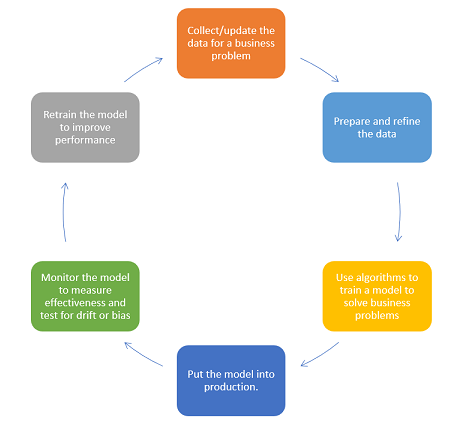
2. Data Science Workflow: How does an idea become a functioning AI model? You need to understand the lifecycle, from data collection and cleaning to model training, deployment, and monitoring. This knowledge helps you set realistic timelines and anticipate roadblocks.
3. Strategic Thinking: An AI PM must identify opportunities where AI can create real value, not just sprinkle it on a product because it's trendy. This means deeply understanding user problems and business goals, then mapping them to what AI can realistically achieve.
4. Ethical Judgment: AI models can perpetuate bias or make mistakes with serious consequences. AI PMs are on the front lines of responsible innovation. You must constantly ask questions about fairness, privacy, and transparency, and build safeguards into your product.
The role requires you to wear many hats: part strategist, part data analyst, part ethicist, and always the voice of the user. It's a challenging but incredibly rewarding field for those who are curious and ready to build the future.