Transitioning to AI Engineering
Introduction to AI Engineering
What Is AI Engineering?
Artificial Intelligence (AI) is about creating systems that can think and learn. AI Engineering is the discipline of actually building and managing those systems in the real world. It's the practical side of AI.
Think of it this way: a data scientist might design a brilliant new algorithm that can predict stock market trends. That's the core idea. An AI engineer takes that idea and turns it into a reliable, scalable application that a financial firm can use every single day. They are the architects and builders who construct the bridges between AI concepts and real-world solutions.
AI engineering serves to create, build, and launch artificial intelligence solutions that resolve practical issues.
This involves everything from preparing the data, to training the AI models, to deploying them on servers, and making sure they keep running smoothly and fairly over time. It’s a field that combines software engineering, data science, and a deep understanding of AI tools.
The Building Blocks of AI
AI is a broad term, like "sports." Just as sports includes everything from swimming to basketball, AI includes several key subfields. AI engineers work with these specific areas to build their systems.
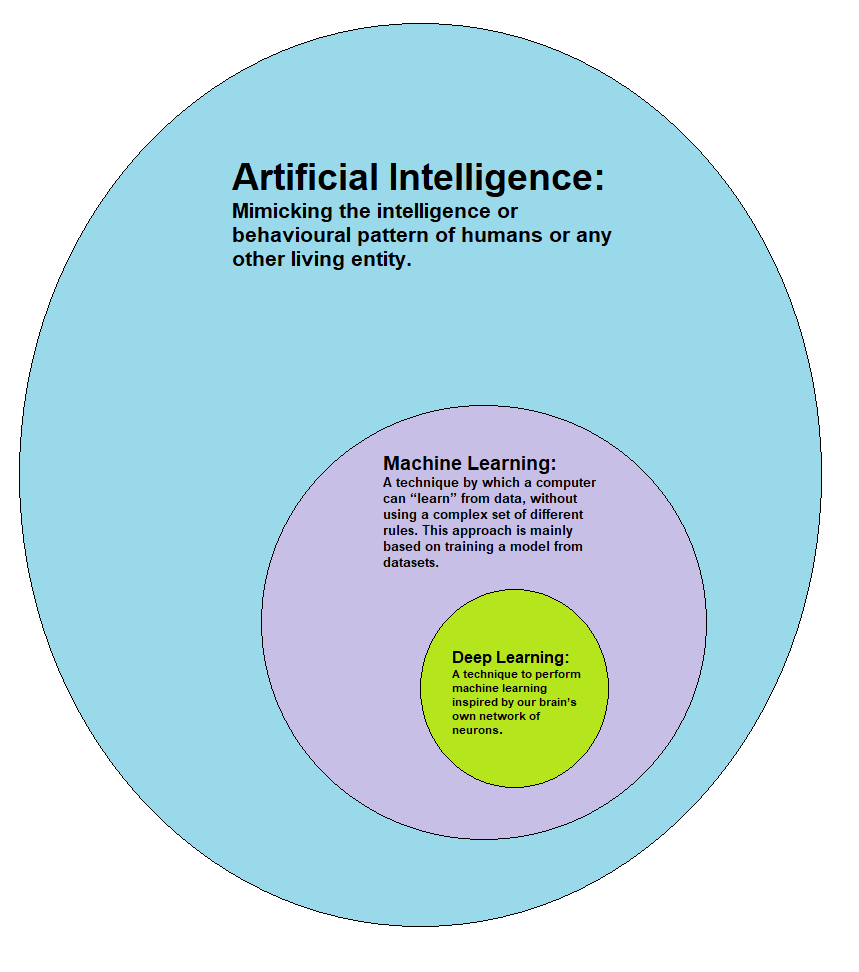
The most important concepts to understand are Machine Learning and Deep Learning.
Machine Learning (ML) is the science of getting computers to learn and act without being explicitly programmed. Instead of writing step-by-step instructions, developers feed the computer large amounts of data. The machine "learns" patterns from the data and can then make predictions. It's how your email service learns to filter out spam or how a weather app predicts rain.
Deep Learning (DL) is a more advanced type of machine learning inspired by the structure of the human brain. It uses complex, multi-layered structures to analyze data. Deep learning is the technology behind more sophisticated tasks, like facial recognition, natural language translation, and self-driving cars.
Inside the AI Brain
The core of deep learning is the neural network. A neural network is a system of interconnected nodes, or "neurons," organized in layers. Each neuron receives inputs, processes them, and passes the result to the next layer.
An input layer receives the raw data, like the pixels of an image. One or more hidden layers analyze the features of the data at different levels of abstraction. Finally, an output layer produces the final result, like a label that says "cat" or "dog."
By processing data through these layers, the network can learn to identify very complex patterns, far beyond what a human could program by hand. AI engineers are responsible for designing, training, and optimizing these networks for specific tasks.
AI in Action
AI Engineering isn't just theoretical; it's transforming industries around the world. From making healthcare more efficient to creating personalized entertainment, the applications are vast and growing every day.
| Industry | AI Application | Impact |
|---|---|---|
| Healthcare | Diagnosing diseases from medical scans | Faster, more accurate diagnoses |
| Finance | Detecting fraudulent credit card activity | Enhanced security and loss prevention |
| Retail | Recommending products to online shoppers | Increased sales and customer satisfaction |
| Automotive | Powering self-driving vehicle systems | Improved safety and transportation efficiency |
| Entertainment | Curating personalized movie or music lists | Higher user engagement and discovery |
These are just a few examples. As the technology continues to evolve, AI engineers will find new and innovative ways to solve problems and create value across every sector of the economy.
What is the primary role of an AI Engineer?
Deep Learning is a specialized subfield of Machine Learning.
That's a brief look into the world of AI engineering. It's a dynamic field that turns the promise of artificial intelligence into reality.