Transition to Product Ownership
Understanding Agile and Scrum
The Agile Mindset
Think of Agile not as a strict set of rules, but as a philosophy for building things, especially in a world that changes quickly. Imagine you're on a road trip. You have a destination, but you're not tied to a single, rigid route planned months in advance. You can adapt to traffic, take a scenic detour, or change plans based on a new restaurant recommendation. That’s an agile approach.
Traditional project management is more like a train on a track. The route is fixed, the schedule is set, and deviations are difficult. Agile, by contrast, embraces flexibility and collaboration. It's built on a foundation of four core values.
These values don't mean the items on the right are worthless. Processes and plans are still important. But Agile prioritizes the things on the left. It bets that focusing on people, creating functional products, working with customers, and adapting to change will lead to better outcomes.
Enter Scrum
If Agile is the philosophy, Scrum is a popular framework for putting it into practice. Think of it as a recipe that helps a team cook with Agile principles. It provides a structure for teams to tackle complex problems by breaking work into small, manageable pieces.
The core of Scrum is working in cycles called Sprints. A Sprint is a short, time-boxed period—usually one to four weeks long—where a team works to complete a set amount of work. At the end of each Sprint, the team should have a usable piece of the product to show for their efforts. This cycle of building, showing, and getting feedback is what allows teams to adapt and respond to change, just like the Agile values suggest.
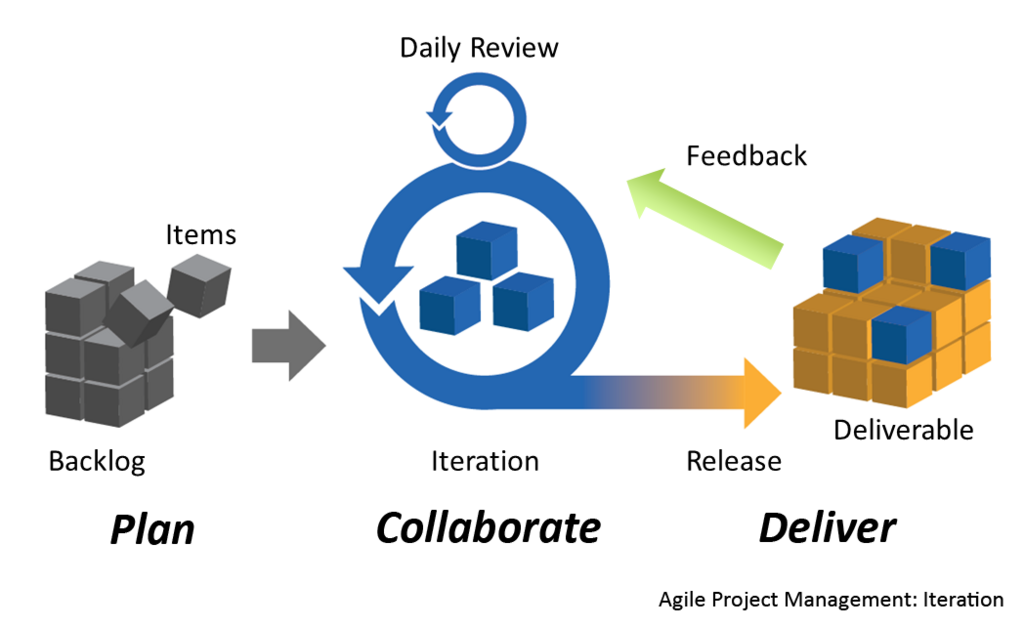
This iterative process means the team isn't trying to build the entire product in one go. Instead, they build and deliver it piece by piece, learning and adjusting as they go. This reduces risk and ensures that what they're building is actually what the customer wants.
The Scrum Team
Scrum is built around a small, cross-functional team. There's no project manager in the traditional sense. Instead, responsibilities are distributed across three specific roles, each with a clear purpose.
To provide some structure to this complex, ever-changing, and often annoying world, scrum gives a lightweight structure with the three scrum roles of development team member, product owner, and scrum master.
Let’s meet the team.
| Role | Key Focus |
|---|---|
| Product Owner | The "what" and "why." Maximizes the product's value by managing and prioritizing the work. |
| Scrum Master | The "how." Helps the team use Scrum effectively and removes any obstacles blocking their progress. |
| Developers | The builders. A cross-functional group of people who create a usable part of the product each Sprint. |
These three roles work together as a single unit. The Developers have the skills to build the product, the Scrum Master ensures the process runs smoothly, and the Product Owner points them in the right direction.
Spotlight on the Product Owner
The Product Owner is crucial. They are the single person responsible for maximizing the value of the product created by the team. They act as the voice of the customer and other stakeholders, ensuring the team is building the right thing at the right time.
This involves several key responsibilities:
Defining the Vision: The Product Owner is responsible for creating and clearly communicating the product goal. Why are we building this? Who is it for? What problem does it solve? Everyone on the team should understand the destination.
Managing the Product Backlog: The Product Backlog is the master to-do list for the product. It's an ordered list of everything that might be needed. The Product Owner is solely responsible for this list, including creating items, ordering them by priority, and making sure everyone understands them.
Prioritizing Needs: The Product Owner must make tough decisions. They weigh the needs of various stakeholders, consider technical constraints, and analyze market value to decide what the team should work on next. Their goal is to deliver the most value as early as possible.
Collaborating with the Team: While they are the final authority on the backlog, a great Product Owner works closely with the Developers and Scrum Master. They answer questions, provide feedback, and ensure there's a clear flow of information between the team and the rest of the world.
Essentially, the Product Owner bridges the gap between the business strategy and the development team. They ensure the team's valuable time and effort is spent on work that truly matters to customers and the organization.
The Agile philosophy is best compared to a road trip where the route can change, whereas traditional project management is more like a...
According to the core values of Agile, which of the following is prioritized over 'following a plan'?
By understanding these core concepts of Agile, Scrum, and the key team roles, you have a solid foundation for seeing how modern products are built and the pivotal part a Product Owner plays in that process.