Transformers in Generative AI
Introduction to Transformer Architecture
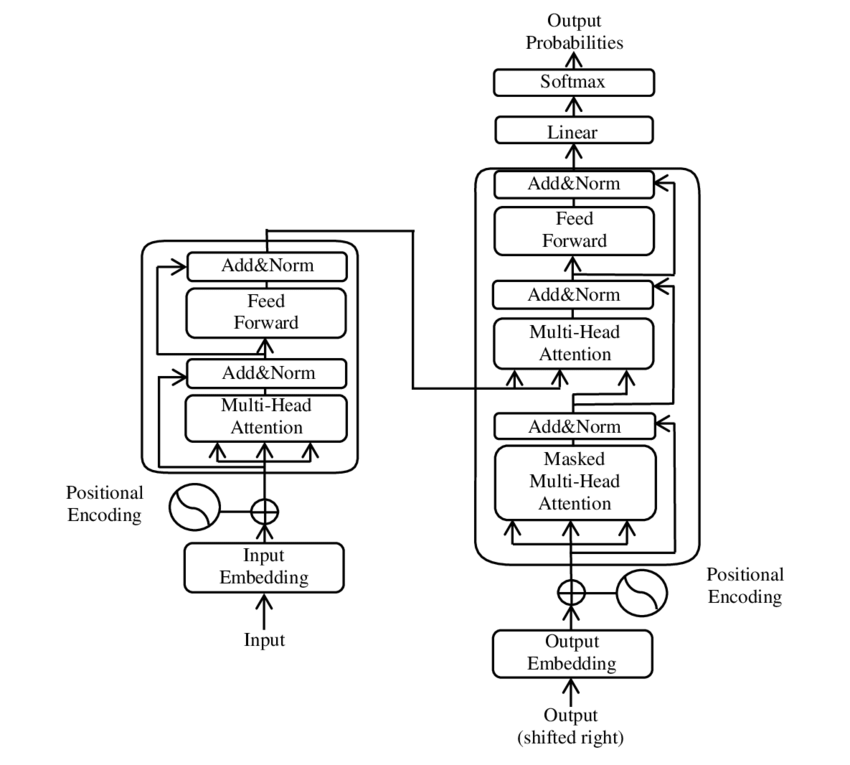
The Transformer Architecture
Before 2017, most language models processed text word by word, in sequence. This was slow and made it hard to see how words far apart in a sentence related to each other. Then came a groundbreaking paper, "Attention Is All You Need," which introduced the Transformer architecture. It changed everything.
We propose a new simple network architecture, the Transformer, based solely on attention mechanisms, dispensing with recurrence and convolutions entirely.
Transformers can look at all the words in a sentence at the same time. This parallel processing is faster and much better at understanding the full context of the text. At its heart, the model is built around an encoder-decoder structure, but its real power comes from a clever mechanism called self-attention.
The Secret Sauce: Self-Attention
Self-attention is what allows the model to weigh the importance of different words when processing a particular word in a sentence. It helps the model understand context and relationships.
Imagine you read the sentence: "The cat sat on the mat, and it purred." When the model processes the word "it," self-attention helps it figure out that "it" refers to the "cat" and not the "mat." It does this by creating three special vectors for each word: a Query, a Key, and a Value.
- Query (Q): Represents the current word's question, like "Who am I related to?"
- Key (K): Represents a word's label or identity, used to be "found" by other words.
- Value (V): Represents the actual meaning or content of the word.
The model compares the Query vector of the current word ("it") with the Key vectors of all other words in the sentence. The comparison results in an attention score. A high score means the words are highly relevant to each other. These scores are then used to create a weighted sum of all the Value vectors, producing a new representation for "it" that is rich with context from the word "cat."
Keeping Track of Order
Because Transformers process all words at once, they lose the natural sequence of the sentence. If you scramble the words in "The cat sat on the mat," a basic self-attention mechanism might not notice the difference. This is a problem, because word order is crucial for meaning.
This is where positional encoding comes in. It's a clever trick to give the model information about the position of each word in the sequence. Before the words enter the main network, a unique vector representing its position is added to each word's embedding (its numerical representation).
This encoding is designed so that words close to each other have similar positional vectors, helping the model learn the relative positions of words. It's like adding a timestamp or page number to each word, so the model knows where it came from in the original sequence.
The Encoder-Decoder Structure
The original Transformer architecture has two main parts: an encoder and a decoder. Each is a stack of identical layers.
The Encoder: Its job is to read the input sequence (like a sentence in French) and build a rich, context-aware numerical representation of it. Each encoder layer contains a self-attention mechanism followed by a feed-forward neural network. It processes the entire input and builds a deep understanding of its meaning and structure.
The Decoder: Its job is to take that numerical representation from the encoder and generate an output sequence (like the translated sentence in English). It works step-by-step, generating one word at a time. The decoder also has self-attention, but it's slightly different—it can only pay attention to the words it has already generated in the output. It also has a second attention layer, called cross-attention, which allows it to look at the encoder's output to ensure the generated text is relevant to the original input.
Together, these components—self-attention, positional encoding, and the encoder-decoder structure—create a powerful and efficient architecture. They enable Transformer models to handle complex sequences and understand deep contextual relationships, forming the foundation for most modern generative AI.