Transformer Neural Networks Explained
Introduction to Neural Networks
The Brain as a Blueprint
At its core, a neural network is a computational model inspired by the human brain. Just as our brains are made of interconnected neurons that pass signals to one another, artificial neural networks are built from simple processing units called artificial neurons, or nodes.
Each neuron receives one or more inputs. It then performs a simple calculation. First, it multiplies each input by a number called a weight. You can think of weights as dials that tune the strength or importance of each input signal. A higher weight means the input has more influence. The neuron then sums up all these weighted inputs.
Finally, this sum is passed through an activation function. This function acts like a gatekeeper, deciding whether the neuron should "fire" and what its output signal should be. Without activation functions, a neural network could only learn simple, linear relationships. They introduce the complexity needed to recognize intricate patterns in data, like identifying a cat in a photo or understanding the nuance in a sentence.
Stacking Neurons into Layers
A single neuron can't do much on its own. The real power comes from connecting them together in layers. The most basic arrangement is a feedforward neural network. In this design, information flows in only one direction, from input to output, without any loops.
A typical feedforward network has three types of layers:
- Input Layer: This is the network's front door. It receives the raw data, like the pixels of an image or the words in a sentence.
- Hidden Layers: These are the processing layers between the input and output. A network can have one or many hidden layers. Each layer learns to recognize different features in the data. For example, in image recognition, the first hidden layer might detect simple edges, the next might combine those edges to find shapes like eyes and noses, and a deeper layer might assemble those shapes into a face.
- Output Layer: This is the final layer that produces the result, such as a classification ('cat' or 'dog') or a prediction.
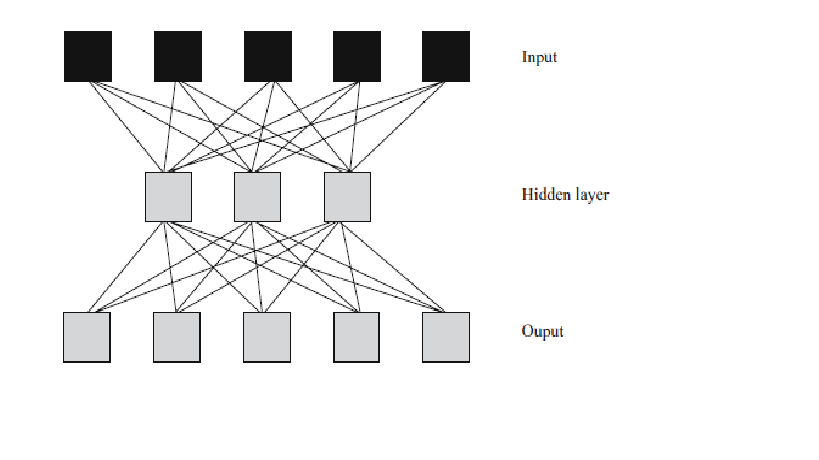
Information passes through the network sequentially, from one layer to the next. The output of one layer becomes the input for the following one. This one-way street of data processing is what defines a feedforward network.
Networks with Memory
Feedforward networks have a major limitation: they have no memory. Each input is processed independently, without any context from previous inputs. This is fine for static data like images, but it's a problem for sequential data, where order matters—like words in a sentence or notes in a melody.
To handle sequences, we use Recurrent Neural Networks (RNNs). The key feature of an RNN is a loop. This loop allows information to persist, effectively giving the network a form of memory. As the RNN processes a sequence one item at a time, it carries forward a representation of what it has seen so far.
This internal memory allows RNNs to understand context. For example, to predict the next word in the sentence "The clouds are in the ___," the network needs to remember the word "clouds." The looping mechanism lets it do just that, making RNNs well-suited for tasks like language translation and speech recognition. While powerful, this simple recurrent structure can struggle to remember information from many steps back, a limitation that led to the development of more advanced architectures.